Namibia Hunting Info
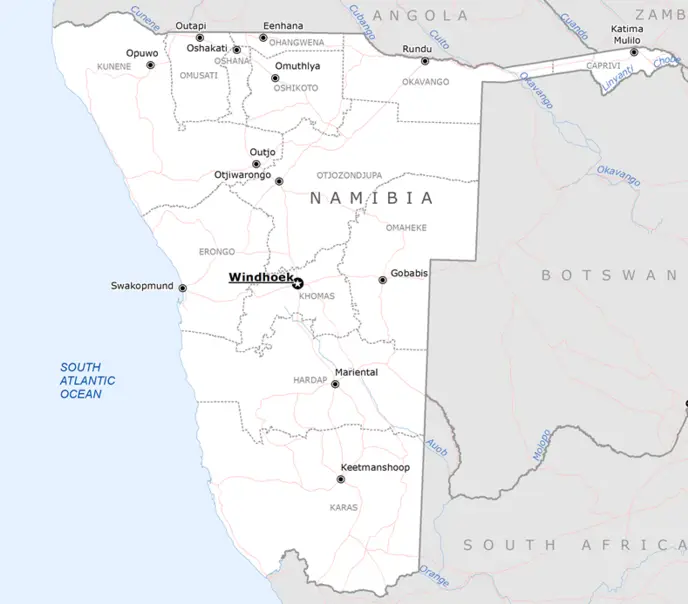
Namibia is a premier global destination for ethical, sustainable hunting, renowned for its diverse landscapes, thriving game populations, and well-managed conservancies. Hunting operations primarily range from walk-and-stalk plains game adventures on private hunting farms to big-game safaris in communal conservancies. The country’s strict wildlife management policies ensure high-quality, fair-chase experiences that also directly support local conservation and anti-poaching efforts.
The hunting season runs from February through November, with the prime months falling between May and October when cooler, dry weather improves tracking and visibility. Hunters can pursue a wide array of plains game—such as the iconic gemsbok (oryx), greater kudu, springbok, and Hartmann’s mountain zebra. For experienced hunters seeking greater thrills, specialized permits and professional guidance are available for dangerous game like leopards, lions, and elephants, primarily in the northern regions. Despite its arid climate, the country boasts an impressive array of desert-adapted wildlife, including black rhinos, lions, and the largest free-roaming cheetah population on earth.
Planning a hunting trip involves selecting a reputable outfitter registered with the Namibia Professional Hunting Association (NAPHA) to ensure compliance with the regulations of the Ministry of Environment, Tourism and Forestry (MET). Hunters should expect rigorous standards, temporary rifle import procedures at international airports, and specific guidelines regarding minimum caliber and energy requirements for different game.
Travel Information
Flying into Namibia
Flying into Namibia offers a dramatic introduction to one of the world’s most breathtaking landscapes, transitioning from vast ocean to seemingly endless, rust-colored desert. The journey often reveals the sheer scale and isolation of the country, setting the perfect stage for an unforgettable African adventure.
Flying to South Africa is a cross-continental journey that spans roughly 15 to 16 hours on nonstop flights from the US to Johannesburg, South Africa (O.R. Tambo International Airport – JNB). Delta Airlines has a direct flight from Atlanta (ATL) and United Airlines has a direct flight from Newark/New York (EWR). These flights usually leave the US in the evening and arrive in Johannesburg in the evening. The other option is flying through a major European or Middle Eastern airport on your trip from the US to Johannesburg (JNB).
If you arrive in South Africa in the evening, you will usually stay in Johannesburg overnight. In the morning, you will then fly out of O.R. Tambo International Airport (JNB) to Hosea Kutako International Airport (WDH), located about 40 kilometers east of the capital city, Windhoek. Depending on where you are hunting, your outfitter may meet you at the airport or another domestic flight might be required. There are a couple different South African airlines that fly a few flights per day to Hosea Kutako International Airport (WDH).
Visa to Enter Namibia
If you are traveling from the United States and most other Western countries, you need a visa to enter Namibia.
You can acquire your tourist visa online before your trip or on arrival in Namibia.
- In Advance: Apply for an eVisa through the Namibia e-Services Portal. Be sure to print a hard copy of your approval notice, as digital versions are not accepted.
- On Arrival: Purchase a Visa on Arrival (VoA) at major entry points such as Windhoek Hosea Kutako International Airport, Walvis Bay International Airport, or designated land borders.
A Visa on Arrival costs N$1,600 (approximately $90 USD) for non-African passport holders and is valid for up to 90 days.
Visitors must show the following documentation upon arrival:
- Confirmation of accommodation
- Confirmation of sufficient funds
- Travel itinerary
- Proof of travel and medical insurance
- Approved eVisa Form
Traveling with Firearms
Most US hunters will be transiting through Johannesburg’s O.R. Tambo International Airport (JNB). Since it usually requires an overnight stay and a change in airlines, you will need to clear customs and pick up your luggage and firearms in Johannesburg. If this is the case, follow the instructions and requirements for importing firearms into South Africa. Then follow the process for importing firearms into Namibia outlined below.
The actual import permit for Namibia is issued upon arrival at Hosea Kutako International Airport (WDH) and is entirely free.
- On arrival: Proceed to the Namibian Police Office located in the customs clearance hall.
- Required Documents:
- Passport – Bring a clear copy of your passport photo page
- Your official US CBP Form 4457
- Invitation letter from your hunting outfitter
- Completed Namibian Rifle Import Form POL 573 – this can be filled out on arrival or some outfitters will send you one to fill out prior to arrival
- Inspection: Present all the required documents listed above to the official for inspection.
- Verification: The police officer will cross-examine the physical serial numbers on your rifle frame and barrel against your application form.
- Permit Issuance: Once verified, you will receive your temporary Namibian weapon license. Keep this paper safe, as you are legally required to produce it when departing the country.
Safety Information
Namibia is widely considered one of the safest and most stable countries in Africa for tourists. While it is an excellent destination, visitors should exercise basic precautions—such as guarding belongings against petty theft in cities and staying highly vigilant while driving on remote roads.
Traveler Insurance
It is recommended that you have robust travel insurance that covers health care and emergency medical evacuation before you leave. Companies like Medjet or Global Rescue specialize specifically in medical transport and repatriation. Make sure that hunting is covered under the insurance that you choose, because some policies do not cover what they consider extreme or dangerous sports. Many standard travel insurance policies classify big-game hunting, shooting sports, or being around wild animals as “extreme activities” and will explicitly exclude injuries resulting from them. You must read the fine print or purchase a sports rider to ensure firearms use and hunting are covered.
Travel Advisories
For comprehensive planning details and travel advisories, consult the U.S. Department of State.
Health Information
When travelling to Namibia, key health concerns include malaria in the northern regions, insect-borne tick fevers, rabies from wildlife or stray animals, and food- or water-borne illnesses like traveler’s diarrhea.
Vaccinations
The National Travel Health Network and Centre and WHO recommend the following vaccinations for Namibia.
- Ensure routine childhood shots like tetanus, diphtheria, pertussis, and measles are up to date.
- Recommended: Hepatitis A and Typhoid are advised for most travellers.
- Considered on a case-by-case basis: Hepatitis B, Rabies (for animal handlers or remote travellers), and Polio boosters.
- Yellow Fever: A yellow fever vaccination certificate is only mandatory if you are arriving from a high-risk/endemic country.
Drinking Water Safety
Tap water is generally safe in major towns, but boiled or bottled water should be used in rural or remote areas.
Malaria
If traveling to Etosha National Park or the northern and northeastern regions, check with your healthcare provider about anti-malarial medications. It is generally recommended to take prophylactic Malaria medicine when traveling to the following northern regions of Namibia: Kavango (East and West), Kunene, Ohangwena, Omaheke, Omusati, Oshana, Oshikoto, Otjozondjupa, and Zambezi.
Rabies
Rabies risk exists from contact with infected dogs, bats, or wildlife. Particularly avoid contact with stray dogs in Namibia as they are the major source of animal to human transmission of rabies in Namibia. Black-backed jackals are the most prevalent carrier in the wildlife population.