
About the Javelina
Info About the Javelina
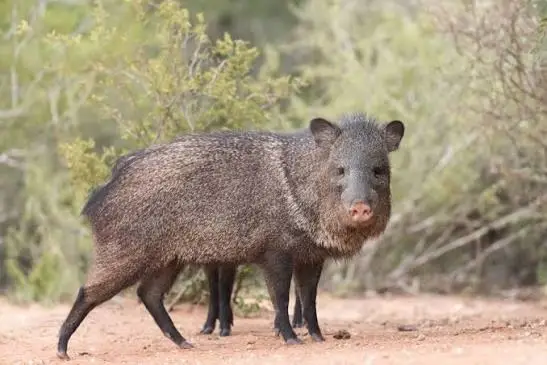
The javelina, also known as the collared peccary, is a medium-sized, pig-like mammal native to the Americas, ranging from the Southwestern United States down to South America. Despite their stout bodies, bristly fur, and snout-like noses, javelinas are not true pigs. They belong to their own unique family and are easily distinguished by a faint, light-colored band of fur around their necks.
These adaptable animals are highly social, living and traveling in tight-knit family groups called “squadrons” or “herds” that typically range from 2 to over 20 individuals. Javelinas rely heavily on a superb sense of smell to navigate their environment and communicate, compensating for their notably poor eyesight. Each herd member helps maintain the group’s unity by rubbing oily musk from a scent gland on their rumps against one another and marking their shared territory.
Because they frequently roam near desert washes and occasionally enter residential areas in states like Arizona and Texas, human encounters with javelinas are relatively common. While not typically aggressive toward people, they are fiercely protective of their young and will aggressively defend themselves if cornered by dogs, which they often mistake for their natural predators like coyotes and bobcats.
Description of the Javelina
- Weight & Dimensions: Adults typically weigh from 40 to 60 pounds., stand from 18 to 24 inches tall at the shoulders, and reach a length of from 32 to 36 inches long.
- Coat & Color: Their bristly hair is coarse and grizzled. The defining “collar” consists of a band of lighter, white-to-cream colored hair running from the neck down to the shoulders. Young javelinas, often called “reds,” are born with reddish-brown coats.
- Teeth & Tusks: Javelinas are named after the Spanish word for “spear” because of their sharp, elongated canine teeth (tusks). These straight tusks protrude from their jaws and are used for defense, cutting, and slashing.
- Body Structure: They have a stout, barrel-shaped body, a large head, short and slender legs, and a round, hairless snout.
Javelina vs. True Pig
- Tail: Javelinas lack a visible tail.
- Feet: They have 3 hoofed toes on their hind feet, whereas true pigs have 4.
- Scent Gland: Both sexes have a prominent musk gland on their lower back, about 6 inches above the tail, which emits a strong, skunk-like odor used to mark territory and identify herd members.
- Stomach: They have a more complex, multi-chambered stomach (similar to ruminants) designed to digest tough desert vegetation.
Recommended Calibers
When hunting with a rifle to hunt the javelina use cartridges from the .243 to .30 calibers.
Where to Hunt Javelina
Arizona, Texas, and New Mexico have javelina hunting seasons.
Cost to Hunt Javelina
It costs from $1,000 to $3,000 to hunt Javelinas
View Our Hunts