
About the Markhor
Info About the Markhor
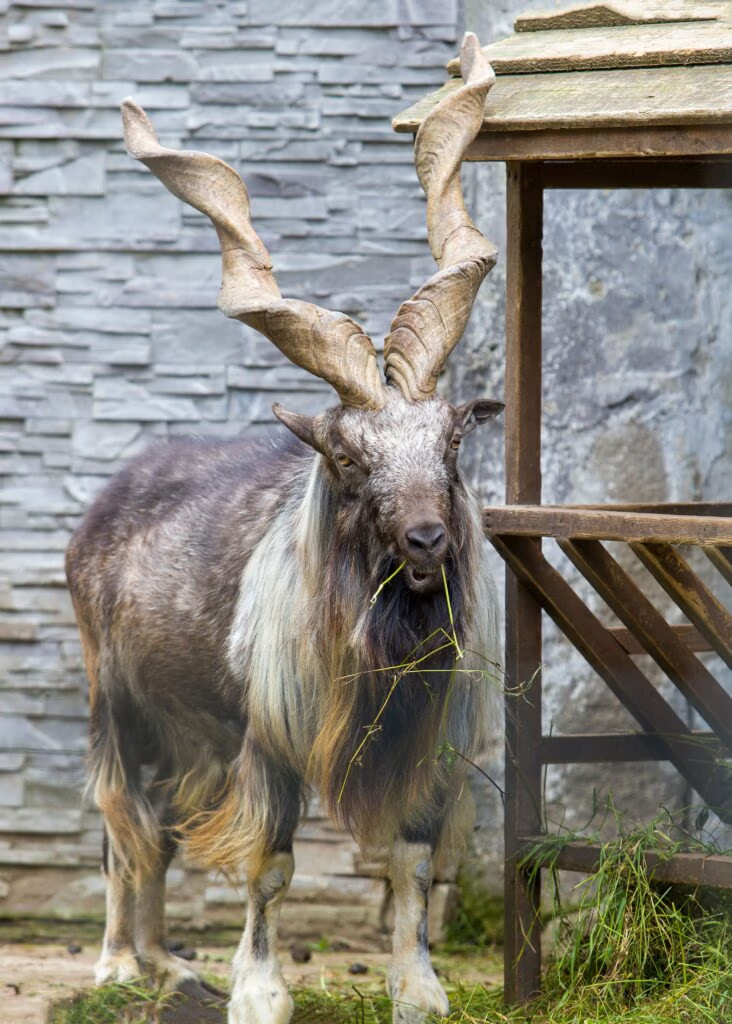
The markhor is a large, majestic species of wild goat native to the rugged, high-altitude mountains and scrublands of Central and South Asia. Famous for their spectacular corkscrew-shaped horns, these incredible climbers are the national animal of Pakistan.
Markhors—whose name translates from Persian as “snake-eater”—show striking sexual dimorphism. Mature males can weigh over 200 pounds and sport magnificent, spiraled horns that can measure up to 63 inches in length. They also feature thick, shaggy manes and long fringes of hair on their necks and chests. Females, on the other hand, are significantly smaller, bearing shorter fur, no mane, and much smaller, tighter horns that only reach about 10 inches long. Their coats undergo seasonal shifts, changing from a smooth, tan summer coat to a thick, gray winter coat that helps them survive the freezing weather.
These resilient herbivores are highly adapted to steep, rocky terrain. Their specialized hooves feature soft centers and hard outer edges that provide exceptional grip, allowing them to scale sheer cliffs and even climb trees in search of food. During the warmer months, they primarily graze on grasses, but in the winter, their diet shifts to browsing shrubs, leaves, and twigs. Socially, females and their young live in small herds, while mature males tend to be solitary, only joining the herds during the winter mating season when males engage in fierce, locking-horn battles for dominance.
Description of the Markhor
Body and Size
- Size: Standing from 26 to 45 inches tall at the shoulder, they measure from 52 to 73 inches in total body length.
- Weight: Adult males typically weigh from 175 to 240 pounds, while females are smaller, weighing from 71 to 110 pounds.
- Coat: The coat is grizzled and ranges in color from light tan and grey to dark brown. It is smooth and short in the summer but grows longer and thicker to survive harsh mountain winters.
- Legs: The lower legs feature a distinct and bold black-and-white pattern. Wide, broad hooves provide steady traction on precipitous mountain slopes.
Sexual Dimorphism
- Males: Adult males have a lighter body color. They are easily recognized by the long, shaggy hair extending from their chin, throat, chest, and shanks. They also have a very strong, distinct musky smell.
- Females: Females have a redder or tan coat color. They lack the pronounced shaggy mane and long chest hair of the males, sporting only a short, black beard.
Distinct Horns
- Males: Their horns grow upward, twisting tightly in a ‘V’ shape (like an open corkscrew) and can reach impressive lengths of up to over 5 feet.
- Females: Females also possess spiral horns, but they are significantly smaller, typically reaching about 10 inches in length.
Markhor
There are three recognized subspecies:
- Flare-Horned Markhor: Also includes the Astor and Kashmir variants. Known for its wide, branching, flat horns that flare outward. They inhabit regions of northern Pakistan, India, and Afghanistan.
- Bukharan Markhor: Also called the Tajik or Heptner’s markhor. This critically endangered subspecies features tight, heavy corkscrew horns with up to three half-turns and is found primarily in Tajikistan, Uzbekistan, and Turkmenistan.
- Straight-Horned Markhor: Formerly split into the Kabul and Suleiman markhors. Characterized by spiral horns that grow nearly straight up. They are predominantly found in the rugged mountains of Afghanistan and Pakistan.
Recommended Calibers
A 6.5mm or larger caliber is needed to bring down a markhor.
Where to Hunt Markhor
Markhor are hunted free range in Pakistan and Tajikistan.
They can be hunted on high fence hunting preserves in Texas.
What is Considered a Trophy Markhor
A markhor trophy will have horns measuring from 38 to 50 inches long.
Cost to Hunt Markhor
It costs between $30,000 and $370,000 to hunt markhor depending on the country you hunt and the size of the trophy.
In Texas the cost is usually between $25,000 and $35,000.
View Our Hunts