
About the Dama Gazelle
Info About the Dama Gazelle
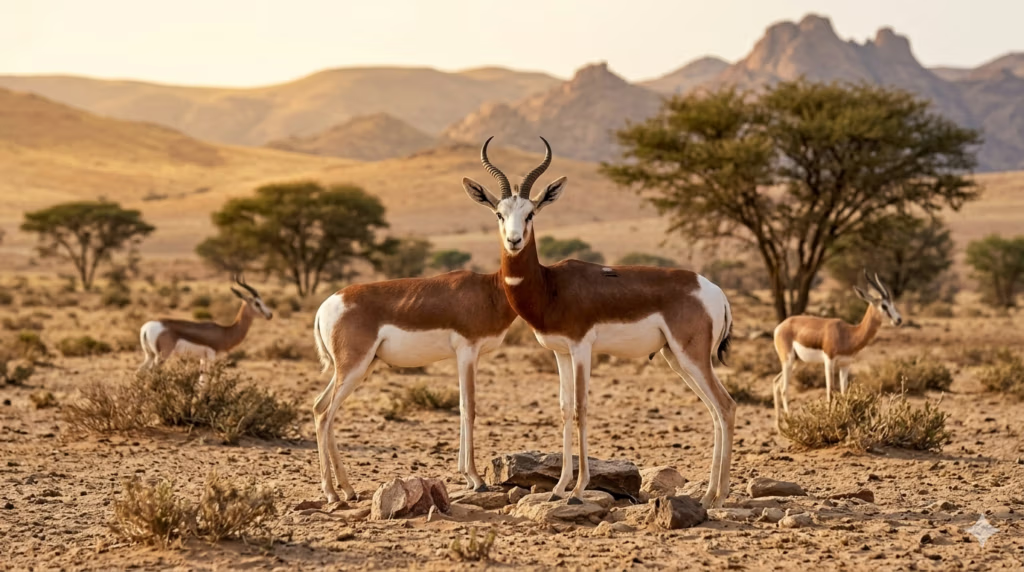
The dama gazelle is the largest and tallest gazelle in the world, standing nearly 4 feet tall at the shoulders and weighing between 77 and 165 pounds. Native to the harsh, semi-arid landscapes of the African Sahel and the Sahara Desert, they boast a striking coat that is deeply adapted for the intense sun, typically featuring a mostly white body to reflect light paired with a rich, reddish-brown neck and back. Both males and females possess characteristic, ringed horns shaped like an “S”.
As true desert specialists, these nomadic mammals survive in harsh environments by constantly migrating. During the summer wet season, they travel north into the Sahara, and as the dry season takes hold, they move south to the African savannas. They are opportunistic browsers and grazers, feeding on desert shrubs, rough grasses, and acacia leaves. To sustain themselves in water-scarce regions, dama gazelles often stand on their hind legs to reach high foliage and extract the majority of their necessary hydration directly from the plant tissues they consume.
Despite their incredible adaptations, the dama gazelle is critically endangered, with estimates of only 100 to 200 mature individuals remaining in the wild. Once widespread across North Africa and the Sahara, their wild populations are now highly fragmented and largely confined to protected or isolated pockets in Chad, Niger, and Mali. The species faces severe population decline primarily due to overhunting, habitat loss, and increasing competition for grazing resources with domestic livestock.
Description of the Dama Gazelle
- Height: Stand from 35 to 47 inches tall at the shoulders.
- Weight: Weigh between 77 and 165 pounds, with males being noticeably larger and heavier than females.
- Limbs: Exceptionally long, thin, and spindly legs.
- Neck: Noticeably long and slender, enabling them to stand on their hind legs to browse tall acacia branches.
- Tail: Short and almost hairless.
- Eyes: Large, dark, and expressive, positioned on the sides of the head to provide a wide field of vision.
- Pattern: Coats are typically two-toned. They feature a brilliant white rump, underbelly, and face, paired with a rich, orangey-red or chestnut patch covering the neck and back.
- Variation: Coloration ranges geographically. Eastern subspecies are mostly white with a reddish-brown neck, while western subspecies are almost entirely a dark reddish-brown.
- Horns: Both males and females possess horns, making them unique among some of their desert relatives.
- Horn Shape: Characterized by a distinct “S” or “U” curve that resembles an upside-down lyre, with the tips pointing backwards and inwards.
- Horn Size: Male horns are thicker and longer, growing from 12 to 15 inches in length with between 18 to 23 prominent rings. Female horns are thinner, shorter, and less prominently ridged.
Dama Gazelle Species / Subspecies
- Addra Gazelle: The easternmost and lightest-colored subspecies. Their chestnut coloration is typically restricted to the neck and the very top of the shoulders, leaving the rest of the body bright white. They are native to the Sahel regions of Chad and Sudan.
- Mhorr Gazelle: The westernmost subspecies, historically found in Morocco and the western Sahara. They feature a darker coat with the rich reddish-brown coloration extending further down the back, shoulders, and legs.
- Nominate Dama Gazelle: The central subspecies historically found spanning across Mali and Niger. They are intermediate in color, generally having darker markings than the Addra but lighter than the Mhorr.
Recommended Calibers
Use a minimum of a 6mm (.243) caliber rifle to hunt dama gazelle.
Where to Hunt Dama Gazelle
You can hunt the critically endangered dama gazelle year-round at high-fence exotic game ranches in Texas.
What is Considered a Trophy Dama Gazelle
A dama gazelle with horns of 15 inches or longer is a trophy specimen.
Cost to Hunt Dama Gazelle
A dama gazelle hunt will cost from $7,500 to $12,000 depending on the ranch hunted.
View Our Hunts