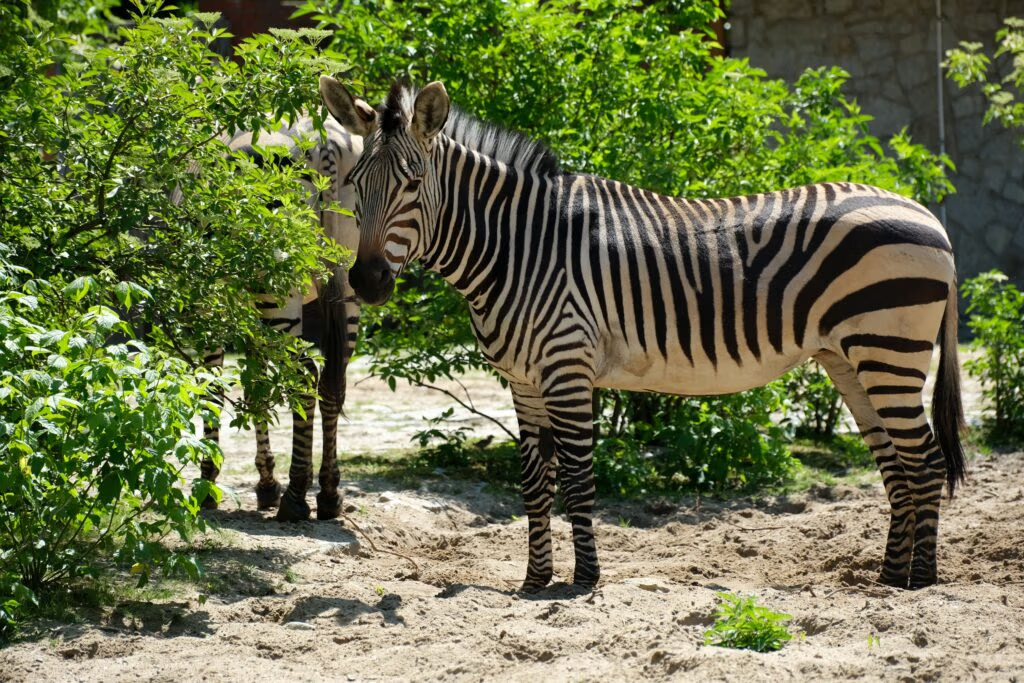

About the Hartmann’s Zebra
Info About the Hartmann's Zebra
The Hartmann’s mountain zebra is a highly agile, sure-footed equid native to the arid, rocky escarpments and dry mountain ranges of Namibia and southwestern Angola. Unlike their plains-dwelling cousins, they feature white bellies and a distinctive fold of skin under the chin called a dewlap.
Hartmann’s Physical Characteristics
- Coat & Striping: They have a striking coat of broad black stripes set against an off-white or creamy background. Unlike plains zebras, their stripes do not meet on the belly. They also feature a unique grid-like pattern (a “gridiron”) on their hindquarters and a triangular “Christmas tree” pattern of stripes just above the tail.
- Size & Weight: They stand roughly 48 to 60 inches tall at the shoulders. Males (stallions) are slightly larger, weighing from 500 and 750 pounds, while females (mares) generally weigh from 500 to 600 pounds.
- Hooves: Hartmann’s zebras are specially adapted for climbing. They have exceptionally hard, pointed hooves that grow quickly to withstand the attrition of scaling steep, rocky terrain.
Hartmann’s Zebra Habitat & Adaptations
- Range: They are found in the rugged, mountainous terrain of Namibia and extreme southwestern Angola, particularly in areas near the edge of the Namib Desert.
- Water & Diet: As herbivores, their diet consists primarily of grasses, shrubs, and bark. Because surface water can be scarce, they are known to dig deep into the sand of dry riverbeds to uncover underground water sources.
- Nocturnal/Crepuscular Behavior: They are active primarily at dawn and dusk, sheltering in high-altitude mountains during the day and descending to feed. They are also believed to have excellent night vision.
Hartmann’s Social Structure
- Herd Dynamics: Unlike plains zebras that gather in massive, roaming herds, Hartmann’s zebras live in smaller, more intimate groups (harems) consisting of one dominant stallion and 1 to 5 mares with their dependent offspring.
- Bachelor Groups: Young males live in separate, subordinate bachelor groups or on their own until they are old enough to challenge a harem stallion for breeding rights
Recommended Calibers
Use a minimum of a 7mm caliber magnum rifle to hunt Hartmann’s Zebra.
Where to Hunt Hartmann's Zebra
Hartmann’s Zebra are hunted in the following locations:
- Namibia: The absolute stronghold for Hartmann’s zebra, especially in the Khomas Highland, the Naukluft Mountains, and the country’s western and central plateaus.
- South Africa (Northern Cape & Eastern Cape): Select private game reserves and high-fencing operations in these regions offer controlled hunts for this specific subspecies.
What is Considered a Trophy Hartmann's Zebra
Any adult stallion is considered a trophy Hartmann’s zebra.
Cost to Hunt Hartmann's Zebra
In Africa, it costs between a $1,000 and $4,000 trophy fee to hunt Hartmann’s zebra.
View Our Hunts