
About the Sambar Deer
Info About the Sambar Deer
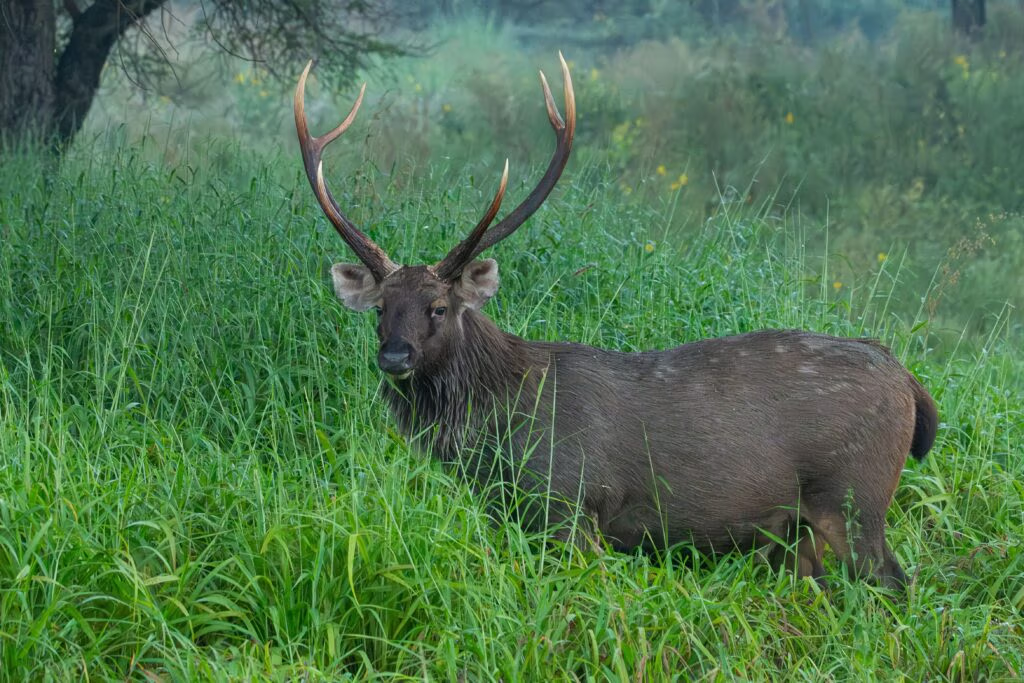
The sambar deer is one of the largest and most powerful deer species on Earth, native to South and Southeast Asia. Adult males can stand up to 5 feet tall at the shoulders and weigh over 500 pounds. They are easily recognized by their thick, dark brown coats, heavy manes around the neck, and rugged, three-tined antlers.
These elusive animals are primarily nocturnal, meaning they are most active at night or during dawn and dusk. Because they are herbivores with a broad diet, they adapt well to various habitats ranging from tropical rainforests to mountainous deciduous woodlands, though they are never found far from water sources. When threatened by apex predators like Bengal tigers, leopards, or wild dogs, sambar deer will often attempt to deter them by stomping their feet and emitting a loud “belling” alarm call.
While males are solitary for most of the year, females and their young live in small herds. Due to intensive hunting and significant habitat loss across their native Asian ranges, the sambar deer is currently classified as vulnerable by the IUCN. Today, beyond their native habitats, they have also established thriving introduced populations in several other regions, including parts of Florida, Australia, and New Zealand.
Description of the Sambar Deer
Key Physical Specifications
- Shoulder Height: from 40 to 63 inches at the shoulders.
- Body Length: from 63 to 106 inches long.
- Adult Weight: from 330 to 700 pounds., with exceptional stags reaching up to 1,200 pounds.
- Tail Length: from 8 to 14 inches long.
Distinctive Features
- Coat & Mane: The coat is thick, wiry, and unspotted in adults. The hair around the neck is exceptionally long, forming a thick ruff or mane, which is particularly prominent in mature males.
- Coloration: Unicolored and variable; predominantly dark brown or reddish-brown, often fading to lighter buff or chestnut on the underparts, inner legs, and the underside of the tail.
- Antlers: Exclusively present in males, these are large, heavy, and typically divide into three tines (a simple brow tine and a forked main beam). They can grow up to 43 inches in span.
- Face & Ears: Features large, broad, bat-shaped ears and a distinctively light-colored patch under the chin.
Sambar Deer Species / Subspecies
The seven recognized subspecies are:
- Indian / Sri Lankan Sambar: Native to India, Sri Lanka, and Bangladesh. This is the largest subspecies, boasting the largest body mass and the most massive antlers.
- Malayan Sambar: Found in Sumatra and the Malay Peninsula. This deer is stout, though it has slightly smaller antlers relative to its body size than the Indian sambar.
- Mainland Southeast Asian Sambar: Inhabits mainland Southeast Asia and Indochina.
- South China Sambar: Found in the southern and southwestern regions of China. This ranks among the largest subspecies, second only to the Indian sambar.
- Bornean Sambar: Native to the island of Borneo, notable for its smaller antlers relative to its body.
- Formosan Sambar: Endemic to the island of Taiwan. This is the smallest of all sambar subspecies.
- Hainan Sambar: Found only on Hainan Island, China.
Recommended Calibers
Use a minimum of a 6.5mm caliber rifle to hunt sambar deer.
Where to Hunt Sambar Deer
In the United States, sambar deer are primarily hunted in Texas on private game ranches. Extremely limited hunting is available on St. Vincent Island, Florida, as well as on Guam. The premier global destinations are Australia (Victoria, NSW, and South Australia) and New Zealand (North Island).
1. Australia (Victoria & New South Wales)
- Key Locations: The Great Alpine National Park, Wonnangatta Valley, and the Victorian Alps.
- Habitat: Ranging from dense sub-alpine timber and snow grass plains to thick, swampy eucalyptus gullies.
- Seasonality: You can hunt them year-round, but the best times are generally from May through September when stags carry hard antlers.
2. New Zealand (North Island)
- Key Locations: Manawatu/Wanganui region (like Santoft Forest) and the Bay of Plenty.
- Access: Much of the land is private; you may need to apply for forestry permits or book through private outfitters.
3. United States & Territories
- Texas: Sambar deer can be hunted on private game preserves in Texas.
- St. Vincent Island, Florida: A National Wildlife Refuge where Sambar were introduced in 1908. The Florida Fish and Wildlife Conservation Commission (FWC) hosts tightly regulated, lottery-drawn hunts.
- Guam: Sambar deer populations are abundant on the island, and hunting is allowed during regulated seasons using firearms or archery/crossbows.
What is Considered a Trophy Sambar Deer
A trophy sambar deer is measured by the following characteristics:
- Antler Points: A standard symmetrical 3-point-per-side structure including the brow tine and two top tines.
- Antler Length: Trophies typically measure over 24 inches, with lengths exceeding 30+ inches considered exceptional.
- Mass and Density: Exceptionally thick, rugged, and dense main beams rather than wide or sprawling spreads.
- Age and Body Size: Mature stags are 7.5+ years of age, featuring heavy neck manes and a robust body weight exceeding 500+ pounds.
Cost to Hunt Sambar Deer
The cost to hunt a sambar deer will vary based on where you are hunting and the trophy quality you are pursuing.
- Meat Hunts can costs from $1,500 to $3,600.
- Texas Ranch Trophy Hunts costs from $8,000 to $12,500.
- International Hunts in Australia or New Zealand cost from $7,000 to $21,000.
View Our Hunts