
About the Black Bear
Info About the Black Bear
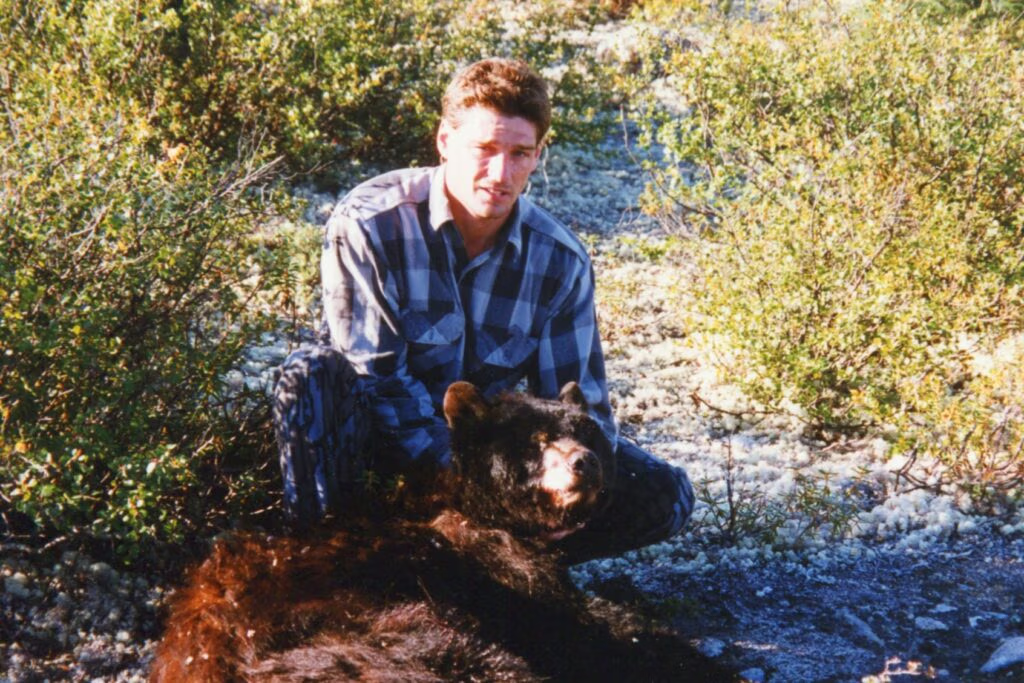
The American black bear is the continent’s most widespread and adaptable bear species. Though they are the smallest of North America’s bears, they are powerfully built. Adults can weigh from 100 to 600 pounds. Despite their name, their coats have color phases including jet black, brown, blonde, and cinnamon.
As omnivores, they are highly opportunistic foragers. Their diet shifts with the seasons, relying heavily on spring grasses and insects, summer berries, and calorie-dense fall nuts. During late summer and autumn, they can consume up to 20,000 calories daily to build critical fat reserves for winter hibernation.
Equipped with claws that do not retract and agile limbs, black bears are exceptional climbers. They frequently scale trees for safety or to access food. During the winter, they enter dens inside hollow trees or rock cavities, where they sleep through the coldest months and give birth to blind, tiny cubs.
Description of the Black Bear
American black bears are stocky, medium-sized mammals featuring long, shaggy coats, small rounded ears, tapering brown muzzles, and straight facial profiles. They stand from 30 to 36 inches tall at the shoulders, measure from 48 to 72 inches in length from nose-to-tail, and have a short, inconspicuous tail.
Physical Characteristics of the Black Bear
Weight:
- Adult males typically weigh from 100 to 500 pounds, but can exceed 600 pounds depending on fall foraging.
- Adult females commonly range from 90 to 300 pounds.
- Their weight can fluctuate by up to 30% between the spring and the fall as they pack on fat for winter denning.
Coloration:
- Despite their name, coat colors range widely based on geographic region. Eastern bears are primarily deep black, while western populations often exhibit brown, cinnamon, blonde, or even blue-gray and creamy-white hues.
- They commonly feature a pale muzzle and occasionally sport a white patch or “blaze” on their chest.
Paws and Claws:
- They have five toes on each foot and walk flat-footed.
- Their claws are short, robust, and non-retractable, making them well-adapted for climbing trees and tearing into logs for food.
Distinguishing Features:
- Black bears do not have a pronounced hump over their shoulders like the grizzly bear. Their back forms a relatively flat or straight line from the neck to the hips.
- Their ears are also taller, less heavily furred, and much more prominent than those of grizzlies.
Recommended Calibers
It is most common to use a 6.5mm or larger caliber when using a rifle to hunt black bears.
Where to Hunt Black Bear
Black bears can be hunted across 28 U.S. states and nearly every Canadian province. North America holds a massive, thriving population of over 800,000 black bears, giving hunters many options for their hunt.
The Western U.S.
- The west is famous for spot-and-stalk mountain hunting
- It has the highest density of “color phase” bears (cinnamon, blonde, and chocolate coats).
- It is the premier region for spring bear seasons, typically April through June.
- Idaho: A favorite for flexible hunting styles including spot-and-stalk, hound hunting, and hunting over bait.
- Montana: The ultimate destination for backcountry mountain spot-and-stalk hunts. Baiting, hounds, and trail cameras are strictly illegal in Montana.
The Eastern & Midwestern U.S.
- Hunters are often surprised to learn that the heaviest black bears in the world are routinely harvested in the east and mid-west due to mild winters, agricultural food availability, and zero hibernation requirements.
- Wisconsin and Minnesota: Highly managed populations that produce massive record-book skulls.
- Maine: Has the largest bear population in the Lower 48 states and is highly affordable for guided, baited hunts.
- North Carolina: Coastal swamp regions consistently produce very large bears exceeding from 500 to 600+ pounds.
Alaska
- Holds over 100,000 black bears.
- Coastal setups allow you to skiff-hunt rugged shorelines or book standard wilderness mountain camps.
Canada
- If you prefer hunting over established bait stations from a tree stand or ground blind, Canada is the global gold standard.
- Saskatchewan & Manitoba: Renowned for high success rates, exceptional spring hunting, and heavy, thick-furred boars.
- Alberta: Offers a rare two-bear bag limit in select management zones with an incredible mix of color-phase bears.
- British Columbia: Home to the largest coastal black bears in the world, where bears gorge on berries and salmon river ecosystems.
What is Considered a Trophy Black Bear
A black bear trophy generally refers to a mature, heavy-bodied male boar. The trophy quality consists of the following criteria.
- Skull Size: A trophy-sized black bear skull measures 18 inches or more and is measured by the total length plus the greatest width of the dried skull.
- Physical Size and Age: Mature males are typically 6 or more years old. A true trophy-class bear will exhibit a thick neck, blunt/broad snout, and a heavy belly.
- Hide and Color Phase: Dense, long-haired skins are highly valued. While black is the standard color phase, bears also come in cinnamon, chocolate, blonde, or silver color phase. These less common color phases are highly sought after and considered a premium trophy.
Cost to Hunt Black Bear
A black bear hunt costs anywhere from $2,500 to $12,000 depending on the location and hunting method. The highest priced black bear hunts tend to be hunting coastlines from a yacht.
Public Land Hunt
- Average cost is from $800 to $1,500
- This is a DIY hunt covering non-resident licenses, fuel, and camping gear.
Guided and Baited Hunt
- Average cost is from $2,500 to $4,500
- Typically found in Maine or the mid-west
Guided Canadian Spring Hunt
- Average cost is from $4,000 to $9,500
Fly-in Coastal Boat/Lodge Hunt
- Average cost is from $7,500 to $12,000+
- Hunts can be fount in Alaska and British Columbia