
About the Red Duiker
Info About the Red Duiker
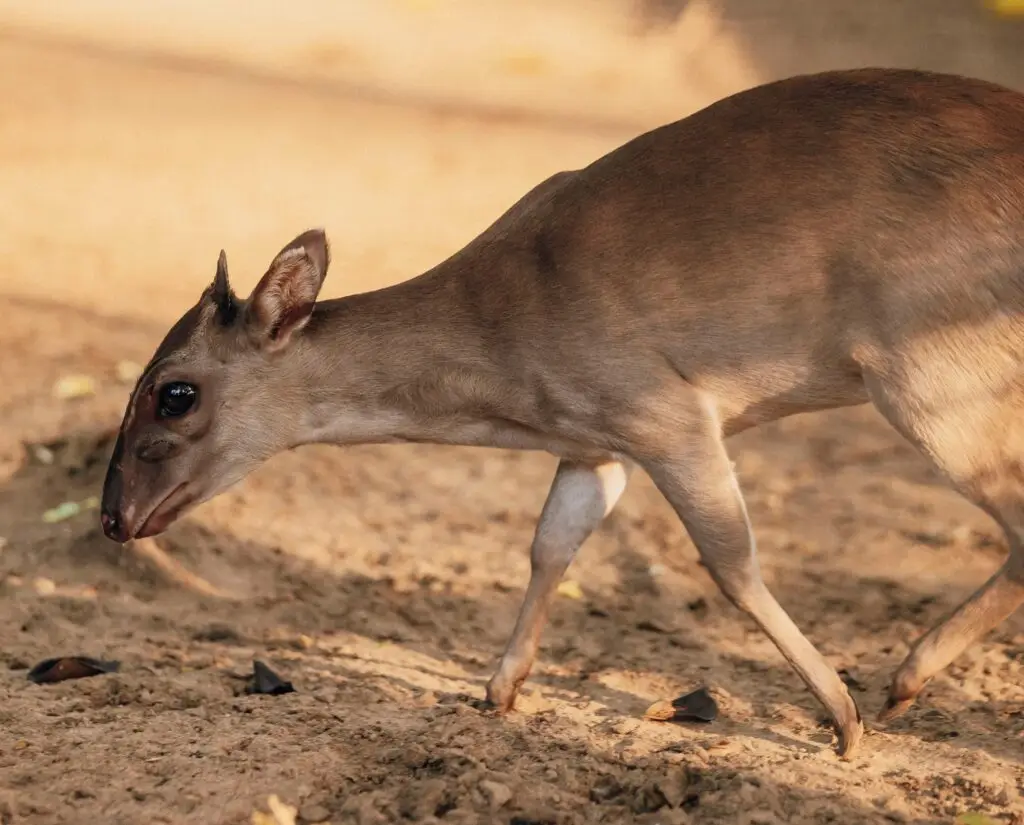
The red duiker, also known as the Natal red duiker or red forest duiker, is a small, elusive antelope native to central and southern Africa. Known for its brilliant chestnut-red coat and unique diving escape behavior, this tiny bovid thrives in dense coastal and riverine forests where it forages for fallen fruits, leaves, and flowers.
Standing from 16 to 17 inches tall at the shoulders, these antelopes weigh from 26 to 33 pounds. Both males and females grow short, straight horns that are often partially concealed by a tuft of dark hair on their forehead. The name “duiker” comes from the Afrikaans word for “diver,” describing their distinct habit of instantly plunging headfirst into thick undergrowth and brush when startled by a predator.
Red duikers are primarily diurnal, meaning they are active during the day, with peak foraging times in the early morning and late afternoon. They are highly territorial and typically live alone or in closely bonded mated pairs. Males aggressively mark their territory by rubbing secretory glands near their eyes onto grass, twigs, or tree bark.
Recommended Calibers
A small centerfire rifle or a shotgun is usually used to hunt the red duiker.
Where to Hunt Red Duiker
You can hunt the red duiker (specifically the Natal Red Duiker) in the dense coastal forests, thick thickets, and montane woodlands of South Africa, Mozambique, and Tanzania. Highly sought after by trophy collectors, this small, secretive antelope is a member of Africa’s coveted “Tiny Ten”.
Best Countries & Regions to Hunt
- South Africa: This is the most popular destination, offering year-round hunting. Focus on the subtropical sand forests and coastal bush of the Zululand region in KwaZulu-Natal, the riverine bush of the Eastern Cape, or the rugged Soutpansberg Mountains in the Limpopo Province.
- Mozambique: The hunting season runs from April 1 to November 30. Red Duikers are typically hunted here alongside larger plains game or Cape Buffalo safaris.
- Tanzania: The season is open from July to December. They are found from Masailand down to the Selous reserve. Note that Tanzania requires a minimum of a 16 to 21-day hunting license to pursue pygmy species.