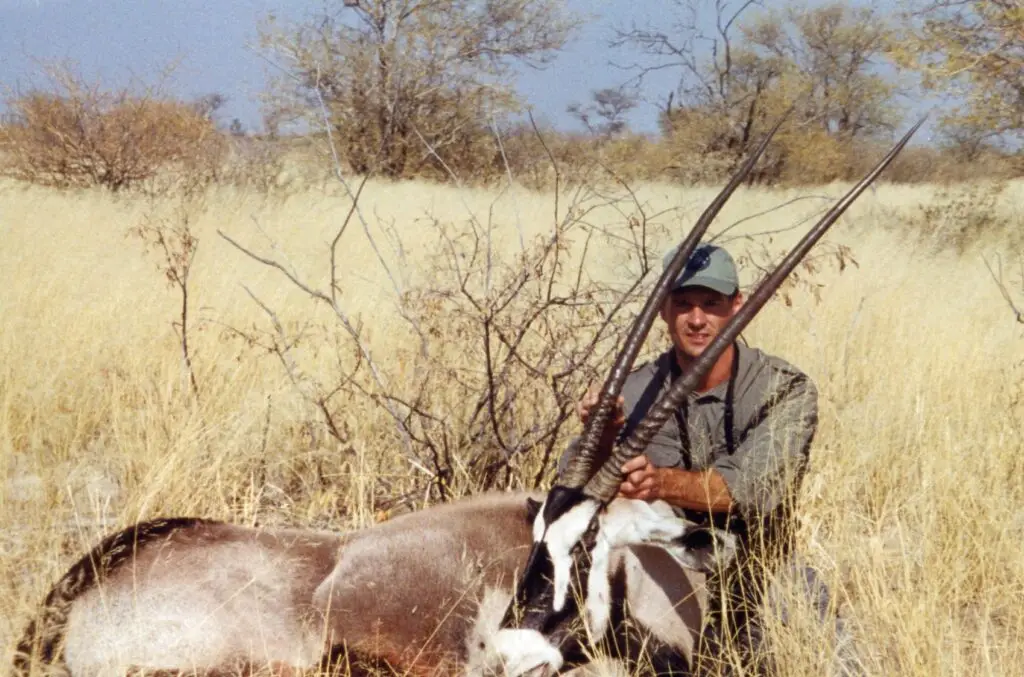

About the Gemsbok
Info About the Gemsbok
The gemsbok is a striking, large antelope native to the arid expanses of Southern Africa, such as the Kalahari and Namib Deserts. Known for its remarkable resilience, it is instantly recognizable by its dramatic, straight, spear-like horns and bold, black-and-white facial markings that resemble a tribal mask.
These animals are the largest members of the oryx genus and stand about four feet tall at the shoulder. Both males and females possess the animal’s signature rapier-like horns, which can grow to over 40 inches long. These impressive horns serve as vital defense mechanisms against apex predators like lions and hyenas. In fact, a mature gemsbok is a formidable opponent capable of fatally injuring a big cat if cornered.
Gemsboks are uniquely built for extreme desert survival. Because they inhabit dry regions with little surface water, they obtain the vast majority of their required moisture directly from their food, consuming water-rich desert plants, roots, and buried melons. They also regulate their body temperature to prevent moisture loss, allowing their internal body temperature to safely rise during the blistering heat of the day and dissipating the accumulated heat at night.
Description of the Gemsbok
The gemsbok stands from 46 to 50 inches tall at the shoulders, and is from 75 to 94 inches in body length. Males (bulls) typically weigh from 400 to 530 pounds, while females (cows) weigh from 220 to 460 pounds.
Both bulls and cows have horns. Females usually have longer and thinner horns than males.
Gemsbok Color Variants
In addition to the classic / common color, they also come in Red, and Golden color phases.
Recommended Calibers
A .30 caliber or larger rifle is best suited for gemsbok hunting. Gemsbok are heavy-bodied, incredibly tough animals with dense bone structures, meaning they require a flat-shooting rifle capable of delivering deep penetration.
Where to Hunt Gemsbok
You can hunt gemsbok in Southern Africa (primarily Namibia, Botswana, and South Africa) and on large exotic ranches in the United States, particularly in Texas, Oklahoma, and New Mexico.
What is Considered a Trophy Gemsbok
A trophy gemsbok will have a horn length of at least 32 inches long.
Cost to Hunt Gemsbok
In Africa, a trophy fee will cost from $1,500 to $3,000 to hunt gemsbok.
In the USA, it will cost from $8,000 to $11,000 to hunt gemsbok depending on the ranch you choose.
View Our Hunts