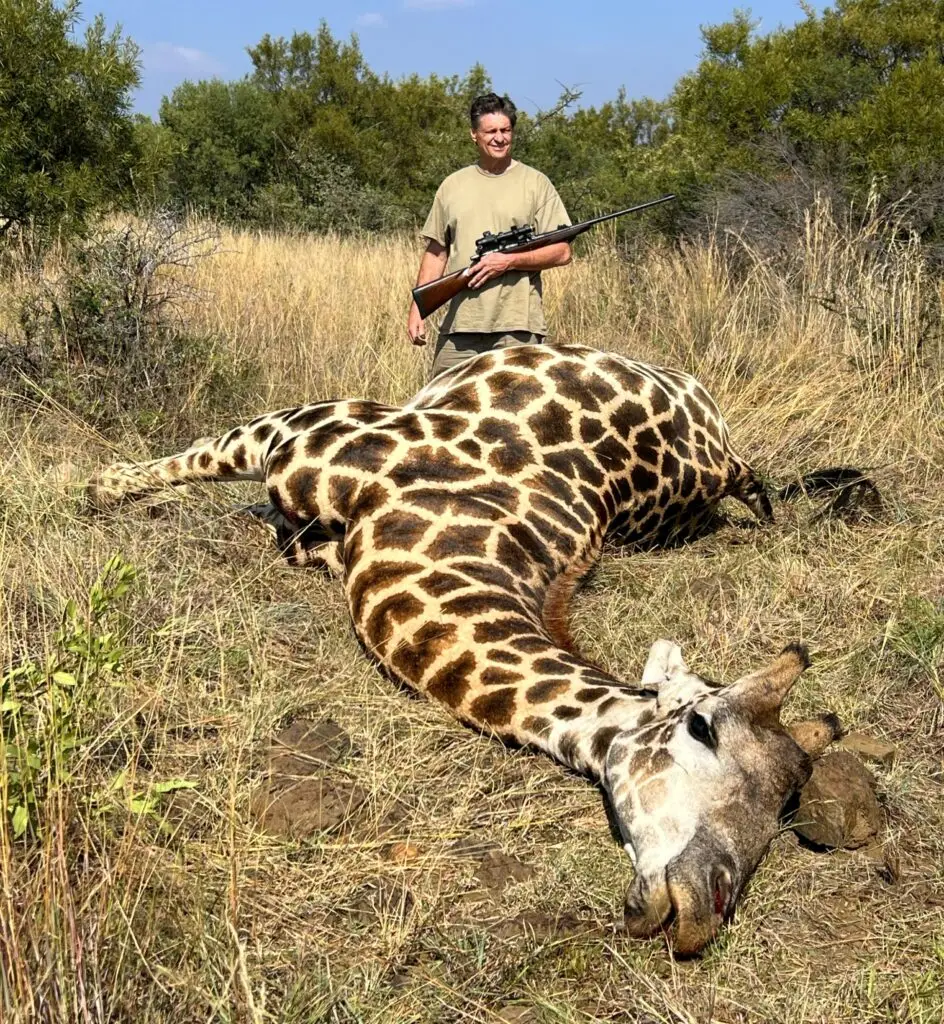

About the Giraffe
Info About the Giraffe
Giraffes are the tallest living land animals, instantly recognizable by their towering legs and long necks, these gentle giants roam the dry savannahs and open woodlands of sub-Saharan Africa. Despite their elongated appearance, their necks contain the same number of vertebrae as a human’s—just seven.
As herbivores, they spend most of their day foraging. Their height and 18-inch purplish-black tongues allow them to reach tender leaves and buds at the tops of thorny acacia trees. Because they get most of their hydration from the plants they eat, they only need to drink water every few days, making them perfectly adapted to arid environments.
Giraffes have a few other incredibly unique traits. Just like human fingerprints, the patchwork pattern on a giraffe’s coat is totally unique to each individual. Furthermore, mothers give birth while standing, meaning a newborn calf experiences a dramatic 6-foot drop to the ground before it even takes its first steps.
Description of the Giraffe
- Coat: They have a pale buff or yellowish coat covered in distinctive reddish-brown, dark, or orange-brown splotches. Similar to human fingerprints, every giraffe has a completely unique pattern. Males tend to grow darker in color as they age.
- Legs and Neck: Their legs can be up to 6 feet long, and so can their necks.
- Ossicones: Both sexes have short, skin-covered horns called ossicones on their heads. Female ossicones are slender with hair tufts, while male ossicones are thicker and usually bald on top from fighting.
Giraffe Species and Subspecies
There are 4 giraffe species and many subspecies:
- Masai Giraffe
- Northern Giraffe
- Reticulated Giraffe
- Southern Giraffe
Recommended Calibers
Use a minimum of a .30 caliber magnum rifle to hunt the giraffe. It’s best to take a head-on shot and aim for the indented “V” above the legs at the base of the neck.
Where to Hunt Giraffe
You can legally hunt giraffe on regulated game reserves and hunting concessions in three African countries:
- South Africa
- Namibia
- Zimbabwe
While giraffes are found in multiple other countries across Africa, they are classified as strictly protected species and cannot be hunted outside of these three southern nations
A few high-fence hunting preserves in Texas may offer giraffe hunts, but they are rare and hard to find.
What is Considered a Trophy Giraffe
A premier trophy giraffe is defined as a mature “Black” or “Dark” Bull, evaluated purely by subjective physical characteristics that signal advanced age and dominance. The following characteristics will define a trophy giraffe:
- Coat Color (The “Black” Bull): The primary benchmark of a trophy bull is an incredibly dark, near-black coloration of its patches. As a bull giraffe ages and dominates a herd, its spots progressively darken from light tan to a deep charcoal or midnight black.
- Bald Ossicones: Female giraffes (cows) and young males have thin ossicones topped with tufts of black hair. A trophy bull features thick, heavy ossicones that are completely bald and polished on top from years of “necking” (violent territory battles with other males).
- Massive Body Size: A true trophy bull stands from 16 to 19+ feet tall and weighs from 2,400 to 3,000+ pounds.
Cost to Hunt Giraffe
South Africa
South Africa features the highest density of private game reserves hosting giraffe populations, making it the most cost-effective region.
- All-Inclusive Packages: A 5-to-7 day all-inclusive bull giraffe package runs from $5,500 to $6,500.
- Trophy Fees: If purchased as an additional animal during a broader plains game safari, standard trophy fees range from $2,800 to $3,500. Premium “black” bulls carry a premium trophy fee in the $4,000 to $5,000 range.
Namibia
Namibia provides large-scale free-range desert environments where hunting is conducted primarily via spot-and-stalk.
- Trophy Fees: Standalone animal fees are frequently lower than in South Africa, averaging from $1,600 to $3,000 depending on the outfitter.
- Daily Rates: Daily fees for a 1-on-1 guided hunt run roughly from $350 to $450 per day to cover lodging, food, trackers, and vehicles.
Zimbabwe
- All-Inclusive Package: Combined daily rates and trophy fees typically total from $6,000 to $8,000 for a 5 to 7 day hunt.
View Our Hunts