
About the Mule Deer
Info About the Mule Deer
Native to western North America, the mule deer gets its distinctive name from its oversized, highly mobile ears, which operate like radar dishes to detect predators. Iconic to the rugged mountains and foothills of the American West, this hardy herbivore is easily recognized by its bright white rump patch and narrow, black-tipped tail.
These deer are masterful jumpers and runners, capable of clearing eight-foot fences and reaching sprinting speeds of up to 45 mph. When startled by a predator, they frequently employ a unique bounding gait called “stotting,” where they bounce away by pushing off the ground with all four hooves simultaneously. This erratic movement allows them to quickly navigate the steep, rocky terrain that defines their natural habitat.
Mule deer rely heavily on their acute sense of smell and large ears to survive alongside predators like mountain lions and coyotes. Unlike their white-tailed cousins, which prefer flat, agricultural regions, mule deer thrive in arid scrublands and high-altitude coniferous forests. During the harsher winter months, many herds undertake seasonal migrations to lower-elevation valleys where food—such as sagebrush and bitterbrush—is more accessible.
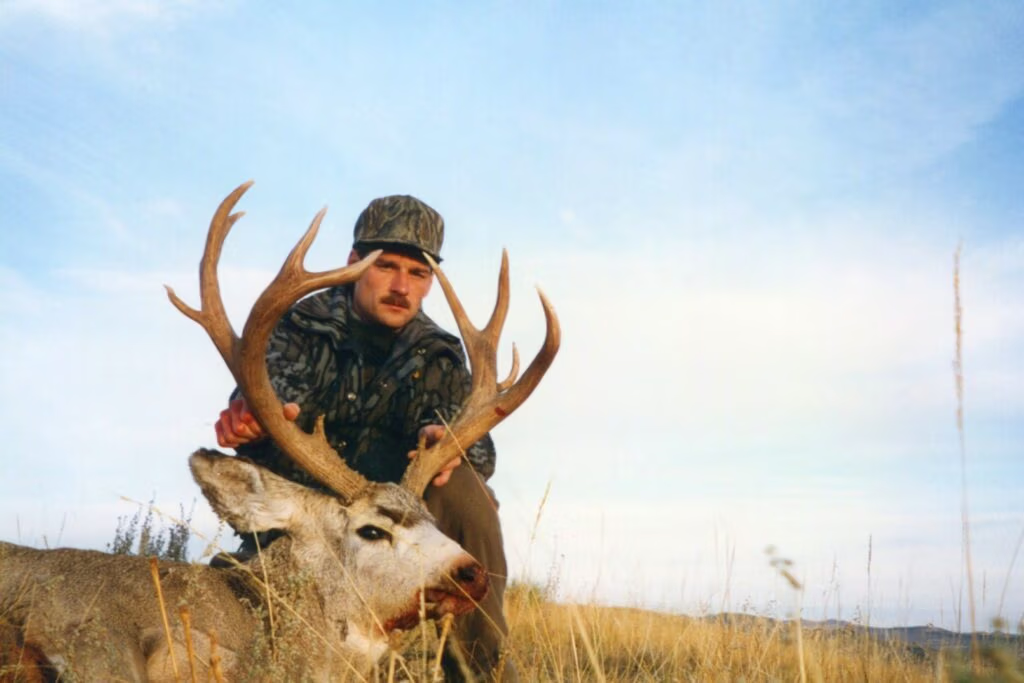
During the fall mating season—often referred to as the “rut”—bucks compete for dominance by sparring with their impressive, forked antlers. These antlers are unique because they branch into two distinct “Y” shapes as they grow. Bucks shed these antlers every winter and re-grow them in the spring, during which time the growing bone is protected by a sensitive, nutrient-rich layer of skin called velvet.
Description of the Mule Deer
The mule deer displays the following traits:
- Size and Weight: They typically stand from 36 to 42 inches tall at the shoulders and measure from 52 to 84 inches long. Adult males average from 150 to 200 pounds, though large Rocky Mountain mule deer bucks can weigh up to 300 pounds. Females are lighter, averaging from 130 to 150 pounds.
- Head and Ears: Their most iconic feature is their large, gray and white ears that measure up to 9 inches long, which they can pivot to detect sounds from afar. They also feature a dark brown or black patch on the forehead, with a gray or brownish face.
- Coloration: Their coat is brownish-gray during the winter months and shifts to a brighter reddish-brown color during the summer. They have a distinct, bright white patch surrounding the base of their tail on their rump.
- Tail: Unlike the wide, bushy tail of the white-tailed deer, the mule deer’s tail is thin, white, and rope-like, with a distinct black tip.
- Antlers: Only males grow antlers, which branch outward and upward to form two equal forks, frequently creating 4 to 5 points on each side. These antlers are shed each mid-winter and regrown the following spring covered in a protective layer of “velvet”.
Mule Deer Species / Subspecies
- Rocky Mountain Mule Deer: The most widespread subspecies, known for its large size, distinct white rump, and classic branched antlers. Found throughout the western United States, Canada, and the Great Plains.
- Desert Mule Deer: Adapted to the harsh environments of the southwestern U.S. and northern Mexico. They are generally smaller, lighter in color, and have longer ears to help regulate body heat.
- Columbian Black-tailed Deer: Native to the Pacific Northwest. They are smaller than Rocky Mountain mule deer and feature a solid brown, black-tipped tail rather than the typical white rump patch.
- Sitka Black-tailed Deer: Found in the coastal rainforests of Alaska and British Columbia. This is the smallest subspecies, uniquely equipped with a browner face and subdued rump markings.
- California Mule Deer: A medium-sized subspecies found predominantly in the chaparral and coastal regions of California.
Recommended Calibers
Use a flat-shooting rifle chambered in 6.5mm or larger caliber for mule deer.
Where to Hunt Mule Deer
Top USA States include:
- Colorado
- Wyoming
- Montana
- Utah
- Idaho
- New Mexico
- Nebraska
- Texas
Best Canadian Provinces include:
- British Columbia
- Alberta
- Saskatchewan
Top States in Mexico include:
- Sonora
- Chihuahua
- Coahuila
What is Considered a Trophy Mule Deer
A trophy mule deer will have antlers that score from 160 to 200+ inches, and have an inside spread of 24 to 30 inches.
Cost to Hunt Mule Deer
It costs between $5,000 to $15,000 to hunt mule deer with an outfitter.
View Our Hunts