
About the Bushpig
Info About the Bushpig
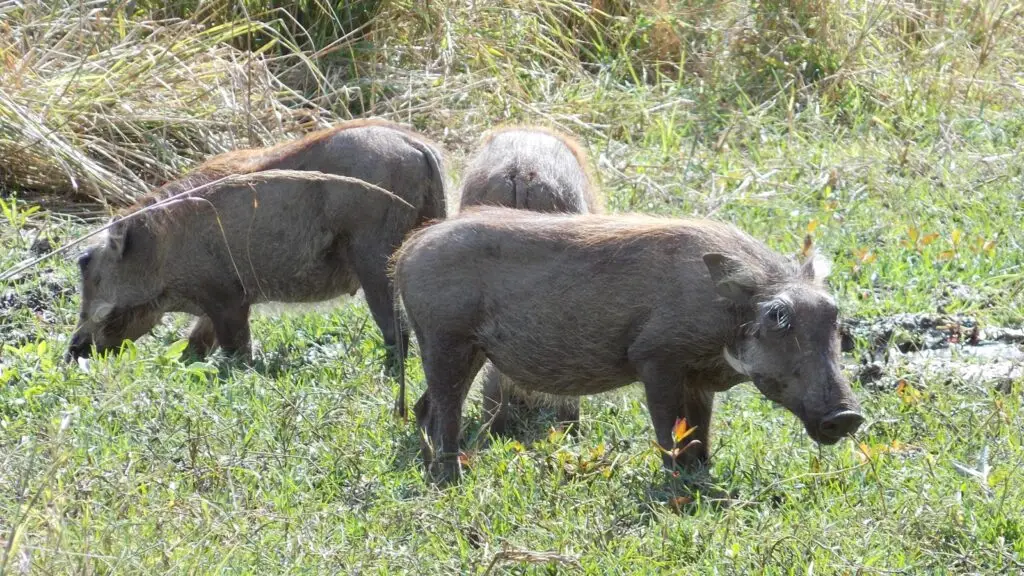
The bushpig is a robust and highly adaptable member of the wild pig family native to East and Southern Africa. Bearing a strong resemblance to domestic pigs, they are stocky animals with blunt snouts, tufted ears, and sharp, short tusks. Their coat color varies widely—ranging from reddish-brown to dark brown or even blackish. As they age, their coat typically darkens, though they usually sport a lighter-colored, bristly mane and facial markings that stand out in the brush.
These animals are primarily nocturnal, spending the daylight hours resting in dense vegetation or thick underbrush to avoid the heat and potential predators. When night falls, they emerge to forage as a group. Bushpigs are highly social creatures that live in close-knit families—known as “sounders”—which can consist of 5 to 12 individuals led by a dominant male and female. Remarkably, the females are the only animals in their sub-region known to construct massive, haystack-like nests out of grass for their young. piglets are born with distinct camouflage stripes that help them blend into the dappled light of the forest floor.
As opportunistic omnivores, bushpigs have an incredibly diverse diet that includes roots, tubers, fruit, insect larvae, bird eggs, and even carrion. They will even trail troops of monkeys, eating the fruits and peels dropped from the canopy above. However, this adventurous appetite makes them a significant nuisance for local agriculture. Bushpigs are notorious for raiding crops like maize, sugarcane, and potatoes, and they have an ill-tempered, aggressive nature—especially when defending their piglets—making them highly formidable and potentially dangerous when surprised.
Description of the Bushpig
- Size: They measure from 3.5 to 5 feet long, stand from 23 to 40 inches tall at the shoulder, and typically weigh from 110 to 330 pounds.
- Coat & Color: The coarse, bristly shaggy fur varies from light reddish-brown and russet to dark brown and near-black. The coat naturally darkens with age.
- Face & Ears: They feature a blunt, muscular cartilaginous snout and small, pointed ears capped with distinctive white or light-colored tassels. The head is usually paler than the body, often displaying a contrasting mask of dark and light grey or white markings.
- Mane: A prominent, erectile crest of longer, bristly white or light-colored hair runs along the spine from behind the ears to the base of the tail. This mane bristles when the animal is agitated.
- Tusks: Both sexes have short, extremely sharp canines. The upper tusks are barely visible, but the lower tusks are sharp and can grow up from 2 to 6.5 inches in length.
- Tail: The tail is thin and long (from 11 to 20 inches), ending in a tuft or tassel of coarse hair. Unlike the warthog, they run with their tail held down.
Bushpig Species / Subspecies
There are several subspecies of the Bushpig.
- Southern Bushpig: Native to southeastern Africa, including Angola, South Africa, and Tanzania. They tend to have darker coats and a distinct facial mask.
- White-faced Bushpig: Found in northeastern Africa, including Sudan, Eritrea, and Ethiopia.
- Malagasy Bushpig: Found in western Madagascar and the Comoro Islands (Mayotte).
- Eastern Malagasy Bushpig: Occurs in eastern Madagascar.
- Somali Bushpig: Found in parts of northeastern Kenya and Somalia.
- Edwards’ Bushpig: Another recognized Malagasy population variant.
Recommended Calibers
Use a minimum of a 6.5mm caliber rifle to hunt bushpigs.
Where to Hunt Bushpig
Bushpigs can be hunted in the following countries:
- South Africa
- Mozambique
- Zimbabwe
- Zambia
- Tanzania
- Namibia
- Uganda
They are often hunted over bait or with hounds.
What is Considered a Trophy Bushpig
A trophy bushpig is generally determined by the length of the tusks. Tusks four inches long or bigger is a very good trophy.
Cost to Hunt Bushpig
A bushpig hunt usually costs from $800 to $2,500.
View Our Hunts