
About the Nilgai
Info About the Nilgai
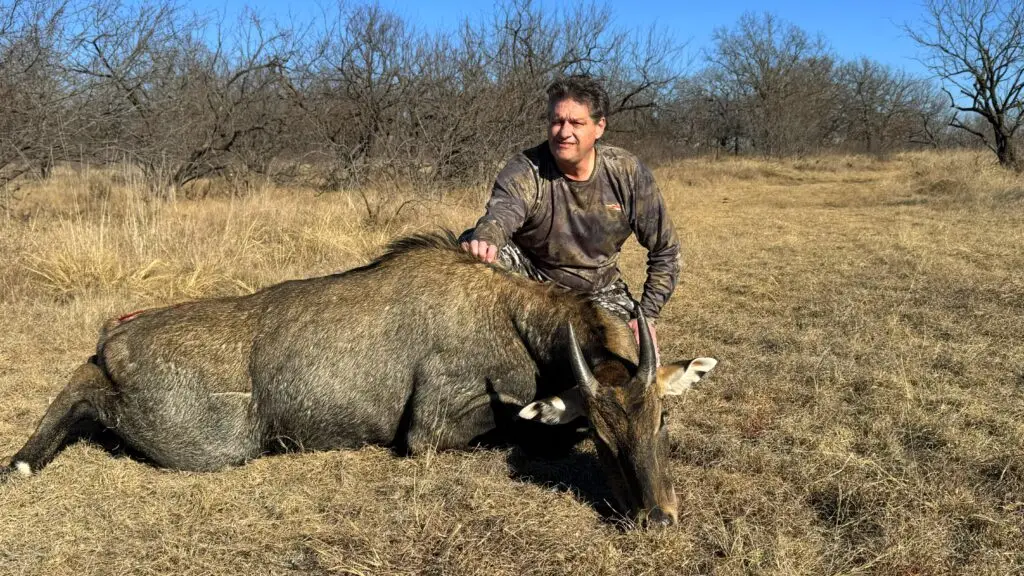
The nilgai is the largest antelope native to Asia. Its name translates from Hindi to “blue bull,” a fitting description for the mature males, which boast a striking dark grey-blue coat. In contrast, females and young nilgai feature a tawny, orange-brown color. Both sexes have distinctive, sloping backlines, thin stilt-like legs, and a prominent tuft of hair on their throat known as a “hair pennant”.
Native to the Indian subcontinent, these herbivores are highly adaptable and thrive in grasslands, scrub forests, and agricultural plains. They are diurnal and possess exceptionally keen senses of hearing, sight, and smell. While they are not overly aggressive, adult males will clash during the mating season using their thick skin for protection. Interestingly, nilgai are known for their unique habit of strategically defecating in the same communal dung piles to mark their territories.
Description of the Nilgai
Body
- White patches on the cheeks and below the lips/chin.
- A prominent broad white “bib” on the throat.
- White striping along the underbelly, widening towards the rear.
- Distinct white-and-black banding on the lower legs.
- Black-tipped long, tufted tails and black-tipped ears.
Physical Features
- Males possess thicker, muscular necks with a short, erect mane running down the back of the neck that ends in a bristly “hog-tuft” above the shoulders.
- Both sexes feature a tubular-shaped tuft of coarse, pendant hair hanging from the dewlap ridge below the white throat patch, which is longer in males.
- Only males typically grow horns. These are short, smooth, dark, and conical, measuring from 5 to 11 inches in length. They are located just behind the eyes, pointing upwards and curving slightly forward.
Recommended Calibers
Use a minimum of a 7mm caliber rifle to hunt nilgai.
Where to Hunt Nilgai
Nilgai can be hunted free-range in Texas. High-fence hunts are conducted in Texas and Oklahoma.
What is Considered a Trophy Nilgai
A trophy nilgai will have horns 8 inches or longer in length.
Cost to Hunt Nilgai
It costs from $3,000 to $6,500 to hunt nilgai depending on the ranch and whether or not they are free-range or high-fence.
View Our Hunts