
About the Polar Bear
Info About the Polar Bear
Polar bears are the largest land-based carnivores on Earth and true marine mammals, spending most of their lives on Arctic sea ice. Adult males can weigh up to 1,600 pounds, while their bodies are perfectly adapted to the harsh environment with a thick insulating layer of fat and a water-repellent coat. Interestingly, their fur is actually transparent—appearing white only from scattered light—while their skin is pitch-black to absorb solar heat.
As the apex predators of the Arctic, polar bears survive almost exclusively on a diet of ringed and bearded seals. They are patient hunters, often using their incredible sense of smell—which can detect a seal from nearly a mile away—to ambush prey at breathing holes or ice edges. Because they consume the fat-rich blubber first, they can go weeks between successful hunts while securing the essential calories needed for the harsh winters. They are also formidable swimmers, able to paddle for hours between ice floes using their large front paws as rudders.
Description of the Polar Bear
Key Physical Attributes
- Coat: The fur i0 s composed of clear, hollow guard hairs that lack white pigment; they scatter sunlight to create the illusion of a white coat, which provides excellent camouflage in the Arctic.
- Skin: The skin is jet-black to absorb heat from the weak Arctic sun and maximize thermal retention.
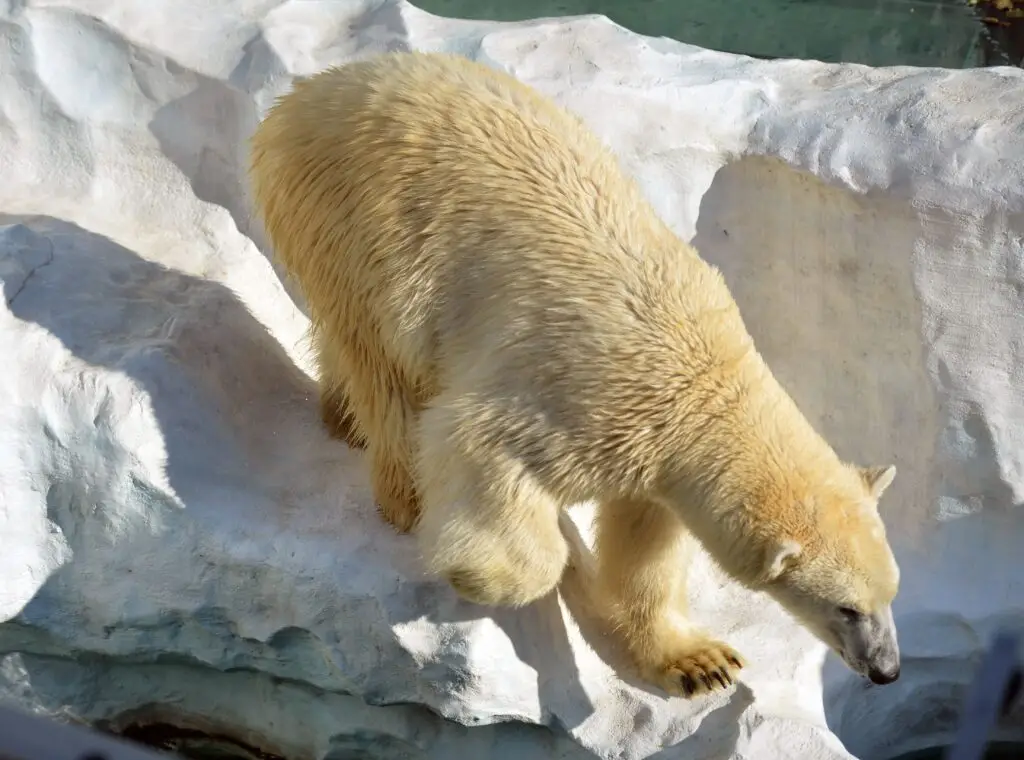
- Body Structure: Unlike brown bears, polar bears lack a shoulder hump. They have a long, torpedo-shaped body with an elongated neck that makes them highly aerodynamic in the water.
- Head: They possess a relatively narrow, elongated head compared to other bear species, with a Roman-nosed snout, dark brown eyes, and small, rounded ears that conserve body heat. They have 42 teeth specialized for a strictly carnivorous diet.
- Paws: Their paws are enormous—up to the size of a dinner plate—and act as natural snowshoes. They feature hairy soles, small dermal bumps for traction on the ice, and non-retractable, sharp claws up to 2.7 inches long.
- Insulation: Beneath the skin lies a thick layer of blubber up to 4 inches deep to insulate against freezing Arctic temperatures
Recommended Calibers
Use a .375 or larger caliber rifle to hunt polar bears.
Where to Hunt Polar Bear
Legal Hunting Regions in Canada
- Nunavut: Overwhelmingly hosts the majority of regulated polar bear hunts. Popular starting hamlets include Arctic Bay, Grise Fiord, and Resolute Bay.
- Northwest Territories: Offers limited tags across specific Arctic coastal villages partnering with specialized outfitting agencies.
Strict Legal and Cultural Regulations
- Inuit-Led Expeditions: You cannot hunt independently. By law, all non-resident hunters must hire a local Inuit guide.
- Traditional Transportation: For the actual tracking and hunting on the sea ice, teams must travel exclusively via traditional dog teams and sleds (qamutik), not snowmobiles.
- Community Benefits: The harvest quota is pulled from the community’s subsistence pool. While the sport hunter retains the hide and skull as a trophy, 100% of the edible meat must remain with the local Inuit village.
- Import Limitations: If you are a citizen of the United States, the Marine Mammal Protection Act completely bans the import of polar bear trophies into the U.S., meaning any harvested item must be stored internationally.
Status in Other Arctic Nations
- United States (Alaska): Strictly illegal for sport or non-residents. Only coastal Alaska Native peoples can harvest polar bears exclusively for subsistence food and authentic handicraft creation.
- Russia: Fully prohibited since 1956. No sport or commercial take is allowed anywhere on Russian territory.
- Norway (Svalbard): Polar bears have been fully protected against all forms of hunting since 1973.
- Greenland: Restricts hunting exclusively to licensed local subsistence hunters and bans the international export of any polar bear skins.