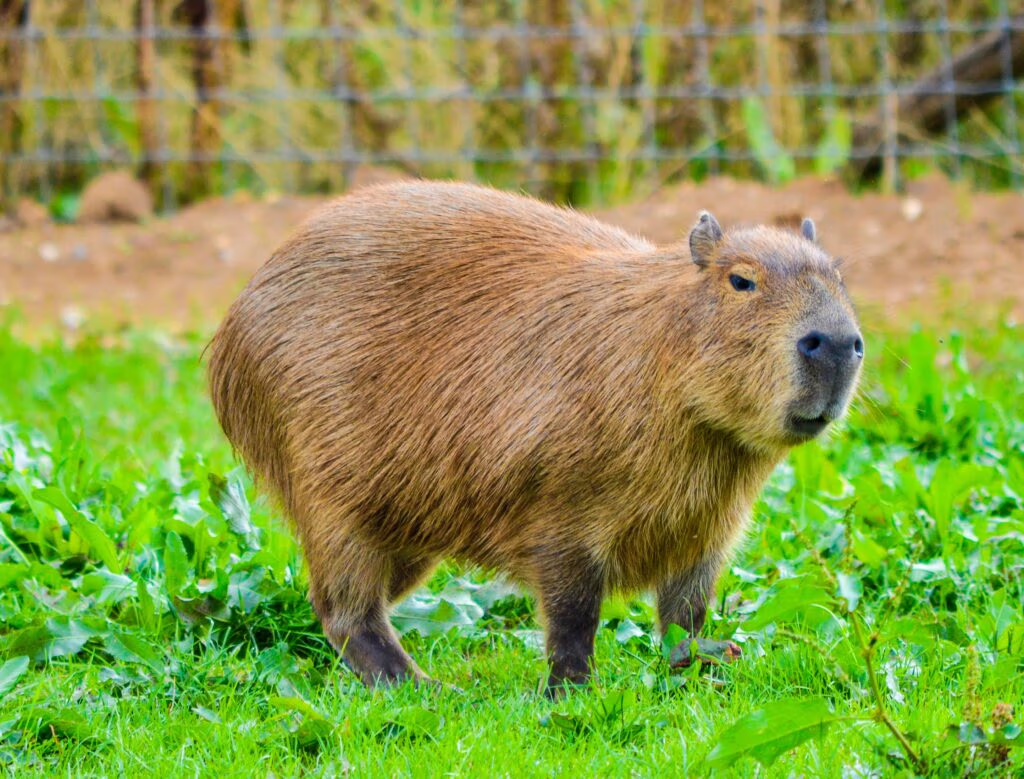

About the Capybara
Info About the Capybara
The capybara is the world’s largest living rodent, native to the tropical savannas, dense forests, and wetlands of South America. Weighing anywhere from 60 to 174 pounds and measuring up to 4 feet in length, these impressive herbivores are distant cousins to the common guinea pig. Their scientific name, which translates from Greek to “water hog,” perfectly describes their semi-aquatic lifestyle, complete with partially webbed feet and eyes positioned high on their heads to easily watch out for predators.
Capybaras are highly social creatures that live in close-knit herds, which typically range from 10 to 40 members, though groups can swell to over a hundred during the dry season. They are well-known for their incredibly calm, docile temperaments and symbiotic relationships with other animals. It is common to see birds perched on a capybara’s back, catching a free ride while grooming the giant rodent for ticks and insects. This easygoing nature has earned the capybara the affectionate nickname of “nature’s ottoman” or “moving chair” in the animal kingdom.
As herbivores, they spend a large portion of their day grazing on fresh grasses and aquatic plants, consuming up to 8 pounds of vegetation daily. Because tough, fibrous grasses can be difficult to digest, they practice coprophagy—eating their own protein-rich feces in the morning to essentially digest their food twice and extract maximum nutrients. Their front incisors never stop growing, requiring constant gnawing to keep their teeth at a manageable length. When not grazing on land, they retreat to the water to stay cool or hide from natural predators like jaguars, anacondas, and caimans, easily holding their breath for up to five minutes at a time.
Description of the Capybara
- Elevated features: Their eyes, ears, and nose are positioned high on their heads so they can see, hear, and breathe while the rest of their body is submerged.
- Tail-less: They do not have a tail.
- Rodent teeth: They have prominent, continuously-growing front incisors, much like a beaver or standard house pet guinea pig.
Capybara Species / Subspecies
The two living species include:
- Greater Capybara: This is the familiar, widely recognized species. They are the world’s largest rodents, weighing from 60 to 174 pounds. They live across a vast range of South American wetlands, swamps, and flooded grasslands.
- Lesser Capybara: Once classified as a subspecies, it was elevated to its own distinct species. They are smaller—weighing around 62 pounds, and have a more restricted range, primarily inhabiting Panama, western Colombia, and northwestern Venezuela.
Recommended Calibers
If using a firearm, a shotgun or small caliber rifle will work fine.
Where to Hunt Capybara
Argentina has limited free range capybara hunting.
Texas offers hunts on high fence exotic ranches.
What is Considered a Trophy Capybara
Any adult capybara is a trophy animal.
Cost to Hunt Capybara
The trophy fee to hunt the capybara is from $3,500 to $4,000 at a Texas hunting preserve.
View Our Hunts