
About the Moose
Info About the Moose
The moose is the largest and heaviest living member of the deer family. Often referred to as “elk” in Europe and Asia, these magnificent woodland giants thrive in the cold, dense boreal forests and subalpine zones across North America, Scandinavia, and Russia. In North America alone, there are four recognized subspecies ranging from the massive Alaskan moose to the smaller Shiras moose of the Rocky Mountains.
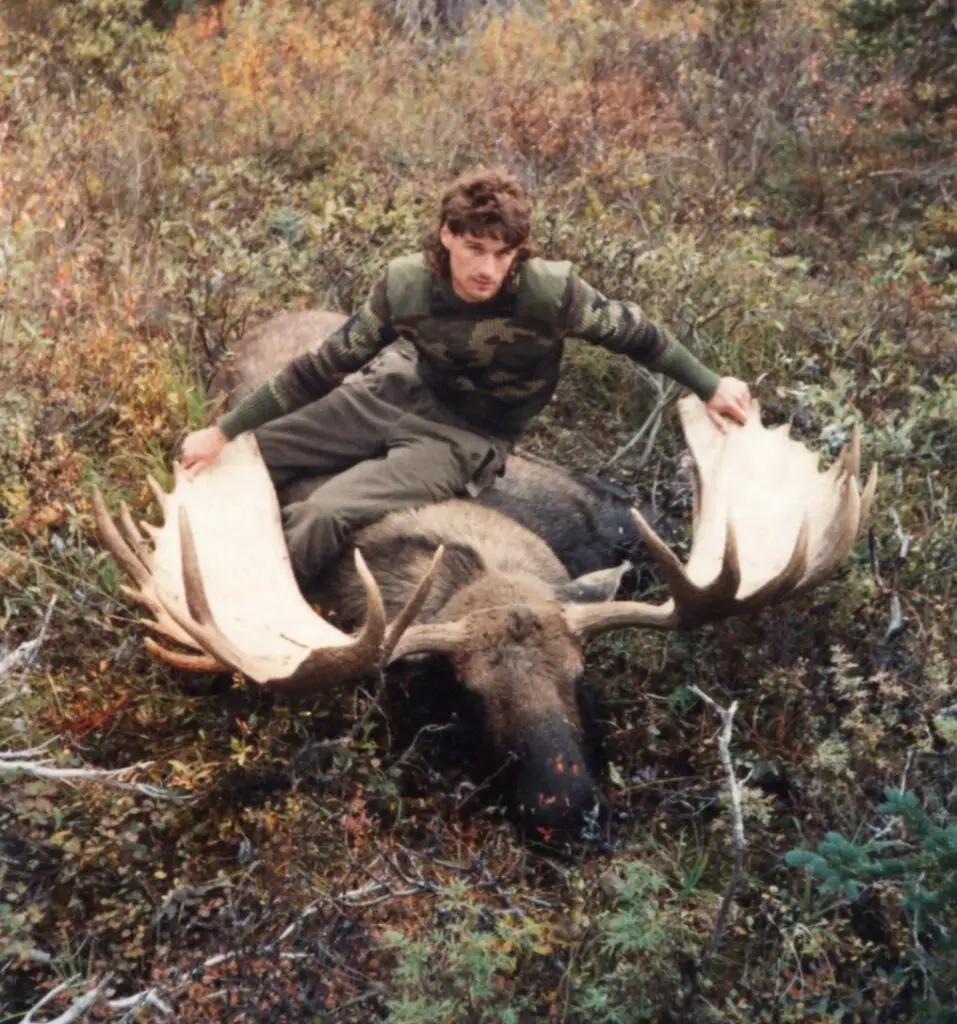
Physically, moose are perfectly adapted to harsh, snowy environments. Adult males, or “bulls,” can stand over 6 feet tall at the shoulder and regularly weigh anywhere from 800 to over 1600 pounds. They feature a dark, thick coat of hollow hair that provides exceptional insulation, long spindly legs that allow them to navigate deep snow, and a distinctive flap of skin called a “bell” hanging beneath their throat. Bull moose are also instantly recognizable by their massive, palmate antlers—which resemble open hands—that can spread an impressive six feet from tip to tip. They shed these antlers every winter and regrow them in the spring to compete for mates during the autumn breeding season.
Despite their imposing size, moose are strictly herbivores and are remarkably nimble. The name “moose” is derived from the Algonquin language, meaning “eater of twigs,” which perfectly describes their winter diet of willow, birch, and aspen. During the warmer summer months, they can consume up to 70 pounds of vegetation a day, often wading into lakes and rivers to snack on sodium-rich aquatic plants. They are also surprisingly athletic; they are powerful swimmers capable of diving up to 20 feet underwater, and can run at speeds of up to 35 miles per hour on land.
Description of the Moose
- Size & Weight: Adult males (bulls) weigh from 800 to 1,600 pounds, while adult females (cows) are 25 to 30% smaller, weighing from 600 to 800 pounds.
- Antlers: Only males grow antlers, which they shed and regrow annually. They are the largest antlers of any mammal, spanning up to 6 feet wide and featuring a broad, flat, “palmate” (open-hand shaped) structure.
- Coat & Fur: Their fur ranges from light to dark brown and nearly black, lightening to grayish-white on their lower legs and belly. Individual hairs are hollow, trapping air to provide exceptional insulation against freezing, subarctic climates.
- Distinct Facial Features: Moose have elongated, angular heads with a bulbous, flexible muzzle and overhanging upper lip used for stripping leaves and bark. Bulls and cows differ in color: bulls have darker, blackish faces, while cows tend to have lighter, brown faces and a distinct white patch of fur under their tail.
- The “Bell”: Both sexes possess a “bell,” which is a pendulous flap of skin covered with long hair hanging from the throat that can grow up to 12 inches.
- Legs & Hooves: They have long, slender but muscular legs that allow them to traverse deep snow and wade through marshes. Their large, splayed hooves function much like snowshoes to prevent them from sinking.
- Shoulder Hump: They feature a noticeable muscle hump over their shoulders, similar to that of a bison.
Moose Species / Subspecies
North American Subspecies
- Alaska-Yukon Moose: Found in Alaska and the western Yukon, this is the largest of all moose. Bulls can weigh up to 1,600 pounds and stand nearly 7 feet tall at the shoulders, with antler spreads that can exceed 6 feet.
- Western Canada Moose: The second-largest subspecies. They inhabit a wide range extending from British Columbia and Alberta into the northern Midwest of the United States, including Michigan and Minnesota.
- Eastern Moose: Ranging throughout eastern Canada and the northeastern United States, these are the third-largest subspecies.
- Shiras Moose: Also known as the Yellowstone or Wyoming moose, this is the smallest subspecies. They are found in the Rocky Mountains—including parts of Utah, Colorado, Idaho, and Wyoming—and rarely weigh more than 1,200 pounds.
Eurasian Subspecies
- European Moose: Widespread across northern and eastern Europe, and into western Russia.
- Yakutia Moose: Found primarily in the Mid-Siberian and Lena River regions.
- Ussuri Moose: Inhabits the far eastern regions of Russia, including the Amur and Ussuri river basins, and overlaps into parts of Manchuria.
- Kamchatka Moose: Found on the Kamchatka Peninsula in far-eastern Russia, these are comparable in massive size to Alaska-Yukon moose.
Recommended Calibers
We recommend a 7mm or larger caliber for rifle hunting moose.
Where to Hunt Moose
Moose are hunted in Alaska, northern USA states (Maine, Minnesota, Wyoming, Idaho, Montana. etc.), Canada, and Russia.