
About the Black Wildebeest
Info About the Black Wildebeest
The black wildebeest, also known as the white-tailed gnu, is a uniquely adapted antelope native to the open plains and grasslands of southern Africa. Once pushed to the edge of extinction due to overhunting in the 19th century, conservative efforts have successfully restored stable populations of this fascinating bovid.
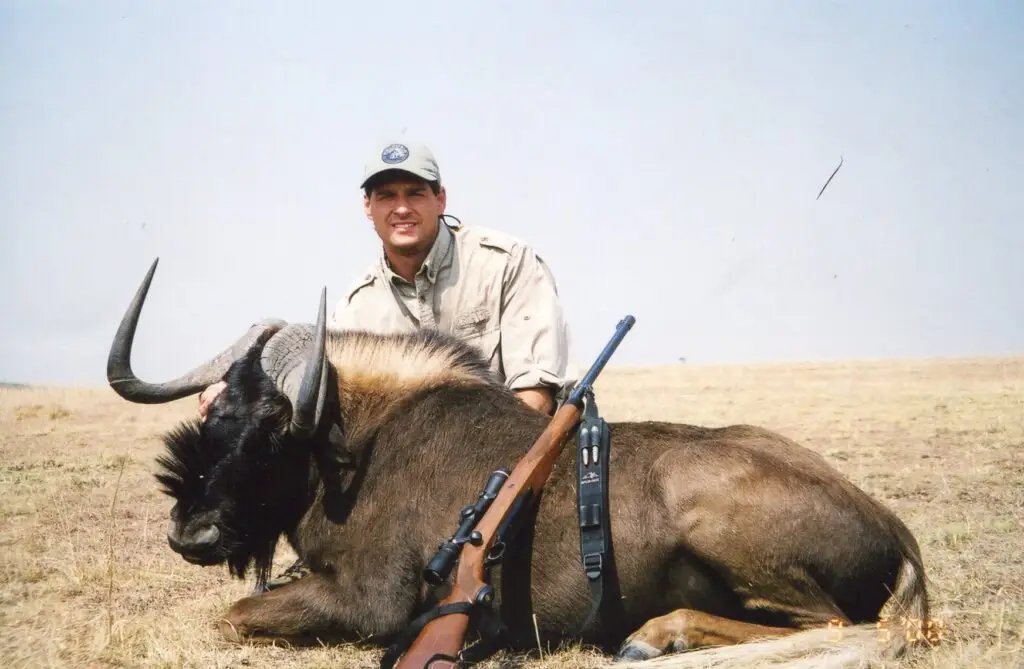
Physically, the black wildebeest is distinctly smaller and more slender than its larger cousin, the blue wildebeest. Mature animals weigh from 240 to 400 pounds, and stand just over 36 inches tall at the shoulders. They are easily identified by their shaggy, dark-brown to black coats, prominent erect manes with cream-and-black tips, and a long, flowing, white tail resembling that of a horse. Both sexes possess formidable horns that curve forward and upward like hooks, though the males have slightly broader and heavier horn bases.
Behaviorally, these herbivores are highly energetic, capable of sprinting speeds up to 50 mph. Unlike the blue wildebeest, which is famous for its massive migratory herds, the black wildebeest is non-migratory and highly territorial. Mature bulls establish and aggressively defend small, localized territories. They use visual displays and vocalizations—such as their distinct “gnu” sound when alarmed—to communicate with nearby herds and ward off rivals.
Recommended Calibers
Any cartridge from the 6.5 mm on up will work on the black wildebeest.
Where to Hunt Black Wildebeest
Hunts for the black wildebeest are found in South Africa, Namibia, Botswana, and exotic game preserves in Texas.
South Africa
- This is the native, premier destination for hunting black wildebeest.
- The Regions: They are primarily hunted in the open plains, karoo shrublands, and hills of the Free State and Eastern Cape provinces.
- Interesting Tip: Because South African law requires blue and black wildebeest to be kept physically separate to prevent hybridization, you will rarely find them on the same properties as blue wildebeest which are found in northern provinces like Limpopo.
- Hunting Style: Hunts are traditionally conducted via spot-and-stalk. Because they live in wide-open country and run in erratic patterns when alarmed, you will spend considerable time glassing from vehicles or ridges before planning an approach on foot.
Namibia and Botswana
- Thriving populations have been successfully introduced to private hunting concessions and game farms across both countries.
- They offer an identical open-country spot-and-stalk safari experience as South Africa.
Texas
- If you want to hunt a black wildebeest without the international travel or passport requirements, several premium exotic game ranches in the Texas Hill Country manage free-ranging herds.
- Classified as exotic livestock, they can be hunted year-round with no closed season.
What is Considered a Trophy Black Wildebeest
Cost to Hunt Black Wildebeest
The cost to hunt the black wildebeest will vary greatly by where you hunt them.
Africa
- You would book your black wildebeest hunt as an all-inclusive African safari. This includes lodging, meals, and a 5-to-7 day plains game package including 3-4 animals. The cost can range from $3,000 to $5,000+ depending on the other animals included in the package and where you are hunting them.
- The standalone trophy fees usually run from $850 to $1,300 if you add-on the black wildebeest to an existing African safari.
Texas
- Texas hunts typically start around $9,500+ for a 3-day hunting package.
View Our Hunts