
About the Turkey
Info About the Turkey
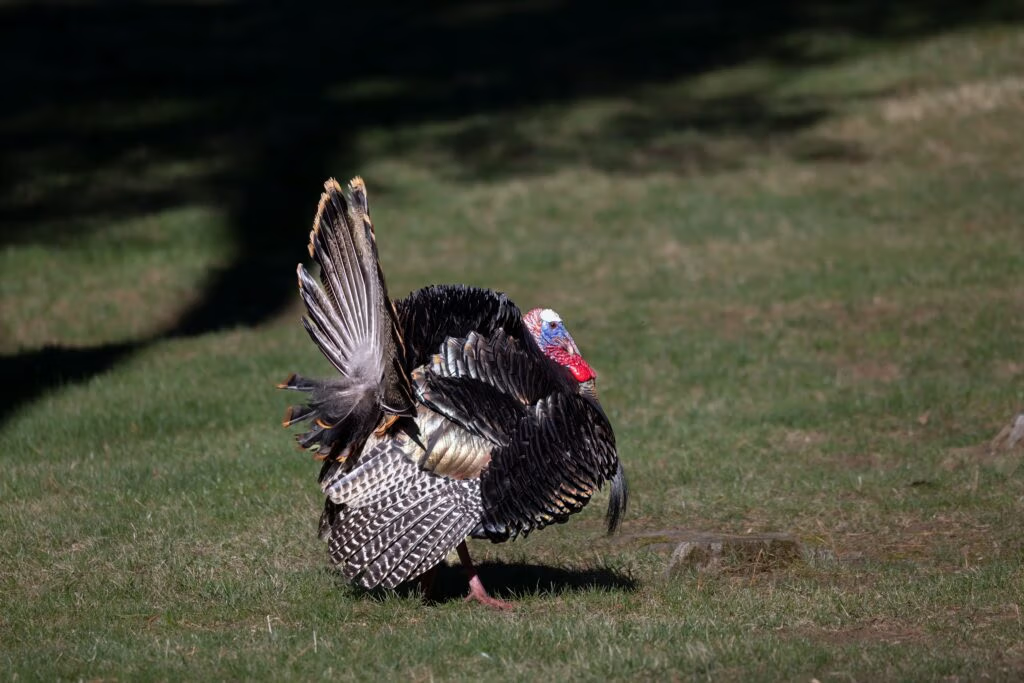
The wild turkey is a large, iconic North American gamebird known for its unique appearance, remarkable speed, and rich cultural history. Belonging to the pheasant family, these birds are easily recognized by their featherless, color-changing heads, large fan-shaped tails, and distinctive vocalizations. While male turkeys (toms or gobblers) are famous for their loud calls, elaborate strutting displays, and chest “beards,” females (hens) are smaller and designed for camouflage while tending to their ground nests. Contrary to popular myth, wild turkeys are highly agile; they can run up to 25 miles per hour and fly in short, powerful bursts at speeds reaching 55 miles per hour before safely roosting in trees at night.
Description of the Turkey
Male Turkeys (Gobblers or Toms)
- Size: Weigh from 11 to 24 pounds and measure up to 4 feet in height.
- Plumage: Dark brown bodies with a striking, iridescent sheen that reflects copper, bronze, red, and green in the sunlight. Their flight feathers are black and white.
- Head & Neck: Bare, featherless heads that change color depending on their mood. They are typically red, blue, or white, with bright red wattles (fleshy lobes under the chin/throat) and a snood (a fleshy projection hanging over the beak).
- Distinct Features: They have a “beard”—a cluster of coarse, hair-like feathers protruding from the chest. Males also have sharp, bony spurs on the backs of their legs used for fighting.
Female Turkeys (Hens)
- Size: Smaller and lighter than males, weighing from 8 to 12 pounds and standing about 3 feet tall.
- Plumage: Duller and more muted than males. Their body feathers are buff-tipped, giving them a more brownish, camouflaged appearance.
- Head & Neck: Heads are typically grayish in color with some fine feathers on the neck.
- Distinct Features: Hens rarely have beards (though about 10% do) and do not have spurs on their legs.
Physical Adaptations
- Wings: Short and rounded. While they rarely fly for long distances, they can run up to 20 mph and fly short bursts up to 55 mph to escape predators.
- Vision: Turkeys have exceptional 360-degree vision and can see in full color.
Turkey Species / Subspecies
There are only two species of turkey in the world: the Wild Turkey and the Ocellated Turkey. The Wild Turkey is further divided into five distinct subspecies commonly found in North America.
Wild Turkey
The most common and widespread species, consisting of five recognized subspecies in the United States and Mexico:
Eastern Wild Turkey
- Range: The most abundant subspecies, found in 38 states east of the Mississippi River and into parts of Canada.
- Characteristics: The largest subspecies. Males weigh 18 to 30 pounds, and they have chestnut-brown tail feather tips and the loudest gobbles.
Rio Grande Wild Turkey
- Range: The arid plains of Texas, Oklahoma, Kansas, and parts of northern Mexico.
- Characteristics: Slightly smaller than the Eastern, with males weighing 16 to 21 pounds. Their tails and lower back feathers typically end in buff or whitish tips.
Merriam’s Wild Turkey
- Range: The mountainous regions of the Western United States, including the Rocky Mountains, Black Hills, and New Mexico.
- Characteristics: Known for distinctive whitish tail tips and a white/pale patch on the lower back/rump. Toms regularly weigh over 26 pounds.
Osceola (Florida) Wild Turkey
- Range: Found exclusively on the Florida peninsula.
- Characteristics: Smaller and darker than the Eastern subspecies. They have mostly black wing feathers with very narrow white bands and dark-brown tail feathers.
Gould’s Wild Turkey
- Range: Found primarily in the mountainous regions of northern Mexico, with smaller populations stretching into southern Arizona and New Mexico.
- Characteristics: One of the largest subspecies (up to 25 pounds), known for having longer legs and the largest tail feathers of the North American wild turkeys.
Ocellated Turkey
- Range: Inhabits the dense jungles of the Yucatán Peninsula in Mexico, as well as parts of Belize and Guatemala.
- Characteristics: Smaller and far more colorful than wild turkeys. Their bodies feature iridescent bronze and green feathers, and their tails have striking blue-and-bronze “eyespots” (similar to a peacock). They also lack the fleshy beard seen on North American wild turkeys.
Recommended Calibers
Most wild turkey hunting is done by using a shotgun loaded with larger pellets (3, 4, 5 shot) than most other bird hunting.
Where to Hunt Turkey
Ideal Habitat & Locations
- Wooded Edges: Set up where forests meet alfalfa, pasture, or picked grain fields. Turkeys use the woods for safety and the fields for feeding.
- River and Creek Bottoms: River drainages provide excellent wooded corridors where turkeys thrive.
- Roosting Sites: Turkeys spend the nights in tall, broad-branched trees. Setting up within 100 yards of a known roosting site can be highly productive at first light.
- Strutting Zones: Open fields or ridge tops where toms display and strut to attract hens during the spring mating season.
Top States by Subspecies
- Eastern: Known as the largest and most wary subspecies. Top states include Missouri, Kentucky, Tennessee, and Wisconsin.
- Rio Grande: Found in arid, desert climates and river drainages. Target states include Texas, Kansas, and Oklahoma.
- Merriam’s: Found in western, mountainous states. Montana and New Mexico offer excellent public land opportunities.
- Osceola: Found exclusively in Florida.
- Gould’s: Found in the mountains of Arizona and New Mexico
What is Considered a Trophy Turkey
A trophy turkey is usually determined by a combination of its’ weight, beard length, and spur length. A beard length of 10 inches or longer is consider a good mature turkey.
Cost to Hunt Turkey
Though most turkey hunting is done in a do-it-yourself fashion, many people go on guided turkey hunts each year. A guided turkey hunt usually costs from $500 to $2,500. However, a more exotic species such as the Gould’s or Ocellated can cost from $5,000 to $8,000 to hunt.
View Our Hunts