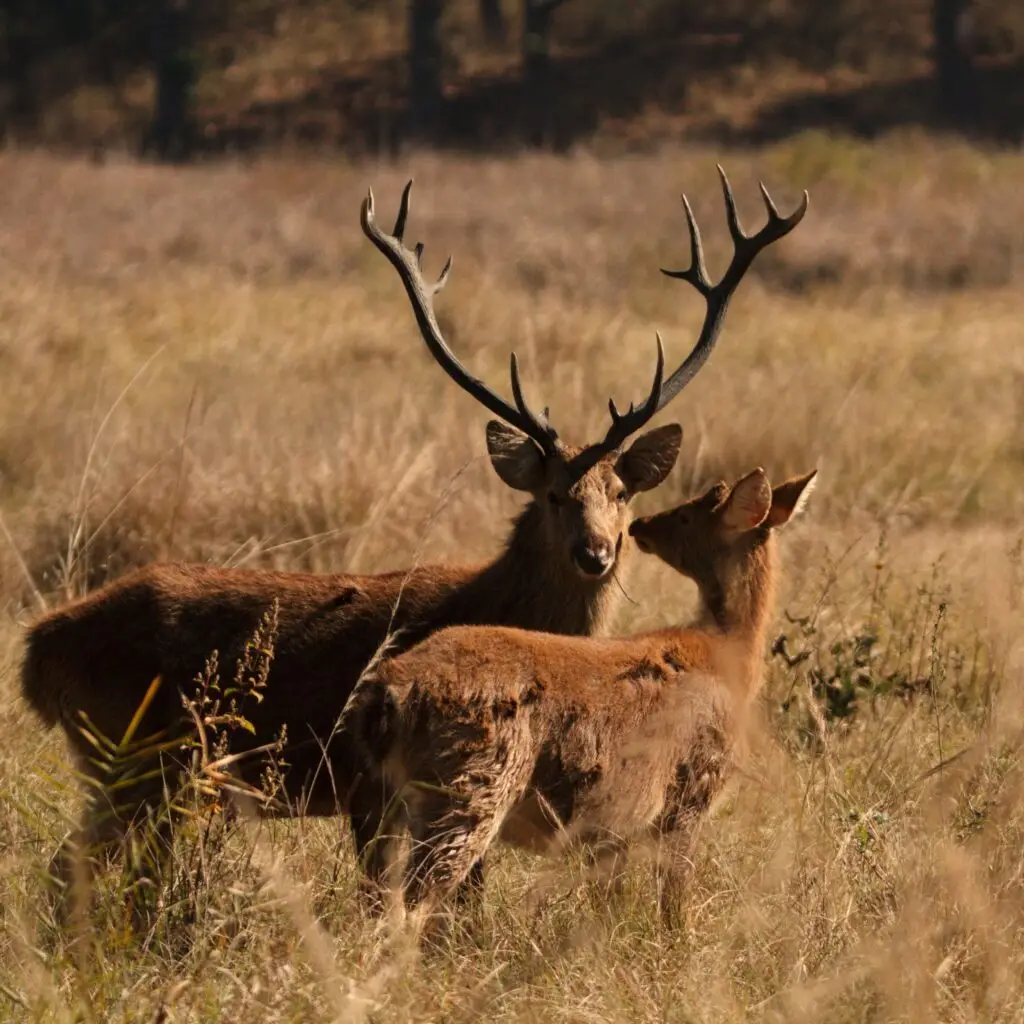

About the Barasingha Deer
Info About the Barasingha Deer
The barasingha, commonly known as the swamp deer, is a large, graceful deer native to the Indian subcontinent. Its name derives from the Hindi and Urdu words bāra (meaning “twelve”) and singha (meaning “horn” or “antler”), perfectly describing the male’s impressive antlers, which typically boast 10 to 14 tines and sometimes as many as 20.
Barasinghas are uniquely adapted to life in marshy grasslands, floodplains, and open forests. They possess specially splayed hooves that allow them to navigate soft, muddy wetlands with ease. These herbivores spend their days grazing on tall grasses and aquatic plants, and they are one of the few deer species known to be active during both the day and night. They are highly social creatures that congregate in herds, though males and females typically form separate groups except during the breeding, or rutting, season.
Historically, swamp deer roamed widely across India, Nepal, Bangladesh, and Pakistan. However, unregulated hunting and the conversion of vast wetlands into croplands caused their numbers to plummet. This pushed them to the brink of extinction and forced them to be listed as a vulnerable species. Today, their survival is widely considered a major conservation success story. Thanks to strict protections, habitat restoration, and initiatives in refuges in India, barasingha populations have rebounded significantly. This has ensured that these majestic “twelve-horned” animals will continue to thrive.
Description of the Barasingha Deer
Body
- Height: Stand approximately from 45 to 53 inches at the shoulders.
- Weight: Adult males range from 375 to 440 pounds, while females are generally smaller, weighing from 300 to 320 pounds.
- Coat Color: The coat is typically a bright chestnut or orange-brown that fades to a lighter brown on the sides and underbelly. The chin, throat, inner ears, inner legs, and underside of the tail are a stark, creamy white. Males tend to have darker, almost black coats.
- Seasonal Changes: During the winter, the coat transitions to a dull, dark grayish-brown. Fawns are born with spotted coats that gradually fade into a solid adult color by the time they reach one year of age.
Distinctive Features
- The Antlers: The most defining trait of the barasingha is its magnificent antlers, which are unique among Indian deer because they carry more than three tines (points). The Hindi name “barasingha” literally translates to “twelve-horned”. Mature males usually sport 10 to 14 tines, but some impressive specimens can have up to 20. The antlers sweep upward and can grow up to 39 inches in length.
- Swamp Adaptations: Their elongated legs and specially adapted hooves allow them to thrive in water-logged, marshy floodplains and reed beds.
Barasingha Species / Subspecies
The three subspecies are:
- Western Swamp Deer: The nominate subspecies, characterized by large, splayed hooves adapted for the flooded grasslands and wetlands of the Indo-Gangetic Plain. They are most abundant in reserves across northern India and southwestern Nepal (such as Dudhwa National Park and Shuklaphanta).
- Hard-ground Swamp Deer: This unique subspecies has adapted to solid, dry ground and open forests rather than swamps. It is native only to the central Indian plains and is primarily concentrated in Madhya Pradesh’s Kanha Tiger Reserve.
- Eastern Swamp Deer: Found primarily in the tall, swampy grasslands of northeastern India (such as Assam’s Kaziranga National Park).
Recommended Calibers
Use a minimum of a 6.5mm caliber rifle to hunt barasingha deer.
Where to Hunt Barasingha Deer
Barasingha deer can only be hunted on high fenced hunting preserves in Texas. Private breeding programs established on Texas estates have successfully saved the species from the brink of extinction, providing the only legal avenue for hunters to pursue them. You can legally hunt them year-round, though most outfitters recommend scheduling trips between June and December when the stags are hard-antlered.
What is Considered a Trophy Barasingha Deer
The specific criteria that define a top-tier Barasingha trophy include:
- Antler Points: A great trophy should possess at least 10 to 14 well-defined tines. The most exceptional trophies can have up to 20 points.
- Antler Characteristics: Hunters look for long, heavy main beams that sweep backward. The Barasingha trophy will have the cluster or “crown” of points at the tips of the antlers, combined with long, prominent brow tines.
- Symmetry and Mass: A highly symmetrical rack with excellent mass throughout the beams indicates peak maturity and genetics.
Cost to Hunt Barasingha Deer
Expect to pay from $7,500 to $10,000+ to hunt barasingha deer.
View Our Hunts