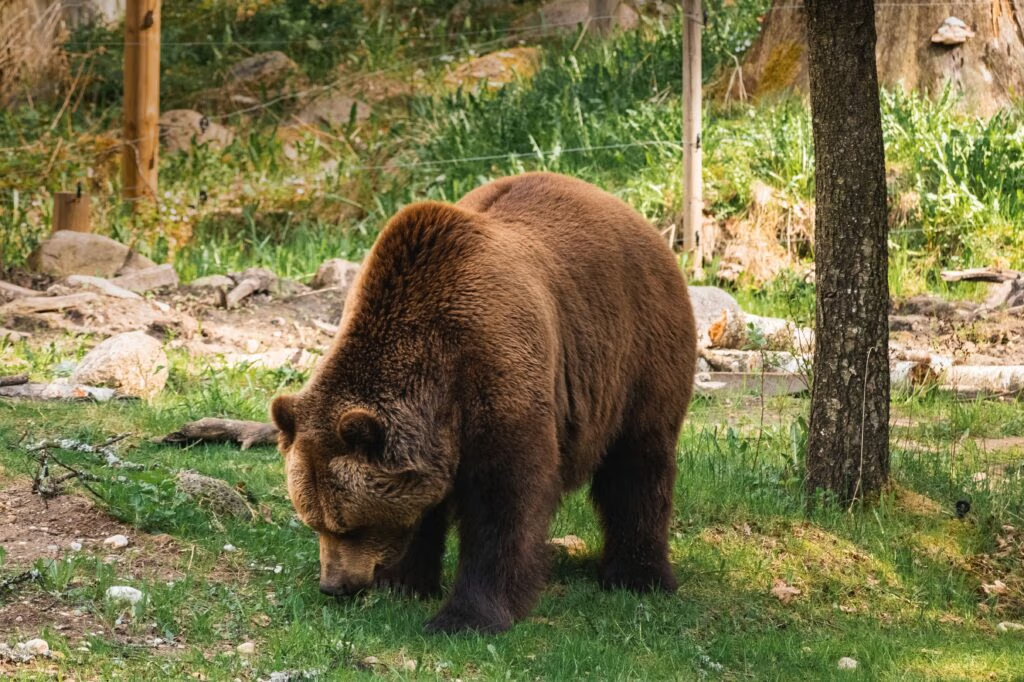

About the Brown Bear
Info About the Brown Bear
The brown bear is one of the world’s largest living land carnivores, distinguished by a prominent muscular shoulder hump, a dished facial profile, and long, curved claws. Though their fur color can range from pale blonde to almost black, their sheer size and adaptability make them iconic apex predators across North America, Europe, and Asia.
Despite their bulky frame, brown bears are surprisingly athletic, capable of reaching short-distance running speeds of up to 30 mph. Their bodies are perfectly adapted for varied diets and environments. While they possess large canine teeth and claws for digging or hunting, roughly 80% of their diet actually consists of vegetation, including roots, grasses, and berries. In coastal regions, they famously congregate to feast on spawning salmon, a protein-rich diet that allows certain subspecies—like the massive Kodiak bear—to reach weights upwards of 1,500 pounds.
To survive harsh, food-scarce winters, brown bear populations in colder climates enter a deep sleep known as hibernation. During the autumn, they can consume up to 90 pounds of food a day to build massive fat reserves. Throughout the winter, they retreat to self-dug or rocky dens. It is inside these dens that females give birth to tiny, vulnerable cubs, which will then stay by their mother’s side for up to three years to learn how to forage and survive.
Description of the Brown Bear
Size and Dimensions:
- Weight: from 300 to 1500 pounds.
- Head-Body Length: from 4.6 to over 10 feet.
- Shoulder Height: 5 feet tall. When standing on hind legs, they can reach up to 10 feet tall.
- Tail Length: from 2 to 8 inches.
Coat and Color:
- Fur is long, thick, and typically ranges in color from pale cream or blonde, to various shades of brown and near black.
- The longer outer guard hairs are often tipped with white or silver, which gives the coat a “grizzled” or silver-tipped appearance (hence the name “grizzly”).
Distinct Features:
- Shoulder Hump: A distinct mass of muscle over the shoulders used for powerful digging and delivering forceful strikes.
- Face: Features a wide head, short and rounded ears, and a concave “dished” snout.
- Paws: Plantigrade walkers (meaning they walk flat-footed on the soles). Paws are massive, measuring over 8 inches wide, and over 14 inches long.
- Claws: Front claws are highly elongated and measure from 2 to 4 inches long, slightly curved, and act as shovels for excavating dens and foraging.
Brown Bear Species / Subspecies
North American Subspecies
- Grizzly Bear: The iconic mainland brown bear found across western and northern Canada, as well as the northwestern United States. They generally have a “grizzled” appearance due to white-tipped fur.
- Kodiak Bear: Isolated on Alaska’s Kodiak Archipelago since the last ice age, these are the largest of all brown bears, rivaling polar bears in size. Males can weigh up to 1,400 pounds.
- Alaska Peninsula Brown Bear: Found in coastal southern Alaska, these bears rival Kodiaks in sheer size and density due to an incredibly rich diet of spawning salmon.
Eurasian Subspecies
- Eurasian Brown Bear: The most widespread subspecies, spanning from Scandinavia and Spain across Eastern Europe and into Western Russia.
- Ussuri Brown Bear: Also known as the Amur brown bear, this dark-furred subspecies is found in the Amur River region, northeastern China, and Japan’s Hokkaido island.
- Kamchatka Brown Bear: Native to the Kamchatka Peninsula in Russia, these are massive bears and are generally the largest found in Eurasia.
- Gobi Bear: A critically endangered and highly adapted subspecies found exclusively in the desert flats and mountains of the Great Gobi region in Mongolia.
Other Notable Varieties
- Himalayan Brown Bear: Found in the high-altitude regions of the Himalayas, known for their paler, sandy or reddish-brown coats.
- Tibetan Blue Bear: Inhabits the Tibetan Plateau and is recognized for its unique bluish-gray and silver highlights.
Recommended Calibers
Use a minimum of a .30 caliber magnum rifle to hunt brown bears. Bigger is better when trying to harvest these bears.
Where to Hunt Brown Bear
Some of the best places to hunt brown bears are:
- Alaska Peninsula
- Kodiak Island
- Southeast Alaska
- Kamchatka Peninsula, Russia
- Yukon, Canada
- Croatia
What is Considered a Trophy Brown Bear
A trophy brown bear is determined by 1 of the following methods:
1. Measuring the length of the bear
A mature adult coastal brown bear will measure from 8 to 9 feet long. Exceptional bears can grow over 10 feet long.
2. Measuring the skull
The skull size is measured by adding the greatest length of the skull to the greatest width of the skull. A skull measurement from 22 to 25 inches is a mature trophy bear. Any skull measurement 26 inches or larger is an exceptional trophy.
Cost to Hunt Brown Bear
A brown bear hunt costs anywhere from $22,000 to $55,000. Kodiak and coastal hunts by yacht are the most expansive brown bear hunts.