
About the Banteng
Info About the Banteng
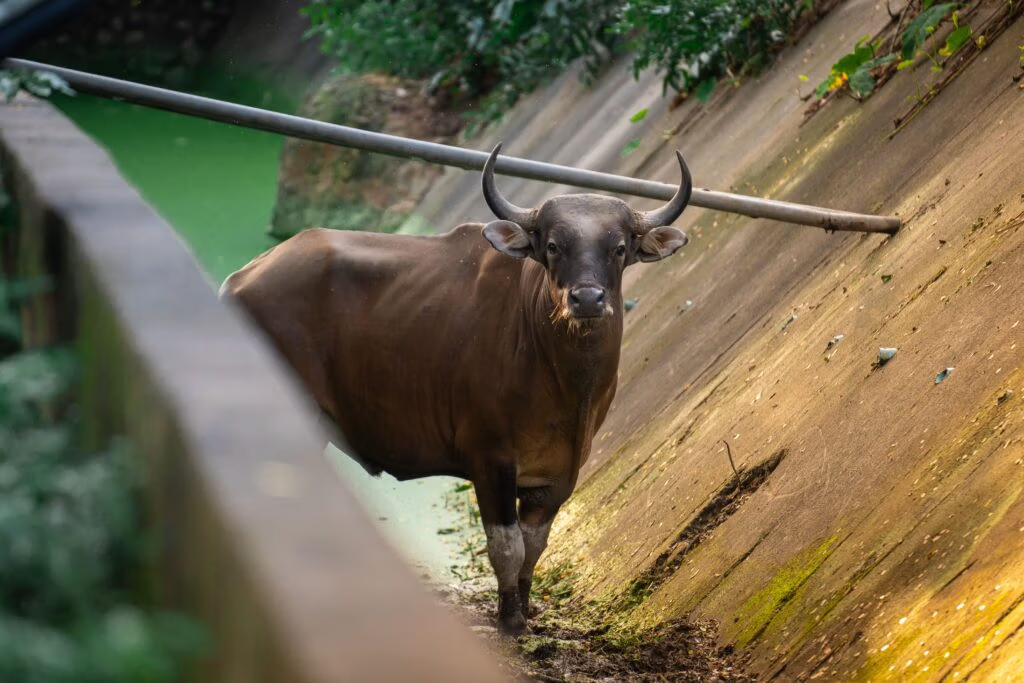
The banteng is an endangered species of wild cattle native to Southeast Asia, highly distinctive for its vibrant coat, bright white “stockings” on its legs, and a prominent white patch on its rump. Weighing from 800 to 2000 pounds, these herbivores play a vital role in their native forest and grassland ecosystems by dispersing seeds and maintaining natural habitats.
Males and females look distinctly different. Both sexes are born with reddish-brown coats, but juvenile males transition to a dark blue-black or deep chestnut color as they mature. Males also grow large, upward-curving horns. Adult females and young retain a lighter reddish-brown coloration with slender, crescent-shaped horns. Highly alert and somewhat shy, banteng typically organize themselves into social herds ranging from 2 to 40 individuals. A single dominant bull leads the group of females and their calves.
The banteng’s history is closely tied to humans. They are the wild ancestors of “Bali cattle,” and an estimated 1.5 million domesticated banteng currently exist across Indonesia for meat and agricultural labor. In the wild, however, the population has plummeted by up to 95% since the 1960s, leaving fewer than 8000 mature individuals. Conservationists consider them highly endangered due to rapid habitat loss from deforestation, illegal poaching, and the risk of disease or genetic dilution from free-roaming domestic cattle. To help preserve their genetic legacy, scientists made history in 2004 when the banteng became the first endangered species to be successfully cloned.
Recommended Calibers
Use a minimum of a .30 caliber magnum rifle to hunt banteng.
Where to Hunt Banteng
You can only hunt the banteng free-range in Australia. a feral population introduced to Australia’s Northern Territory in 1849 has thrived dramatically. Today, the outback is the exclusive destination for sport hunting this exotic bovine. The prime hunting window aligns with the Australian dry season, running from May through September.
What is Considered a Trophy Banteng
A premier banteng trophy is judged by the age of the bull. Mature bulls transition from a reddish-brown coat to a dark blue-black or deep chestnut color. Hunters look for heavy sweeping horns with deep ridges, broomed (worn and frayed) tips, and a massive boss.
A trophy bull is categorized by the following measurements:
- Typical: Horns measuring from 17 to 19 inches in length per side, with a base circumference of about 12 inches is the typical trophy size.
- Excellent: Horns measuring from 20 to 22 inches per side, with bases exceeding 13 inches are considered an exceptional trophy.
- Record Book: Horns stretching from 23 to 25 inches per side are considered exceptional and are highly coveted by hunters.
Cost to Hunt Banteng
A standalone 5-day banteng hunt costs from $12,000 to $18,000. This typically covers your trophy fee, professional guiding, remote camp accommodation, meals, and transit from Darwin Airport.