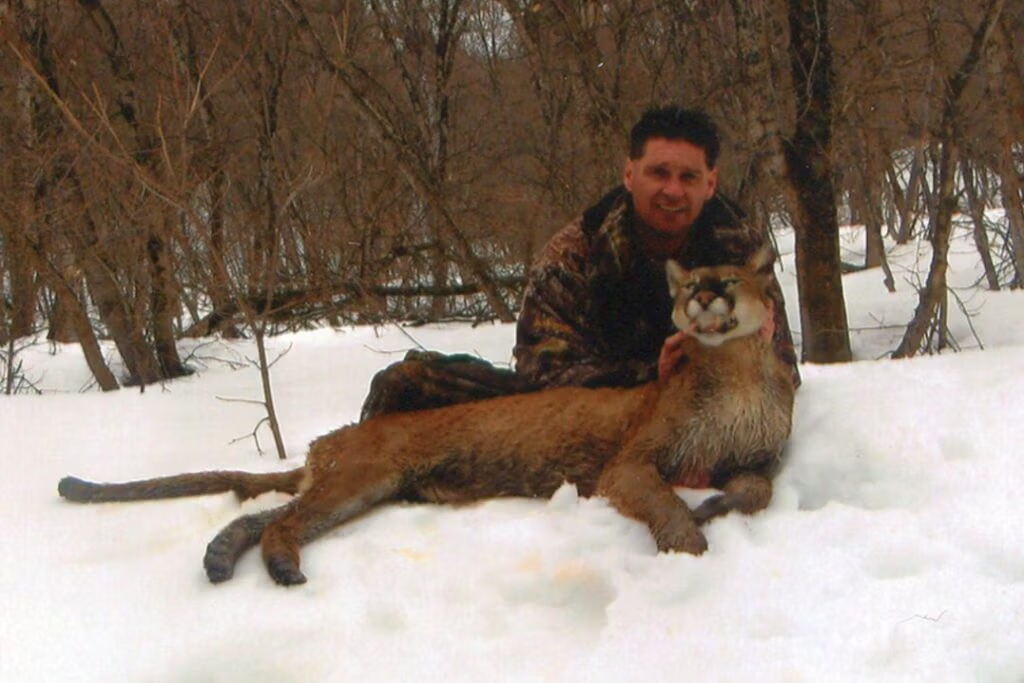

About the Mountain Lion (Cougar)
Info About the Mountain Lion (Cougar)
The mountain lion is an elusive, solitary, and incredibly adaptable predator native to the Americas. Also commonly known as the cougar, puma, or panther, this sleek feline holds the Guinness World Record for the land mammal with the most names. They can comfortably thrive in diverse environments, from the Canadian Yukon to the southern Andes.
As apex predators, mountain lions are highly specialized ambush hunters. Using their powerful hind legs and flexible spines, they can leap up to 40 feet horizontally and 18 feet vertically in a single bound. They primarily prey on ungulates like deer and elk, often dragging carcasses to sheltered caches and returning to feed over several days. Their hunting habits also play a vital role in ecosystems by preventing overgrazing and supporting numerous scavenger species.
Despite their imposing size and strength—with adult males weighing anywhere from 115 to over 200 pounds—mountain lions belong to the “small cat” classification. This distinction is based on throat anatomy, as they lack the hyoid bone necessary to roar, instead communicating through purrs, chirps, and blood-curdling screams. They generally remain secretive, wide-ranging ghosts of the wilderness that actively avoid humans, making encounters rare.
Description of the Mountain Lion
- Length: 7 to 8 feet from nose to tail tip. The tail makes up about one-third of this length.
- Shoulder Height: 25 to 30 inches tall.
- Adult Males: Weigh 115 to 220 lbs.
- Adult Females: Weigh 64 to 141 lbs.
- Body Fur: Short and coarse, ranging in color from tawny and light cinnamon to reddish-brown or silvery-gray.
- Underbelly: Pale whitish-gray or light cream.
- Markings: Distinctive black accents frame the snout, upper lip, and the backs of the rounded ears, with a noticeable dark tip on the tail.
- Kittens: Born with blackish-brown spots and dark-ringed tails that fade completely by about six months of age.
- Claws & Paws: Paws are broad, measuring roughly 4 inches across, and feature fully retractable claws.
- Hind Legs: Considerably longer and more muscular than their front legs, enabling them to leap up to 18 feet vertically and cover 40 feet in a single horizontal bound.
- Tail: Functions as a heavy counterbalance, allowing the cat to make sharp, high-speed turns while chasing prey across steep, rocky terrain.
Recommended Calibers
Use a .243 or larger caliber to hunt the mountain lion.
Where to Hunt Mountain Lion (Cougar)
Mountain lion hunting is legal in several western U.S. states and Canadian provinces, where populations are managed through strictly enforced quota systems. Because mountain lions are incredibly elusive, the vast majority of successful hunts rely on experienced local outfitters who use trained hounds to track and “tree” the big cats.
Top States & Provinces for Mountain Lion Hunting
- Idaho: Known for rugged terrain and large cougar populations, harvesting roughly 450 cats annually. Detailed state guidelines and licenses can be reviewed via the Idaho Department of Fish and Game.
- Montana: Offers excellent winter hound hunting. Check local rules and harvest tracking on the official Montana Fish, Wildlife & Parks website.
- Wyoming: Provides exceptional vast public land hunting opportunities across the Bighorn Basin and Wind River Range. Check regulations through the Wyoming Game and Fish Department.
- Nevada: Features a straightforward over-the-counter tag system. However, hunters must strictly monitor active zone quotas through the Nevada Department of Wildlife.
- Utah & Arizona: Excellent regions for dry-ground hound pursuits or high-desert winter tracking.
- British Columbia & Alberta: The premier Canadian destinations boasting deep snow conditions and high-density, massive “Tom” populations.