

About the Lichtenstein Hartebeest
Info About the Lichtenstein Hartebeest
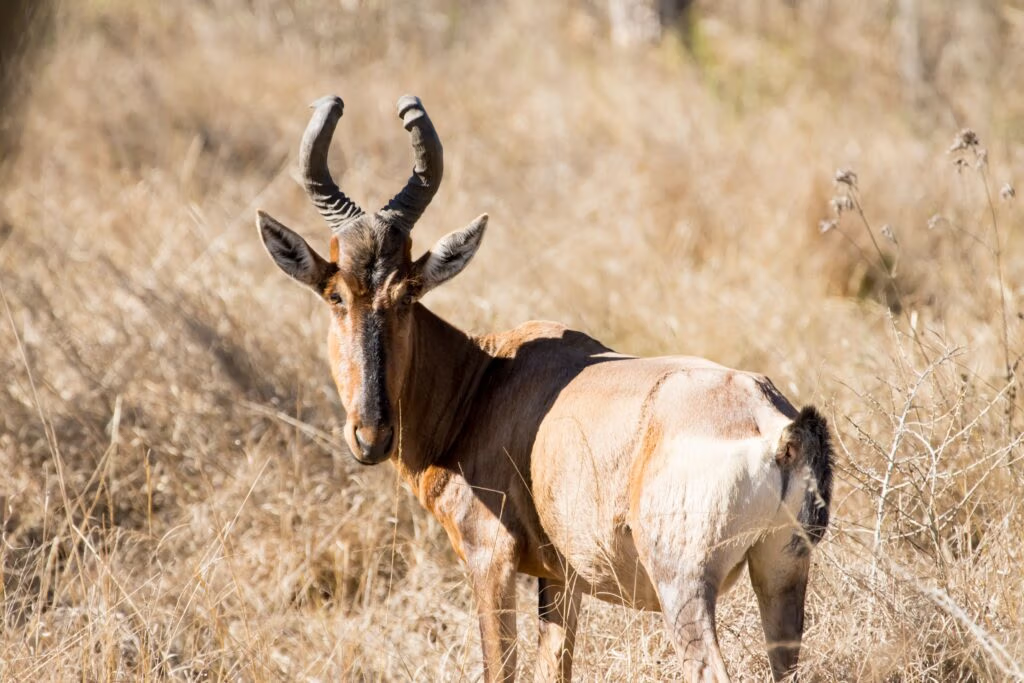
The Lichtenstein’s hartebeest is a striking and highly athletic antelope native to the savannas, grasslands, and miombo woodlands of south-central Africa. Named after the German zoologist Martin Lichtenstein, this species is well known for its elongated, narrow face, high-set shoulders, and a distinct rufous saddle that contrasts with its pale fawn flanks and off-white hindquarters.
Unlike many other antelopes, both sexes of the Lichtenstein’s hartebeest carry ringed, S-shaped horns that are distinctly flattened and thick at the base. They are highly diurnal, selective grazers that rely on perennial grasses, particularly new growth in recently burnt areas. Because they are dependent on daily access to water, they are most frequently found in areas with reliable rainfall and perennial water sources.
Socially, they live in small, cohesive herds consisting of a single dominant bull and a harem of about 5 to 15 females and their young. Territorial males will vigorously defend their turf and frequently stand atop anthills or termite mounds to survey their surroundings for predators. When threatened, they rely on their exceptional speed to escape—capable of reaching speeds up to almost 40 mph as they flee in single file.
Description of the Lichtenstein Hartebeest
Dimensions & Build
- Shoulder Height: stand 48 inches tall at the shoulders.
- Weight: from 280 to 320 pounds for females; and from 390 to 440 pounds for adult bulls.
- Body Structure: Distinctively high, humped shoulders that slope sharply downward to the rump, combined with a short neck, slender legs, and a notably long, narrow muzzle.
Coloration & Markings
- Body: The upper coat is a bright, reddish-brown (tawny) with a darker rufous saddle extending from the shoulders to the base of the tail.
- Flanks: Lighter tan, contrasting against off-white to whitish hindquarters and rump.
- Legs & Tail: Slender legs feature distinct black stripes on the front, and the tail terminates in a black tuft.
- Facial Marks: A dark patch forms on the flanks, caused by the animal rubbing its preorbital glands (located near the eyes) against its body.
Horns
- Shape: Ringed horns that curve outward and upward, then sharply forward and inward at a 45-degree angle, finishing backward. From the side, this resembles an “S” curve.
- Thickness: The horns are wide and flattened at the base, with bulls possessing much thicker bases than females.
Recommended Calibers
Use a minimum of a 6.5mm caliber rifle to hunt Lichtenstein Hartebeest.
Where to Hunt Lichtenstein Hartebeest
What is Considered a Trophy Lichtenstein Hartebeest
A Lichtenstein hartebeest with horns measuring 18 inches or longer is considered a trophy animal.
Cost to Hunt Lichtenstein Hartebeest
The trophy fee to hunt Lichtenstein hartebeest costs from $1,200 to $3,500. However the countries that offer this species have daily hunting fees ranging from $500 to $1,500 per day which greatly increases to cost.
View Our Hunts
We do not currently have any Lichtenstein hartebeest hunts available.
We do not currently have any Lichtenstein hartebeest hunts available.