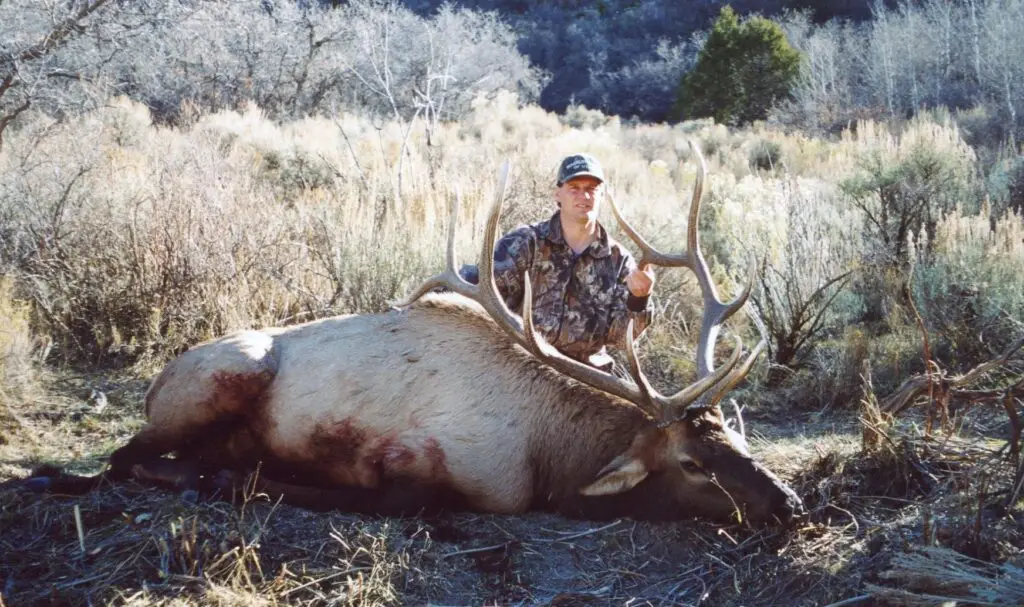

About the Elk
Info About the Elk
The elk, also known by its Shawnee and Cree name wapiti, is one of the largest members of the deer family. These magnificent herbivores are native to North America and eastern Asia, thriving in diverse environments that range from mountain meadows to open coniferous forests. Famous for their massive size and the males’ impressive antlers, elk are a keystone species in their native ecosystems.
A bull elk’s sweeping antlers can grow up to 1 inch per day during the summer. Both sexes feature a stocky, muscular build, thick brown to tan coats, and distinctly pale, buff-colored rumps. Because elk are ruminants, they possess a four-chambered stomach that allows them to regurgitate their food and chew their cud, making them highly efficient at processing tough vegetation like grasses, tree bark, and shrubs.
During the fall mating season—referred to as “the rut”—bull elk become highly vocal. They produce an iconic, otherworldly sound known as a “bugle,” a high-pitched roar that can be heard echoing across valleys to establish dominance and attract females. Elk are also highly social and gregarious outside of the breeding season, occasionally gathering in immense herds of up to several hundred individuals. In mountainous regions, they engage in seasonal migrations, moving to higher alpine pastures during the warm summer months and returning to lower, snow-free valleys in the winter to find adequate food.
Description of the Elk
- Bulls (Males): Weigh from 700 to 1,100 pounds, stand from 4.5 to 5 feet tall at the shoulders, and reach up to 9 feet in total length.
- Cows (Females): Weigh from 500 to 700 pounds and are slightly shorter.
- Summer: Their coats are shorter and have a rich, reddish-tan to dark brown hue.
- Winter: Coats grow much thicker and shaggier to insulate against the cold, shifting to a lighter grayish-tan on the back and sides.
- Markings: The legs, belly, and head remain dark. They feature a prominent sandy-colored rump. Adult males also develop a dark, shaggy mane extending from the neck to the chest during the winter.
- Only bull elk grow antlers, which can weigh from 30 to 40 pounds per pair and span up to 6 feet in length. A mature bull elk typically has 6 tines (points) per antler.
Elk Species / Subspecies
There are 6 living subspecies of elk:
North American Subspecies:
- Rocky Mountain Elk: The most widespread and populous subspecies. They have the largest, most slender antlers and primarily roam the mountainous regions of the West, though they have been introduced to states east of the Mississippi.
- Roosevelt Elk: The largest in body size, found in the lush coastal rainforests of the Pacific Northwest (ranging from northern California up into British Columbia). They have darker coats and larger, more heavily palmated antlers.
- Tule Elk: Endemic only to California, this is the smallest subspecies of elk. They were once reduced to just a few individuals in the late 1800s but have since recovered.
- Manitoban Elk: A large, robust subspecies native to the northern Great Plains, found in the Canadian prairie provinces (Manitoba and Saskatchewan) and parts of the northern U.S. plains.
- Manchurian or Siberian Wapiti: Found in the dense, mountainous forests of northeastern Asia and Russia.
- Alashan Wapiti: A rare and less-studied subspecies that lives in the desert-mountain regions of north-central China.
Recommended Calibers
Thousands of elk have been harvested with the .270 win, so anything from the .270 and up works great.
Where to Hunt Elk
Elk are hunted free-range in: Colorado, Montana, Utah, Wyoming, Idaho, New Mexico, Oregon, California, Washington, Nebraska, and Texas in the USA. The following Canadian provinces have good elk hunting: British Columbia, Alberta, and Saskatchewan.
Elk can be hunted on high-fence hunting preserves in Texas and Oklahoma.
Cost to Hunt Elk
To hunt elk it costs from $1,000 to $25,000+ depending where you hunt, the outfitter (if at all) you use, and the antler size at a high-fence operation.
View Our Hunts