
Botswana Hunting Info
Trophy hunting in Botswana is legal , regulated, and renowned for offering a genuine, free-range wilderness experience . The country issued a moratorium on hunting in public lands in 2014 but lifted the ban in 2019 to address escalating human-wildlife conflict and overpopulated elephant herds. Botswana is currently the premier place to hunt for trophy elephants.
Today, the industry focuses heavily on “conservation through utilization,” where strict quotas generate revenue and meat directly for local, remote communities. You must book through and hunt as a client of a registered Botswana safari company.
Botswana’s Hunting Areas
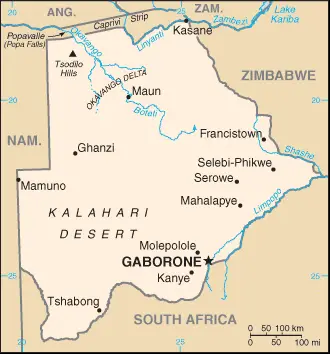
Botswana ’s hunting landscape is entirely structured around unfenced Controlled Hunting Areas (CHAs) —designated as blocks or concessions —rather than individual private farms. There are nine CHAs:
- CH – Chobe District
- CT – Central District
- GH – Ghanzi District
- KD / KG – Kgalagadi / Kgatleng Districts
- KW – Kweneng District
- NE – North-East District
- NG – Ngamiland / North-West District (e.g., NG/1 through NG/52)
- SE – South-East District
- SO – Southern District
This creates an authentic, completely wild free-range experience. There are four most sought after areas are detailed below.
The Okavango Delta Fringe
- Terrain: Okavango Delta Fringe hunting area are located in the “NG” blocks. The terrain consists of lush floodplains, seasonal marsh channels, and small wooded islands and is very flat and swampy.
- Primary species: Elephant , Cape buffalo , Hippo , Crocodile , and specialized water antelope like Red Lechwe
- Hunting Style: Hunting is done primarily by boot and foot tracking. Outfitters use motorboats or traditional wooden dugout canoes (mokoros ) to navigate waterways, transitioning to a cautious spot-and-stalk on foot through the marshes.
The Kalahari Basin
- Terrain: This hunting area is located in the “CT”, “KD”, and “GH” blocks and consists of vast, arid sandveldt, acacia thorn bush, open grassy savannah plains, and dry pans.
- Primary species: Gemsbok , Cape eland , Greater kudu , Red hartebeest , Springbok , and Kalahari lion/leopard .
- Hunting Style: Hunting is done primarily by long-distance tracking. The hunt is highly dependent on the tracking skills of native San Bushmen. It requires long days of glassing from 4x4s, followed by miles of intense foot tracking over deep, soft sand tracks.
Chobe Hinterland & Northeast
- Terrain: The Chobe area is in the “CH” blocks. The terrain consists of the drier Kalahari woodland forests, dense mopane forests, and teak systems beyond the Chobe River.
- Primary species: Thick concentrations of Elephant and migratory plains game .
- Hunting Style: This is your classic big game safari. The hunting is heavily focused on old-school tracking of massive elephant bulls navigating the dry backcountry corridors between water systems.
The Tuli Block & Eastern Concessions
- Terrain: Hunt in the “CT” blocks in this rugged terrain marked by dramatic rocky kopjes, sandstone outcrops, open savannah, and thick riverine bush.
- Primary species: High-density Elephant herds, Leopard, and general plains game (Impala , Zebra, Wildebeest)
- Hunting Style: This is river corridor hunting features the massive CT-27 concession (over 5.4 million acres) managed under community-based wildlife programs. The Shashe and Limpopo rivers form natural corridors, making it a premier region for leopard baiting and tracking.
Travel Information
Flying to southern Africa is a cross-continental journey that spans roughly 15 to 16 hours on nonstop flights from the US. Since there are no direct flights into Botswana from the USA, the recommended route is to fly into Johannesburg, South Africa (O.R. Tambo International Airport – JNB). Delta Airlines has a direct flight from Atlanta (ATL) and United Airlines has a direct flight from Newark/New York (EWR). These flights usually leave the US in the evening and arrive in Johannesburg in the evening. The other option is flying through a major European or Middle Eastern airport on your trip from the US to Johannesburg (JNB).
If you arrive in South Africa in the evening, you will usually stay in Johannesburg overnight. In the morning, you will then fly out of O.R. Tambo International Airport (JNB) to Botswana. These airports in Botswana have flights daily from Johannesburg, South Africa.
- Sir Seretse Khama International Airport (GBE)
- Location: Gaborone (capital city of Botswana)
- Flight Time from JNB: 45-55 minutes
- Airlines: Airlink, Air Botswana, and South African Airways
- Maun International Airport (MUB)
- Location: Maun
- Flight Time from JNB: 1 hour 45 minutes
- Airlines: Airlink, CemAir, and Air Botswana
- Kasane Airport (BBK)
- Location: Kasane
- Flight Time from JNB: 1 hour 50 minutes
- Airlines: Airlink
Traveling with Firearms
Importing firearms into Botswana for a hunting safari requires advance planning, strict adherence to weapon restrictions, and close coordination with your hunting outfitter. Botswana heavily regulates the types and quantity of firearms allowed across its borders:
- Three firearms only can be imported per hunter.
- Rifles must be of different calibres . You cannot bring more than one firearm per caliber.
- Certain calibres like .22, .303, and .308 may face strict local restrictions or prohibitions.
- Handguns, semi-automatic, automatic , and military-style weapons are strictly prohibited.
- Maximum of 100 rounds per firearm . Ammunition must exactly match the caliber of the imported firearm.
Application Process
- Coordinate with Your Outfitter: Your hunting outfitter will apply for the temporary permit on your behalf so that it is waiting for you at your point of entry. You must submit your paperwork to them at least one to two months before your trip.
- Gather Required Documents: You will need to provide your outfitter with clean, legible copies of the documents below.
- A completed Application for Temporary Permit Form (Non-Resident).
- A notarized copy of your passport photo/details page.
- Proof of ownership: For U.S. citizens, this is CBP Form 4457. For other nationalities, a valid national firearm license or permit stating the exact make, model, caliber, and serial number is required.
- Your formal hunting invitation or itinerary from your Botswana outfitter.
- A Letter of Proxy authorizing your outfitter to act as your clearing agent.
- Pay the Fees: While government permit fees at the border are nominal (around 100 Botswana Pula), outfitters or clearing agents generally charge an administrative fee (which can range from $250 to $400) to process the advanced paperwork.
Arrival and Border Customs
- Match Serial Numbers: Your firearm’s serial numbers and your exact ammunition count must perfectly match your pre-approved permit. Even a single digitized character mistake can result in the weapon being confiscated at the border.
- Import Taxes: Expect to pay an ammunition import tax at the border checkpoint, which includes VAT and customs duty based on the declared value of your cartridges. Keep cash in Botswana Pula (BWP) on hand, as border posts rarely accept foreign cards for these specific duties.
- Physical Travel Rules: Travel with your firearms inside a durable, locked hard case (like a Pelican or Numeric case). Most international airline regulations require your rifle bolts to be removed and packed separately from the firearm frame.
Crucial Note for South Africa
If your flight transits through OR Tambo International Airport (Johannesburg, South Africa) and you have to clear customs, collect your baggage, or stay overnight, you must also apply for a South African Temporary Firearm Import Permit (SAPS 520) . Make sure to request a multiple-entry permit so you can safely pass back through South Africa with your firearms on your return journey. Details on this can be found on our South Africa page.
Safety Information
Botswana is widely considered one of the safest and most stable countries in Africa . It boasts a long history of continuous multi-party democracy and ranks very highly on the Global Peace Index. Violent crime targeting tourists is exceptionally rare in Botswana. The unique safety conditions focus much more on road hazards, remote wilderness logistics, and wildlife awareness than it does on urban crime.
Tips for Traveling in Botswana
- Secure Your Gear in Towns: If you are shopping or stopping for fuel in cities, do not leave expensive camera gear, passports, or bags visible on your vehicle seats.
- Avoid Freshwater Swimming: Do not swim in northern rivers or lakes due to the severe dual threat of crocodiles/hippos and water-borne parasitic diseases.
- Carry Cash/Pula: While luxury lodges accept credit cards, rural ATMs frequently run out of cash or lose power. Keep a reserve of Botswana Pula or crisp US Dollars handy.
- Respect Local Laws: It is strictly illegal to take photographs of military installations, government buildings, or police personnel in Botswana.
Traveler Insurance
It is recommended that you have robust travel insurance that covers health care and emergency medical evacuation before you leave. Companies like Medjet or Global Rescue specialize specifically in medical transport and repatriation. Make sure that hunting is covered under the insurance that you choose, because some policies do not cover what they consider extreme or dangerous sports. Many standard travel insurance policies classify big-game hunting, shooting sports, or being around wild animals as “extreme activities” and will explicitly exclude injuries resulting from them. You must read the fine print or purchase a sports rider to ensure firearms use and hunting are covered.
Travel Advisories
For comprehensive planning details and travel advisories, consult the U.S. Department of State.
Health Information
When travelling to Botswana, key health concerns include malaria in the northern regions, insect-borne tick fevers, rabies from wildlife or stray animals, and food- or water-borne illnesses like traveler’s diarrhea.
Vaccinations
The following vaccinations are recommended for travel to Botswana.
- Routine childhood Shots: Ensure shots like tetanus, diphtheria, pertussis, and measles are up to date.
- Recommended: Hepatitis A and Typhoid are advised for most travellers.
- Considered on a case-by-case basis: Hepatitis B and Rabies should be considered for long stays and wildlife handlers.
- Yellow Fever: A yellow fever vaccination certificate is only mandatory if you are arriving from a high-risk/endemic country.
Drinking Water Safety
In major towns and urban areas, city tap water is generally treated and safe to drink. However, when staying in remote safari camps, road-tripping, or visiting rural villages, stick entirely to sealed bottled water or water boiled and filtered by the lodge.
Malaria
Malaria is a serious risk in Botswana, particularly during and immediately following the rainy season (November to April ). The northern wilderness regions, including the Okavango Delta , Chobe National Park , and Kasane are considered high-risk zones. Consult a travel clinic 4 to 6 weeks before departure for prescription prophylaxis.
Rabies
Rabies risk exists from contact with infected dogs, bats, or wildlife. Particularly avoid contact with dogs in Botswana as they are the major source of animal to human transmission of rabies. Black-backed jackals are the most prevalent carrier in the wildlife population.