

We flew from the United States to Amsterdam (Netherlands), then to Johannesburg (South Africa) where we spent the night at the City Lodge Hotel which is connected to the airport. After overnighting in Johannesburg we flew into Kasane (Botswana) where after clearing customs, we were picked up by our professional hunter (PH). On the 45 minute drive from the Kasane airport to our hunting lodge we built a report with our PH by discussing the elephant hunt details, and learning about more about Botswana. Though this was my wife’s first trip to Botswana, I have previously hunted in 1999 for plains game (kudu. cape eland, gemsbok, red hartebeest, and steenbok) in the Kalahari Desert in southern Botswana.
After arriving at our northern Botswana camp we meet with our PH and outfitter host to sign our elephant hunting documents and get familiarized with our 11 day home. We stayed in a private villa a stone’s throw from the main lodge. The villa is very nice, with comfortable beds, living room, kitchen (which we didn’t use), and a very large bathroom with a huge walk-in shower.
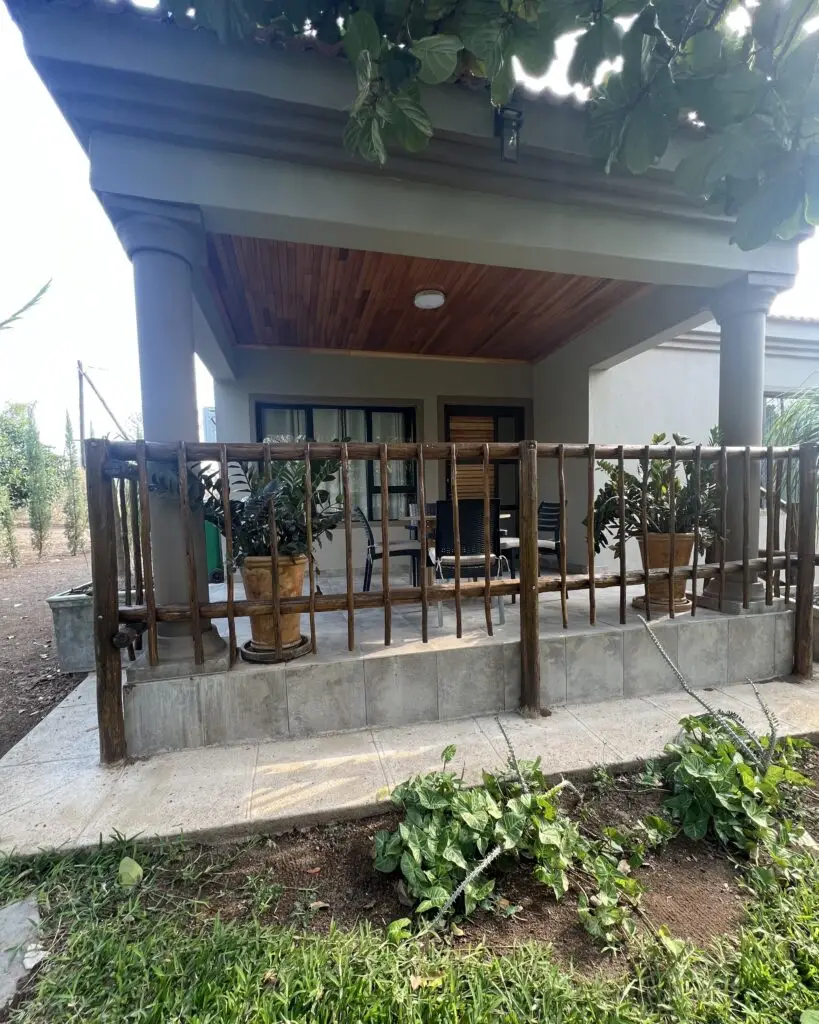
Supporting us during our hunting adventure were two separate sets of staff, not counting our PH and the outfitter. At the lodge where we stayed, there was a cook, a caretaker, housekeeping, and laundry and grounds-keeping staff. The trackers (3) , skinners (3), a community official, a government official (called a game warden in the USA) stayed at a primitive community outpost near the hunting concession. Every morning before hunting we stopped at the outpost to pick up the trackers, and community and government officials.
The first evening before the elephant hunt began; we drove to the closest edge of the hunting concession to look for fresh bull elephant tracks. We did manage to find some fairly fresh sign which the PH found to be very encouraging. I also had the chance to shoot the .375 H&H cartridge bolt-action rifle I’d be using to hunt with. I shot a couple rounds with both solid bullets and soft-point ammo. The gun fit me perfectly and was shooting right on the money at 100 yards. The 3 to 9 power first-focal-point Zeiss scope was clear as a bell and mounted with perfect eye-relief for me. If I made a bad shot, it was definitely going to be my mistake.
After taking the practice shots with the .375, I used the PH’s .22 rifle with a suppressor to shoot doves for some trigger practice. I ended up shooting 8 doves and missing a few more than I got. The shot doves were given to the camp staff for a meal.
Each day the Toyota Land Cruiser carried the PH, and my wife and I in the extended cab truck, with the trackers and officials riding in the high railed open bed of the truck. We all scanned for animals and game tracks as the PH drove us on the sand, so called “roads”.
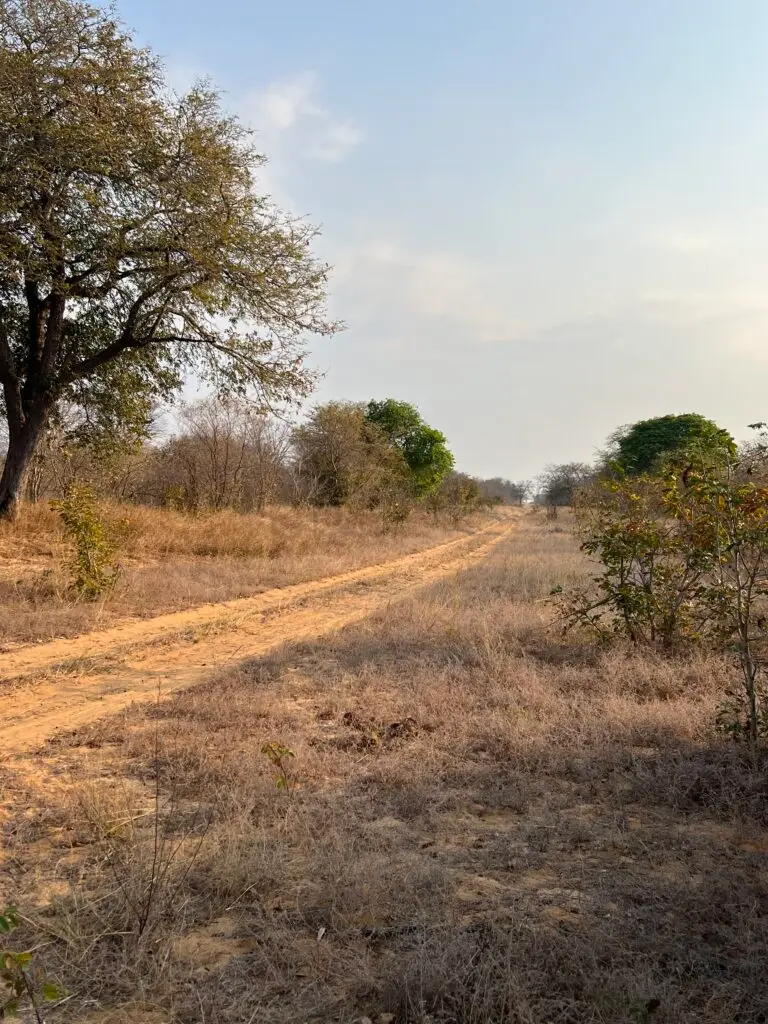
Once elephant tracks were spotted, they were assessed for size, gender, approximate age of the animal, and how old the track was. The goal is to find mature bull elephant tracks that are from the previous night or fresher. Trophy-sized male elephants are usually at least 38 years old. To an expert elephant tracker, each elephant has unique tracks in the same fashion as human fingerprints. It amazes me how accurate the trackers are at evaluating a track in terms of size and how recent they were made.
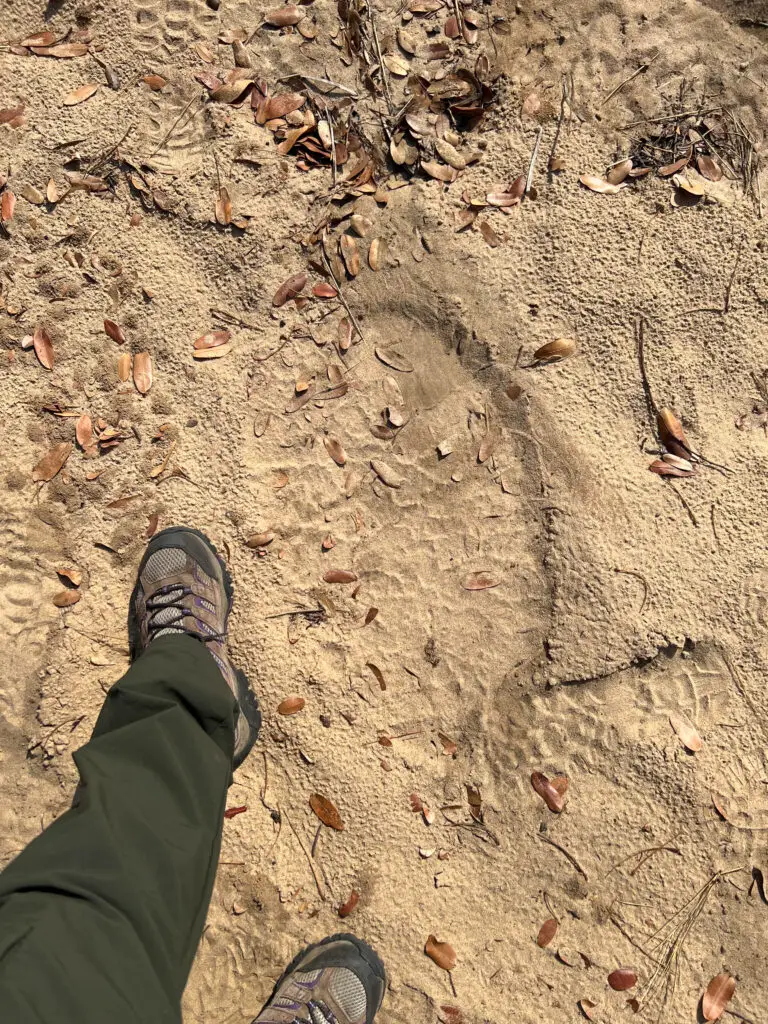
After seeing some cow and young bull elephant tracks, we found one set of mature bull elephant tracks. Armed with a walkie-talkie, the 3 trackers began following the tracks, while the rest of us stayed with the truck. After an hour or so the trackers had followed the elephant tracks across another sand “road” and also picked up the fresh tracks of three more mature bulls headed in the same direction as the one they were following. We slowly drove the truck to get to the second road they crossed.
After another hour or so, the trackers reported they were getting closer to the 4 elephants based on the sign (tracks, droppings, and urine) they were seeing. After more time elapsed, it was decided that we would abandon the truck and follow the trackers tracks to see if we could catch up to these massive beasts.
The next report we received from the trackers was that they spotted one of the elephants by climbing a tree for a better vantage point in the thick bush. We eventually caught up to the trackers and they led us to within 70 or 80 yards of the bull resting in the shade of a large tree. The tusks looked good on this elephant, which fortunately for us was unaware of our presence because the wind was in our favor.
At this point, we decided to back off this bull to see if the trackers could find the other 3 bulls to see if any of the other animals had even larger tusks. Within 15 minutes, the trackers found the other elephants standing under some trees only a few hundred yards from the first elephant. The next move was for the PH and me to carefully sneak to within 30 yards of the animals using bushes and trees for cover.
With some slow maneuvering we were able make an assessment of each elephant. Unfortunately each animal had 1 broken off tusk, though 2 of the 3 were very large. We decided to make a stalk on the first resting elephant we saw. After about 20 minutes we were able to get within 25 yards from the first elephant. I was then able to make a good kill shot on the bull. I put 2 more shots in him before he collapsed to the ground.
We took numerous photos and admired the sheer size of this 41 to 44 year old beast. It’s an amazing experience to harvest the largest land mammal as it approaches the end of its natural life expectancy.
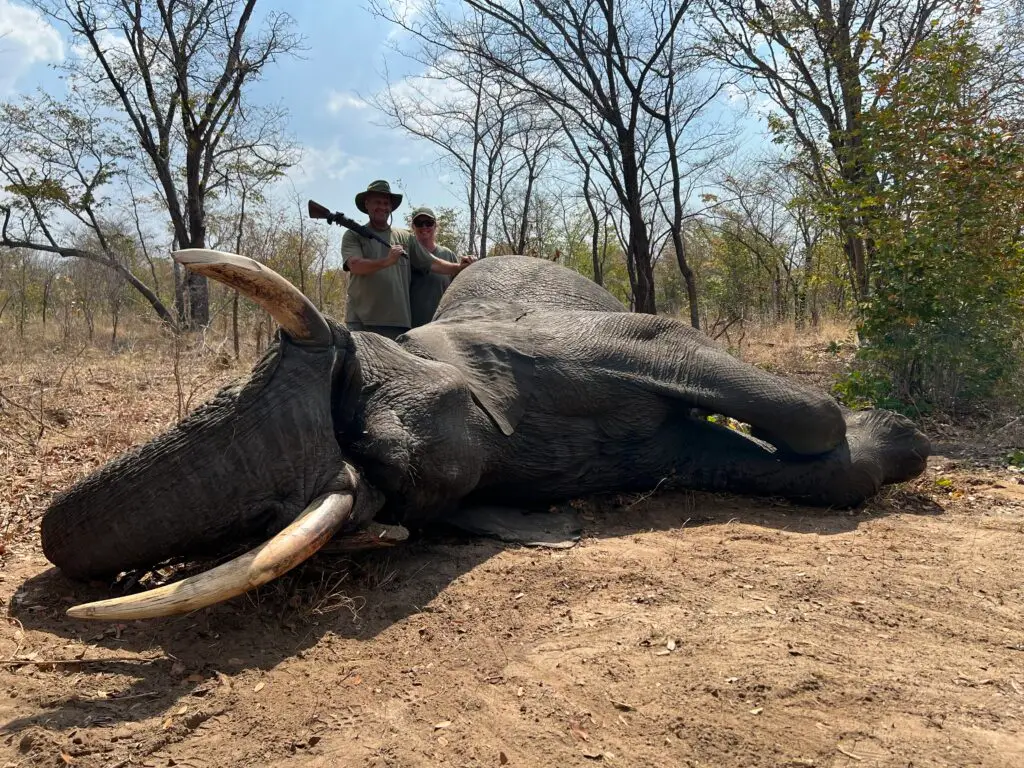
The meat from a Botswana elephant belongs to a local community. When an elephant is harvested in this part of Botswana, 1 community gets the meat, but 5 communities take turns getting the meat in a round-robin fashion.
I’ve hunted with some amazingly excellent guides / professional hunters in my life, but it’s not an exaggeration to say our PH on this hunt was as good as any of them. I highly recommend hunting with our PH if you are looking for an elephant hunt.