
A hunting trip can cost anywhere from a few hundred dollars up to several hundred thousand dollars depending on what species you hunt, where you hunt, and the guidance and/or assistance you choose to receive. The purpose of this article is to discuss the logistics of your hunt from the perspective of food, lodging, equipment needs, hunting land access, and guiding services.
Do-It-Yourself (DIY) Hunts on Public Land
The least expensive type of hunt is usually a Do-It-Yourself (DIY) hunt. You and your hunting party are responsible for planning and executing the entire hunt. This includes the following:
- Choosing your hunting area (usually public land)
- Knowing the local hunting laws and seasons
- Providing your own lodging
- Providing and preparing your own food
- Judging the quality of the species you are hunting
- Field dressing, transporting, tagging, and registering the game you harvested
As a hunter, you can achieve a great sense of satisfaction knowing you have done your own research and preparation to accomplish your goals.
A disadvantage of a DIY hunt is you don’t have any control over hunting pressure and interference from other hunters. A significant amount of time and effort may be required to get away from the crowd. In many cases the trophy quality of the animals can be lower than anticipated.
Do-It-Yourself (DIY) Hunt on Private Land
Private land hunting typically requires either free landowner permission or a paid trespassing fee. However, this opportunity is shrinking as landowners increasingly view quality hunting ground as a valuable financial asset. Furthermore, a careless minority of hunters have ruined access for others by abusing the land—leaving gates open, breaking fences, littering, and damaging property.
Currently, gaining private land access usually requires a personal connection to the landowner. However, you can still occasionally trade your labor or services for hunting rights.
Obtaining a Hunting Leasing on Private Land
The increasingly popular option of hunting leases allows you to contractually secure hunting rights to a property for a set period of time. The contract should explicitly state which land improvements you are permitted to make. These modifications often include creating food plots, digging water holes, setting up feeders, installing blinds or stands, and cutting trees to build bedding areas and shooting lanes.
This option can provide you with a controlled hunting area without the up-front costs of purchasing your own land, and paying ongoing expenses such as property taxes.
The disadvantage to leasing land is the uncertainty of being able to renew the lease when the current contract expires. If you are putting in a significant amount of time, effort, and money to make improvements to your leased land, this is something you need to consider. This can especially be a problem in highly competitive markets such as with Texas whitetail hunting.
Outfitted Hunts
There are three types of outfitted hunts that you will come across while planning your out-of-state hunt.
An Outfitted Only Hunt Without Any Guiding
An outfitted only hunt means you hire an outfitter to get access to the hunting area and the outfitter provides some or all of the supplies your need. However, you have no guide with you on your hunt. An outfitter usually provides the following:
- Public or private land for the hunt
- Assistance obtaining licenses and tags
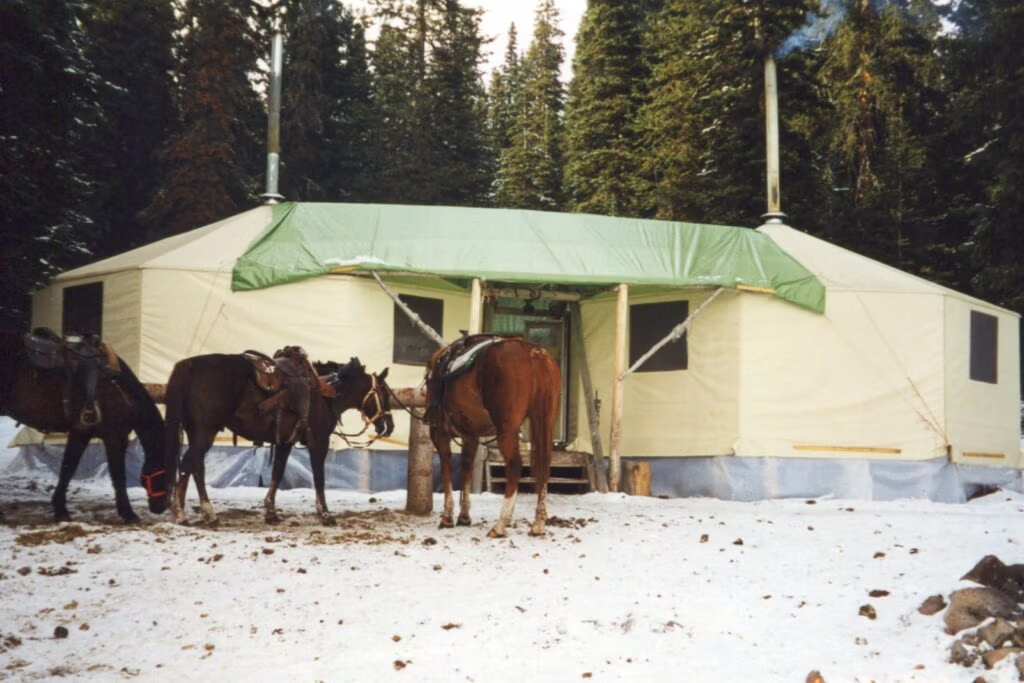
- Lodging or tent
- Cooking equipment
- Maps and guidance regarding which hunting areas have traditionally been the most productive
- Depending on the terrain—especially in remote areas—outfitters may supply specialized transportation, such as trucks, horses, boats, or bush planes.
An example of an outfitted only hunt would be as follows. You are going on a caribou hunt in Alaska. The outfitter either has a wilderness cabin for you to stay in with basic kitchen supplies provided or he equips you with a tent and camp cooking supplies. You will be given maps of the hunting area and possibly guidance on where they have been seeing the best caribou. Depending on the arrangements you make with the outfitter, you may be taken to the hunting area. You are on your own to hunt unguided at this point.
Semi-Guided Outfitted Hunt
On a semi-guided hunt, the outfitter typically provides the following:
- Access to hunting land
- Assistance obtaining licenses and tags
- Lodging consisting of anything from a wall tent to a 5-star lodge
- Food
- Transportation to and from your hunting location
- Help with tracking a wounded animal
- Field prep and transportation of harvested game
This is a very common hunting option when hunting from an elevated stand or blind. Almost everything is taken care of for you, but a guide is not with you when you are sitting in the stand or blind.
Fully-Guided Outfitted Hunt
A fully-guided hunt provides everything a semi-guided hunt does, except your guide(s) is with you the whole time you are hunting. Your guide helps you with the following:
- Spotting game
- Field judge the quality of the game
- Judge the shooting distance to the game
- Assists with planning the shot,
- Determines if and where you hit the game
- Tracking the animal if necessary
- Field preparing a harvested animal
- Transporting the game back to the lodge or game processor
Though a fully-guided hunt is the most expensive option, it is mandatory when hunting in many countries or for certain species. It is also the safest choice when navigating remote wilderness areas, you are unfamiliar the game laws, or you are unfamiliar with the local language. A top-tier guide elevates an average hunt into an exceptional one, drastically increasing your odds of harvesting your target trophy and ensuring a smooth, well-executed expedition.
Check out our hunts and let us help you plan your next big game adventure!