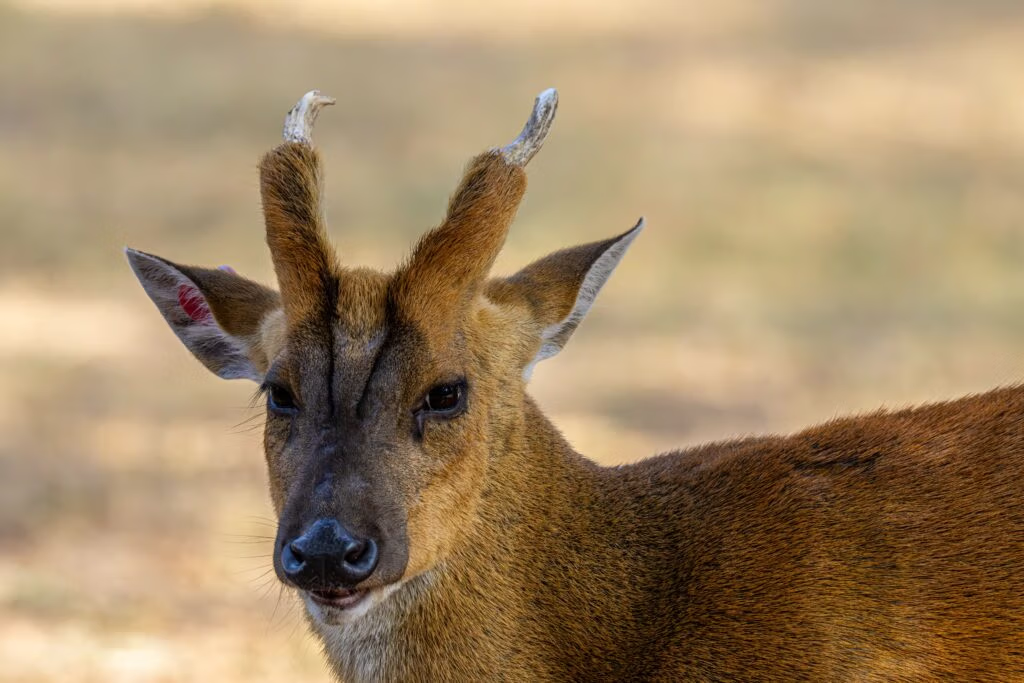

About the Muntjac
Info About the Muntjac
Muntjacs, also known as “barking deer” or “rib-faced deer,” are small, ancient forest-dwelling deer native primarily to South and Southeast Asia. They are highly adaptable and thrive in dense forests and tropical environments, though one species—the Reeves’s muntjac—has also established wild populations in the UK.
These small ungulates are stocky, generally weighing between 22 and 70 pounds and standing only 16 to 25 inches tall at the shoulder. Their bodies are perfectly evolved for slipping through thick underbrush, with haunches that are slightly higher than their shoulders, giving them a distinctively hunched posture. One of their most fascinating physical features is their prominent facial structure. Unlike many other deer, muntjacs have large, conspicuous scent glands on their foreheads (frontal glands) and beneath their eyes (pre-orbital glands), which they use to mark territory and communicate with one another.
Muntjacs are largely solitary, crepuscular animals that are most active at dawn and dusk. They are also surprisingly omnivorous for a deer. While their diet primarily consists of leaves, grasses, and shoots, they have been known to scavenge and feed on eggs, carrion, and small animals. They earn their nickname, the “barking deer,” from the loud, repetitive, dog-like vocalizations they produce. They use these barks to warn others of predators, declare their territory, or attract mates.
Description of the Muntjac
- Size & Build: They typically weigh between 22 to 70 lbs., standing 15 to 25 inches tall at the shoulder. Longer hind legs create a distinctively hunched, downward-sloping posture.
- Coat & Color: Fur is generally short and soft, ranging from vibrant ginger and reddish-brown in the summer to duller gray-brown in the winter. The underbelly and the underside of the tail are creamy white.
- Head & Face: They feature pronounced bony ridges running from their face to the top of their head, earning them the nickname “rib-faced deer”. Both sexes have large, prominent scent glands under their eyes used for marking territory.
- Antlers (Males): Males grow short, unbranched antlers (often less than 4 inches long) that sit atop long, fur-covered bony stalks called pedicles and are shed annually.
- Canine Teeth: Both males and females have upper canine teeth that can protrude from the lip, functioning as formidable tusks for defense and sparring.
- Females: Instead of antlers, females possess small, bony knobs (pedicles) covered by tufts of hair.
Recommended Calibers
Use a small caliber center fire rifle to hunt the muntjac.
Where to Hunt Muntjac
Though indigenous to Nepal, India, and Taiwan, they can be hunted free range in the United Kingdom.
Muntjac are hunted on high fence hunting preserves in Texas.
What is Considered a Trophy Muntjac
Any adult antlered male Muntjac is considered a trophy.
Cost to Hunt Muntjac
It costs between $3,500 and $6,500 to hunt Muntjac depending on the country and ranch or estate hunt you hunt.
View Our Hunts