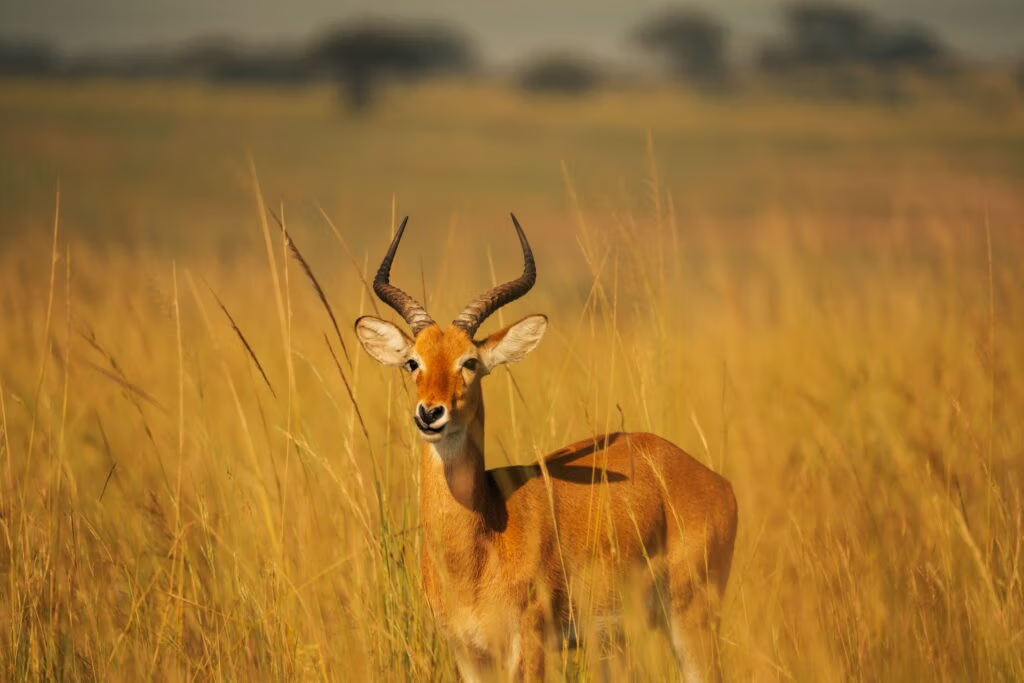

About the Puku Antelope
Info About the Puku
The puku is a medium-sized, golden-brown antelope native to the wet grasslands and floodplains of south-central Africa, particularly within Zambia and Tanzania. Highly dependent on marshy habitats and river margins, these gregarious herbivores are well-adapted to the seasonal cycles of flooding and drought.
Puku are most active during the early morning and late afternoon. They spend their days grazing on the lush grasses of wetland plains, moving to higher ground during the wet season to escape rising waters. The species displays sexual dimorphism: females and young gather in loose, fluid herds of up to 50 individuals, while mature males are solitary and vigorously defend territories to attract mates. Only the males carry the beautiful, strongly ridged, lyre-shaped horns.
One of the most notable characteristics of the puku is its vocal alarm system. When startled by predators like lions, leopards, or wild dogs, the animals will repeat a loud, shrill whistle to alert the rest of the herd. Today, the puku is classified as Near Threatened by the IUCN, facing ongoing conservation challenges from habitat fragmentation, agricultural expansion, and poaching.
Description of the Puku
- Size: They stand from 27 to 35.5 inches tall at the shoulders.
- Weight: Adults typically weigh from 132 to 200 pounds.
- Sexual Dimorphism: Males are distinctly larger than females and possess thick, muscular necks.
- Horns: Only males grow horns. They are stout, lyre-shaped, heavily ridged for about two-thirds of their length, and scoop upward in smooth arcs up to 20 inches long. Females have no horns.
- Coat & Markings: The fur is coarse, rough, and approximately 1.2 inches long. They feature no distinct leg markings, but their ear tips are black.
- Legs & Hooves: They have elongated, splayed hooves which act as a natural adaptation for walking and leaping across soft, muddy floodplains and wetlands.
- Face & Scent Glands: Puku have preorbital glands located just in front of their eyes, which appear as thickened glandular skin with a small tuft of dark hair. Territorial males use these glands to secrete a dark, greasy substance, which they rub on grass stalks to mark their domain.
Puku Species / Subspecies
There are 2 species.
Southern Puku
- Characteristics: Generally larger with a lighter, golden-yellow coat.
- Habitat: Floodplains across Zambia, Botswana, Namibia, Angola, and Zimbabwe.
Northern / Senga Puku
- Characteristics: Can exhibit slight variations in body size and coat color compared to the southern counterpart.
- Habitat: Wetland areas along rivers and lakes in the southern Democratic Republic of the Congo, eastern Zambia, and Tanzania.
Recommended Calibers
Any long range cartridge from .243 win up to any of the .30 caliber rifles will work great.
Where to Hunt Puku
Zambia and Tanzania are the primary countries to hunt the Puku.