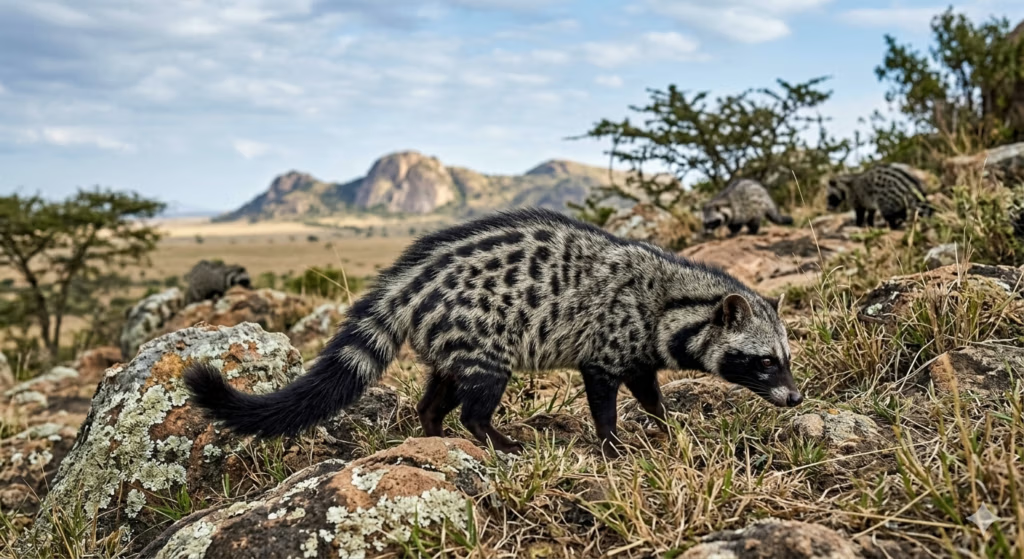

About the Civet
Info About the Civet
Civets are small, solitary mammals native to tropical forests and savannas across Asia and Africa. Although commonly called “civet cats,” they are not felines at all. They belong to the family Viverridae and are actually more closely related to mongooses and weasels.
These elusive creatures are primarily nocturnal and omnivorous. They rely on an exceptional sense of smell to hunt small reptiles, insects, and even highly toxic prey like millipedes, while also scavenging for carrion and foraging for sweet fruits. This opportunistic diet makes them vital to their ecosystems by acting as natural seed dispersers as they digest and excrete whole seeds across the rainforest.
Civets are perhaps most famous for the strong, musky secretion they produce from their perineal glands. Historically, this musk—also called “civet”—was highly prized in the global perfume industry for its properties as a fixative.
Description of the Civet
Body and Size
- Frame: Long, sleek, and slender bodies, similar to a hybrid between a house cat and a ferret.
- Dimensions: Head and body length typically range from 16 to 35 inches, with tails adding another 13 to 25 inches.
- Weight: Average weight spans widely from 3 to 44 pounds, depending on the species.
Head and Face
- Muzzle: Extended and pointed, resembling that of an otter or mongoose.
- Ears: Small, rounded, and alert.
- Facial Markings: Many species feature distinct dark, raccoon-like bands across their eyes and white markings on the muzzle.
Coat and Markings
- Texture: Coarse, thick fur.
- Colors: Typically grayish, buff, or cream, overlayed with bold brownish-black spots, bands, or lines.
- Tail: Usually long, heavily furred, and distinctly banded with dark rings.
- Mane: Many species (like the African Civet) have an erectile crest or short mane running down their spine that they raise to appear larger when threatened.
Paws and Claws
- Legs: Relatively short compared to their long spines.
- Claws: They have five digits on each paw with curved, semi-retractile claws, which aid in climbing.
Scent Glands
- Musk: Civets possess perineal glands that secrete a strong-smelling, greasy, dark yellow substance called “civet,” which they use to mark their territory.
Civet Species / Subspecies
1. Large Civets
- African Civet: The largest of the true civets, widespread across Africa. It typically has no recognized subspecies, though it varies slightly in color depending on its region.
- Large Indian Civet: Native to South and Southeast Asia. It has about 5 recognized subspecies.
- Small Indian Civet: Ranges from India to Southeast Asia. It features over 11 recognized subspecies.
2. Palm Civets
- Asian Palm Civet / Common Palm Civet: Native to South and Southeast Asia. It has up to 30 described subspecies.
- Masked Palm Civet: Also known as the Himalayan Palm Civet, it lives in East and South Asia. It has several subspecies across its range, varying in fur tone and mask structure.
3. Semiaquatic and Rare Civets
- Sunda Otter Civet: Highly specialized for swimming and hunting in the water. It is found in Malaysia, Sumatra, and Borneo.
- Malabar Civet: An extremely rare and critically endangered species endemic to the Western Ghats of India. It has no living recognized subspecies and is thought to be mostly extinct or on the brink.
Recommended Calibers
For rifles use a .223 or smaller caliber. Shotguns with a small pellet size work well.
Where to Hunt Civet
Civet cats are legally hunted in sub-Saharan African countries, with the Limpopo Province of South Africa being the most premier and accessible destination. They are also hunted in Zimbabwe, Tanzania, and Cameroon. Because they are nocturnal, civets are typically hunted at night using spotlights and baiting methods.
What is Considered a Trophy Civet
Any adult civet is considered a trophy animal.
Cost to Hunt Civet
The trophy fee to harvest a civet is from $350 to $1,300 depending on the country and outfitter.