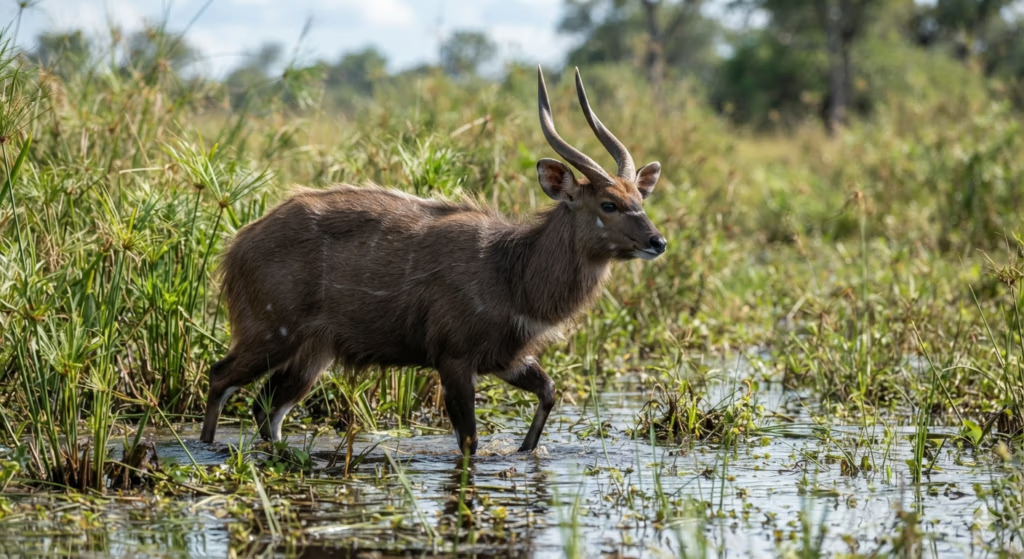

About the Sitatunga
Info About the Sitatunga
The sitatunga is a semi-aquatic antelope native to the swamps and marshlands of central and southern Africa. Often referred to as the marsh buck, it is uniquely adapted for an amphibious lifestyle, possessing elongated, widely splayed hooves that act as natural snowshoes to prevent sinking into the muddy, boggy terrain.
These remarkable adaptations allow the sitatunga to thrive in environments that are difficult for most other hoofed mammals to navigate. Their coats are shaggy and secrete an oily, water-repellent substance, and they are such accomplished swimmers that they can paddle for several kilometers. When threatened by predators like lions, leopards, or wild dogs, sitatungas will often flee into deep vegetation and submerge almost their entire bodies, leaving only their nostrils poking above the surface of the water to hide.
Because they live in dense papyrus and reed beds, sitatungas are notoriously elusive and reclusive animals. They are primarily active at dawn and dusk, and they use their excellent sense of hearing to pinpoint sounds in their dark, claustrophobic habitat. The species exhibits striking sexual dimorphism: females are a rich chestnut brown with white vertical stripes, while mature males are dark gray-brown, sport a scraggy mane, and feature impressive, twisting spiral horns.
Description of the Sitatunga
Physical characteristics vary between sexes and region:
- Size: They are medium-sized antelopes. They generally stand from 26 to 48 inches tall at the shoulders. Males are considerably larger than females, weighing from 154 to 275 pounds, while females weigh from 110 to 132 pounds.
- Coat Color and Markings:
- Females and Juveniles: They typically sport a brighter coat, ranging from rufous-red to bright chestnut or reddish-chocolate brown.
- Males: As they mature, their coats darken into a grayish-brown or deep dark brown.
- Stripes and Spots: Both sexes often have 6 to 8 faint, vertical white stripes across the body, alongside white spots on the thighs, throat, cheeks, and between the eyes.
- Texture: The fur is long, shaggy, and oily, acting as a natural waterproof layer that keeps the animal dry and insulated while swimming.
- Horns: Only males possess horns. They are long, elegant, and spiraled with about 1 to 1.5 twists, reaching lengths from 18 to 36 inches. The tips of the horns are often ivory-colored.
- Unique Hooves: To navigate wet, boggy terrain, sitatungas have evolved exceptionally long, widely splayed hooves (which can measure up to 7 inches on the hind legs). This adaptation and flexible pastern joints allow them to walk silently through water and marshland without sinking into the soft substrate.
- Body Shape: They have a slightly hunched appearance, as their hind legs are noticeably longer than their front legs. Adult males also develop a long, scraggy mane and a white stripe running down their back.
Sitatunga Species / Subspecies
Nile Sitatunga
- Location: East Africa, including the Nile River watershed, Uganda, Kenya, and Tanzania.
- Characteristics: Males have a shaggy, grayish-brown coat with faint or absent white stripes. Females and young are typically a bright reddish-brown with numerous white spots and stripes.
Congo or Forest Sitatunga
- Location: Western and Central Africa, stretching from Guinea-Bissau through the Congo Basin to northern Angola.
- Characteristics: Both sexes of this western race feature abundant white spots and striking vertical white striping on their coats.
Zambezi or Southern Sitatunga
- Location: Southern Africa, particularly the Okavango Delta, Linyanti swamps, and the Zambezi River systems (Botswana, Zambia).
- Characteristics: Both males and females have very few, if any, white body markings.
Recommended Calibers
Use a minimum of a 6.5mm caliber rifle to hunt sitatunga.
Where to Hunt Sitatunga
The following locations offer Sitatunga hunting:
- Uganda: World-renowned for high-density populations of East African and Island Sitatunga. Prime areas include the Kafue River Basin, the papyrus belts along the River Nile.
- Zambia: The Zambezi Sitatunga is primarily hunted in the Bangweulu Swamps and the Kafue River basin.
- Cameroon & Central African Republic (CAR): These are the primary destinations to hunt the much larger Forest Sitatunga. This requires hunting thick, dense rainforests often using elevated platforms (machans) or tracker dogs.
- Tanzania: East African Sitatunga are found in the extensive wetland and marsh regions of western Tanzania.
- Texas: Some high-fence hunting preserves in Texas offer Sitatunga hunting.
What is Considered a Trophy Sitatunga
A sitatunga with horns measuring 27 inches or longer is a trophy specimen.
Cost to Hunt Sitatunga
It costs from $13,000 to $50,000 to hunt sitatunga depending on the country you choose.
View Our Hunts