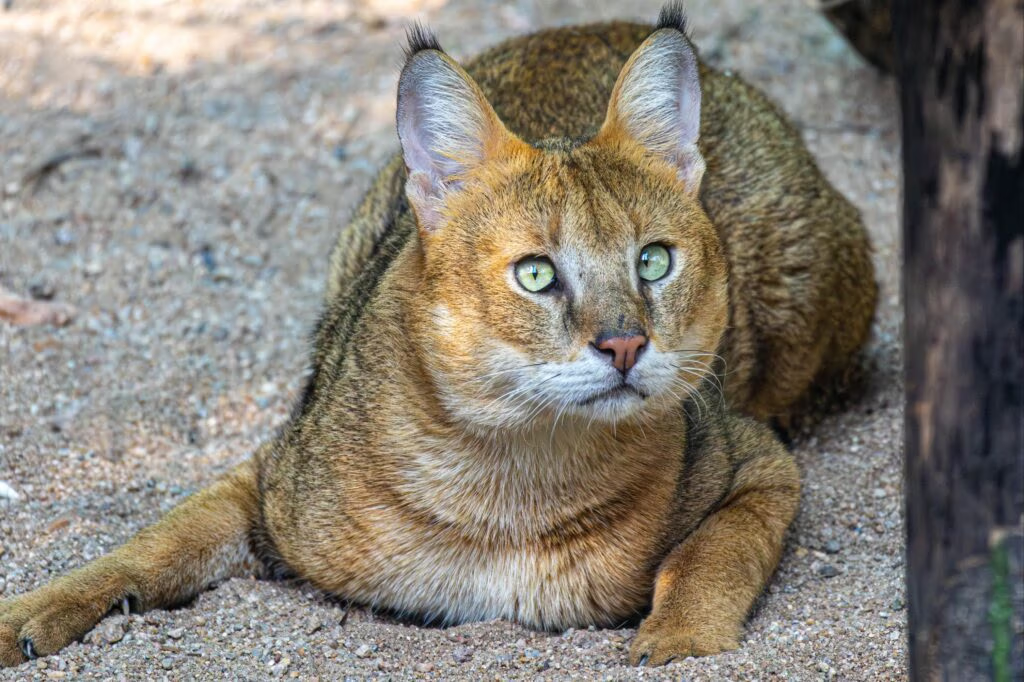

About the African Wildcat
Info About the African Wildcat
The African wildcat is a small feline native to savannas, scrublands, and semi-deserts across Africa and the Middle East. Widely considered the direct ancestor of all domestic cats, it looks remarkably like a striped tabby but is slightly larger, with distinctly longer legs and a reddish tint on the back of its ears.
As an opportunistic predator, the wildcat hunts primarily at dawn and dusk, using tall vegetation and rocky outcrops for stealthy ambushes. Its diet consists mostly of small rodents and birds, but it will also consume reptiles and insects. To survive in arid environments, the wildcat extracts most of its necessary moisture directly from its prey, rarely needing to drink from open water sources.
Today, this hardy survivor faces major conservation threats, primarily through genetic pollution. Because it interbreeds freely with feral domestic cats, genetically pure African wildcats have become increasingly rare across much of their natural range.
Description of the African Wild Cat
- Coat & Color: Fur ranges from sandy yellow and tawny brown to grey, depending on the environment. It is marked with faint, subtle stripes and a distinct dark line running down the spine.
- Distinctive Ears: A highly recognizable characteristic is the bold reddish-brown or rust color on the backs of the ears.
- Legs & Stance: Front legs are noticeably longer than its hind legs, providing an upright sitting posture and a Cheetah-like walking gait. The lower legs have horizontal black bars.
- Tail: Unlike the blunt, bushy tail of the European wildcat, the African wildcat’s tail is long, slender, and cylindrical. It is marked with two to three distinct dark rings and a black tip.
- Paws: The paw pads are jet black
African Wildcat Species / Subspecies
- North African Wildcat: Found across Northern Africa, the Sinai, and into Sudan. This is the primary subspecies from which domestic cats originated.
- Southern African Wildcat: Native to the savannas and brushlands of Eastern and Southern Africa.
- Asiatic Wildcat: Found throughout the Middle East, the Arabian Peninsula, and western India.
Recommended Calibers
For rifles use a .223 or smaller caliber. Shotguns with a small pellet size work well.
Where to Hunt African Wildcat
African Wildcats can be hunted in: South Africa, Namibia, Zimbabwe, and Ethiopia.
What is Considered a Trophy African Wildcat
Any adult African Wildcat is considered a trophy animal.
Cost to Hunt African Wildcat
An African Wildcat is almost always harvested as an animal of opportunity when hunting other species. The trophy fee usually costs from $250 to $1,500.
View Our Hunts