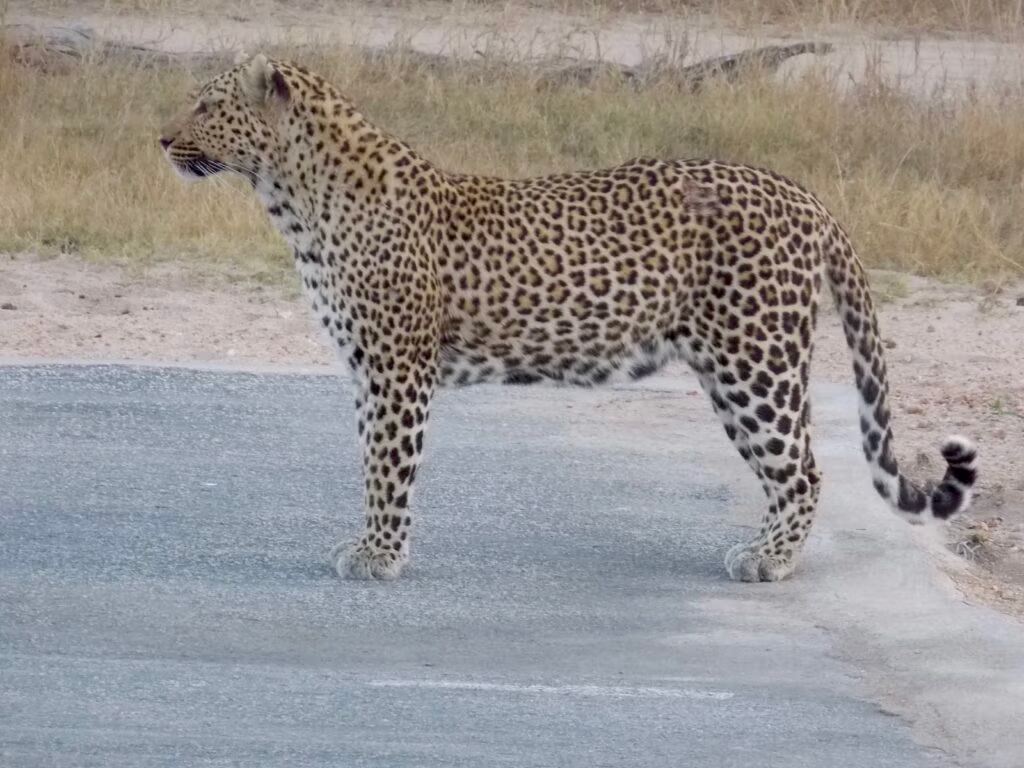

About the Leopard
Info About the Leopard
The leopard is one of the most widely distributed and adaptable big cats, found across diverse habitats in sub-Saharan Africa, the Middle East, and Asia. Renowned for their incredible strength, sleek bodies, and golden coats marked with dark, rose-like patterns called rosettes, these solitary predators are masters of stealth.
Leopards are opportunistic hunters and formidable climbers. They frequently haul heavy prey—sometimes weighing more than themselves—high up into the branches of trees. This ingenious behavior protects their hard-earned meals from scavengers like lions and hyenas. Their exceptional agility also allows them to pounce silently from above or stalk prey close to the ground, making them highly successful ambush predators in both dense forests and open savannas.
Because of their elusive nature and nocturnal habits, leopards are notoriously difficult to track or study. Unfortunately, populations in many regions face significant threats due to habitat loss, human-wildlife conflict, and illegal poaching. Conservation efforts are critical to protecting these magnificent cats and ensuring they continue to roam wild across the globe.
Description of the Leopard
- Size and Weight: Leopards are sexually dimorphic, with males being about 30% larger than females. Males typically weigh from 68 to 165 pounds., while females weigh from 45 to 132 pounds. Their head and body length ranges from 36 to 75 inches long, and they stand about 24 to 30 inches tall at the shoulders.
- The Tail: Their tail is incredibly long, usually measuring 24 to 42 inches, and often features a white underside and dark rings.
- Coat and Coloration: Background fur color varies by habitat, ranging from pale cream and light yellow in dry, arid regions to rich tawny or dark golden-brown in dense forests. Leopards with a genetic mutation that causes entirely black coats are often called “black panthers”. Their spots are also distinct: the rosettes are arranged across their back and flanks, while their faces, chests, and limbs feature solid black dots.
- Facial Features: Leopards have broad heads, small rounded ears, and specialized binocular vision with yellow-green eyes that are excellent for both depth perception and night vision. They have long whiskers that protect their eyes and face as they maneuver through dense vegetation.
- Paws and Claws: They have broad paws equipped with sharp, curved, retractable claws that allow them to climb trees easily and grasp prey.
Recommended Calibers
As a member of the Big 5, the .375 is the minimum caliber used to hunt leopards.
Where to Hunt Leopard
Leopards are only hunted in the following countries: Zimbabwe, Namibia, Mozambique, Tanzania, and Zambia.
They are hunted by using bait or with a pack of hounds.