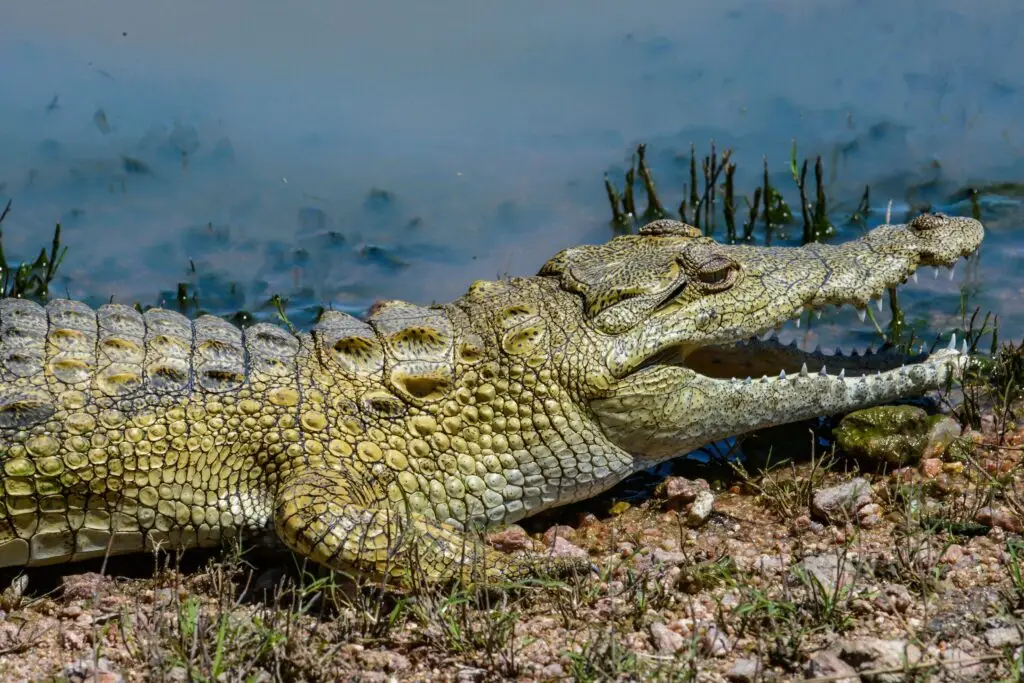

About the Crocodile (Nile)
Info About the Crocodile
The nile crocodile is the largest freshwater predator in Africa and one of the largest living reptiles globally. Reaching lengths of up to 20 feet long and weighing over 1,500 pounds. They thrive in a variety of aquatic habitats, including rivers, lakes, and mangrove swamps across sub-Saharan Africa and Madagascar.
Despite their aggressive, fearsome reputation, nile crocodiles are surprisingly attentive parents. Unlike most reptiles, a mother will diligently guard her sandy nest for about three months and may even gently assist her hatching babies in reaching the water. They are vital to their local ecosystems as well. By managing populations of certain predatory fish, they help preserve the balance of their river environments.
Description of the Nile Crocodile
Key Physical Characteristics
- Body & Tail: Features a streamlined, lizard-like body, short splayed legs, and a long, laterally compressed muscular tail used for swimming.
- Head: Narrow snout with eyes, ears, and nostrils situated on the very top of the head so the rest of the body can remain submerged.
- Eyes & Senses: Possesses prominent green eyes protected by a clear nictitating membrane and specialized sensory organs on their skin that detect water pressure.
- Jaws & Teeth: Equipped with highly powerful jaws with 64 to 68 sharp, conical teeth. When closed, multiple teeth conspicuously overlap and protrude from the mouth.
- Hide & Armor: The skin is rough, covered in tough scales. Rows of bony plates called osteoderms run down the back and tail.
- Coloration: Adults are typically a uniform or blotched olive-green, gray, or brown on their backs, and feature dark cross-bands on the tail. The belly is a light straw-yellow or yellowish-white.
Recommended Calibers
The .300 win mag is considered the bare minimum cartridge for hunting the nile crocodile. It’s best to use a heavy-core bonded rapid expanding bullet to insure a quick kill so the reptile doesn’t escape into deep water.
Where to Hunt Crocodile
Nile crocodile hunting is legally permitted through licensed outfitters across several countries in Southern and Eastern Africa, most notably in South Africa, Zimbabwe, Mozambique, Zambia, Namibia, and Tanzania.
Because the nile crocodile is protected under international agreements, legal hunts require strict permitting, including CITES export permits and local conservation tags.
What is Considered a Trophy Crocodile
Mature male nile crocodiles are generally from 11 to 15 feet long. A 15 foot or longer crocodile is an exceptionally large trophy.
Cost to Hunt Crocodile
A nile crocodile hunt costs anywhere from $4,000 to $16,000 depending the length of the “croc” and where you are hunting. The average cost is from $8,000 to $9,000.