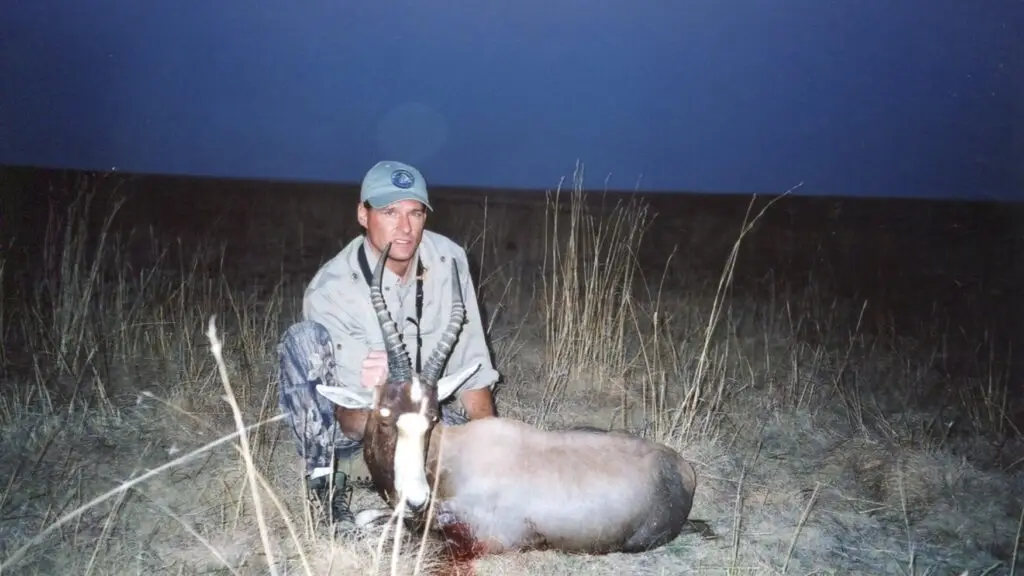

About the Blesbok
Info About the Blesbok
The blesbok is a striking, medium-sized antelope endemic to the open grasslands and plains of southern Africa. Its name derives from the Afrikaans word “bles,” meaning blaze, a nod to the highly distinctive, bright white stripe running down its face, which is usually broken by a horizontal brown band. Both males and females carry uniquely ringed, lyre-shaped horns.
These social, diurnal animals are strict grazers that prefer feeding on short, sweet grasses. They often gather in large herds and rely on group vigilance against predators. Well-adapted to life in wide-open spaces, they are built for both speed and endurance. They are capable of sprinting at speeds up to 43 mph to evade threats such as lions and spotted hyenas. Because they are dependent on surface water, their daily routines are closely tied to the availability of drinking sources.
Historically, the blesbok ranged the vast treeless savannahs numbering in the thousands. However, by the late 19th century, relentless hunting for their meat and hide brought the species dangerously close to extinction. Fortunately, through vigorous conservation efforts, protected area management, and reintroduction to private game farms, their numbers have rebounded dramatically. Today, the blesbok is classified as Least Concern and is once again one of the most abundant antelopes in South Africa.
Description of the Blesbok
- Weight: Males typically weigh from 143 to 176 pounds, while females are slightly smaller, weighing from 121 to 154 pounds.
- Height & Length: from 33 to 39 inches tall at the shoulders, and reach a body length of from 55 to 63 inches long.
- Horns: Both sexes possess ringed, gazelle-like horns that sweep backward and slightly outward. Male horns are generally thicker and longer (from 13 to 19.5 inches), while female horns are slightly more slender and shorter.
Blesbok Color Variants
While the common blesbok features a rich chocolate-brown coat, selective breeding on private game reserves has produced several distinct color variations.
The white blesbok is the most common color variant of the blesbok and is highly sought after by Africa hunters.
The yellow, saddleback, copper, and painted blesbok are also being breed and developed for hunters wishing to have a complete collection.
Recommended Calibers
Use a minimum of a .243 caliber rifle to hunt blesbok.
Where to Hunt Blesbok
The premier and most natural destination to hunt blesbok is South Africa, where the species is endemic. Because they have been successfully introduced to other regions and thrive on specialized game ranches, you can also legally hunt them in several other global destinations.
South Africa (Primary Native Range)
Blesbok are native to the high-elevation central grasslands of South Africa, known as the Highveld. They are incredibly abundant here and can be hunted across almost all provinces through various outfitters.
- Free State, North West, and Limpopo Province: Classic open-plains terrain perfect for traditional spot-and-stalk hunting over long distances.
- Eastern Cape: Known for rugged, beautiful terrain where blesbok are frequently bundled into multi-species plains game safari packages.
Namibia (Introduced Range)
Blesbok have been successfully introduced to the semi-arid grasslands and mixed woodlands of Namibia. Numerous game ranches host blesbok hunts alongside native Namibian plains game. While South Africa allows year-round hunting, Namibia enforces a distinct trophy hunting season that runs from February 1 to November 30.
Texas
If you prefer not to travel internationally, Texas features a thriving population of blesbok on intensely managed exotic hunting ranches. They are highly sought after because they retain their ringed horns year-round.
What is Considered a Trophy Blesbok
Look for the following characteristics when hunting for a trophy blesbok.
- Horn Length: A blesbok is generally considered a trophy when its horns reach a length of 14 to 16 inches long. Anything over 17 inches is considered an exceptional trophy.
- Horn Tips: As a blesbok ram matures, the tips of his horns will turn a distinct translucent yellow or bone-white color due to weathering and rubbing. Younger rams will have solid dark or black tips.
- Base Mass and Connecting Ridge: A trophy ram’s horns will be thick, heavily ringed, and the bases will sit very close together, almost touching. Ewes have much thinner, more slender horns with wider spacing at the base.
Cost to Hunt Blesbok
Africa
- A typical blesbok trophy fee usually costs from $400 to $1,200.
- A color variant such as the white blesbok costs from $700 to $2,500.
- On a typical African safari hunting package, these trophy fees are included in the package price. A package with the blesbok and 2 or 3 additional plains game will cost from $3,500 to $7,000 depending on the animals included.
Texas
- A blesbok hunt at a high fence hunting preserve in the USA costs from $5,000 to $13,000.
View Our Hunts