

New Zealand Hunting Info
New Zealand is widely considered one of the premier hunting destinations in the world, offering an unmatched combination of rugged alpine terrain, breath-taking scenery, and highly sought-after big game species. The country’s hunting system is divided into two distinct experiences: free-range wilderness hunting on public conservation lands, and intensely managed private estates,
Because New Zealand has no native land mammals, its big game species were introduced in the late 19th and early 20th centuries. With no natural predators, these populations thrived, prompting the government to manage them flexibly and allowing for year-round hunting with no official bag limits or seasonal restrictions for most species.
The undisputed king of New Zealand hunting is the Red Stag, drawing thousands of international hunters each year, particularly during the “roar” from late March through April. Beyond the iconic stag, the country offers world-class alpine hunting for Himalayan Tahr and Chamois. Pursuing these agile animals requires hunters to navigate the sheer, snow-capped peaks of the Southern Alps, a physically demanding endeavor that often utilizes helicopters—locally known as heli-hunting—to access remote, high-altitude drop points safely. Some New Zealand outfitters offer add-on species such as Fallow Deer, Arapawa, and Feral Goats.
For the traveling sportsman, New Zealand provides an incredibly welcoming and highly professional guiding infrastructure. The South Island is the focal point for most trophy hunting, centered around premium lodges set in the mountains. For those seeking true wilderness, the Department of Conservation (DOC) manages millions of hectares of public land where hunters can obtain affordable permits to pursue free-range game. Whether you are backpacking in the high country for Tahr and Chamois or glassing a gold-medal Red Stag from a luxury estate lodge, hunting in New Zealand delivers an unforgettable adventure steeped in dramatic landscapes and rich sporting tradition.
Travel Information
Flights to New Zealand
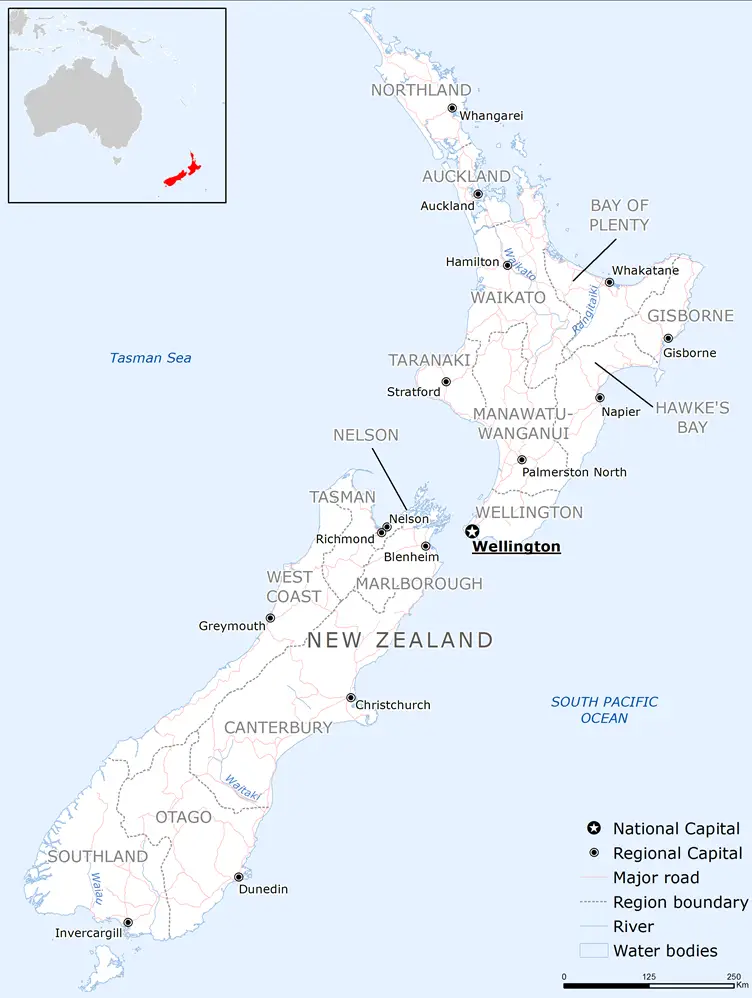
International flights from the US fly into Auckland on the North Island. Most flights leave from San Francisco, Los Angeles, or Houston. You will then book a domestic flight to the domestic airport nearest to your hunt.
Domestic flights within New Zealand are quite reasonable. Most flights are on 2 major airlines: Air New Zealand is the national carrier flying international and domestic routes. Jetstar is a low-cost carrier owned by Quantas flying domestic routes.
Visitor Requirements to Enter New Zealand
Approximately 1 month before departure:
You must download the NZeTA app and apply for entry into New Zealand. This should be done about a month before departure. You will receive an email that your application was approved and it will show as approved in the app. You will need to have this to enter New Zealand.
Within 24 hours of departure:
You must also download the NZTD app. This is the New Zealand Traveller Declaration that you need to fill out within 24 hours of departure. This will be needed when going through customs. If you do not have this filled out prior to entering New Zealand, you will be asked to do it in Customs which could delay your entry a bit.
Strict Biosecurity Laws
- Clean Your Gear: Your hunting boots, and other outdoor equipment must be entirely free of soil, seeds, mud, and organic matter before you pack them.
- Declare Everything: You must explicitly declare all outdoor equipment, used footwear, and firearms on your Customs declaration. If border officers find dried mud or grass on your boots or equipment that you failed to declare, you face an immediate fine or potential prosecution. If you forget to to clean your equipment, just be sure to declare this at Customs and they will inspect your equipment and clean it if necessary.
Safety Information
Crime and Personal Safety in New Zealand
New Zealand is exceptionally safe. It consistently ranks among the safest and most peaceful countries in the world, with a very low violent crime rate. Opportunistic theft is always something a tourist should be aware of. Petty theft, such as vehicle break-ins, occurs at popular, unmonitored tourist trailheads and scenic lookouts. Never leave expensive hunting gear, optics, or electronics visible inside a parked rental vehicle.
Emergency Services
The emergency phone number for police, fire, or ambulance in New Zealand is 111.
Weather and Wilderness Risks
- Volatile Weather: The weather in the Southern Alps changes violently and without warning. Clear skies can turn into torrential rain, heavy snow, or strong winds in under an hour, making hypothermia a serious risk.
- Deceptive Terrain: New Zealand’s mountains are steep with loose rocks. Screen fields, sudden bluffs, and thick bush make navigation challenging. Getting lost or injured is the most common cause of emergency rescues.
- River Crossings: Fast-flowing, glacial-fed braided rivers are notoriously dangerous. Attempting to cross a swollen river after heavy rain is a leading cause of backcountry fatalities.
Driving Safety
- In New Zealand, vehicles drive on the left side of the road and the driver sits on the left side of the car. If you are not used to this, it is recommended that you delay driving after a long international flight until you get a full night of sleep.
- Demanding Roads: Outside of major highways, roads are often narrow, winding, and steep with single-lane bridges. Distances always take much longer to drive than they look on a map.
Health Information
No mandatory vaccinations are required to enter New Zealand. The country is isolated and free from major tropical diseases like malaria, yellow fever, or rabies.
Related Information
New Zealand Species Hunts
New Zealand Species Info