
South Africa Hunting Info
South Africa is the easiest and cheapest place to hunt in Africa right now. It has an abundance of plains game and is easy to travel to from the US.
Private Hunting Concessions
Hunting in South Africa is an exceptional, bucket list experience. Nearly all hunting occurs on private game ranches, which cover over 25% of the country. Because wild animals are the property of the landowner, 99% of hunting is done on vast high-fenced private game concessions or ranches. Even though these hunts are on private concessions, international hunters are required by law to be accompanied by a licensed PH and outfitted by a registered outfitter.
Hunting Regions in South Africa
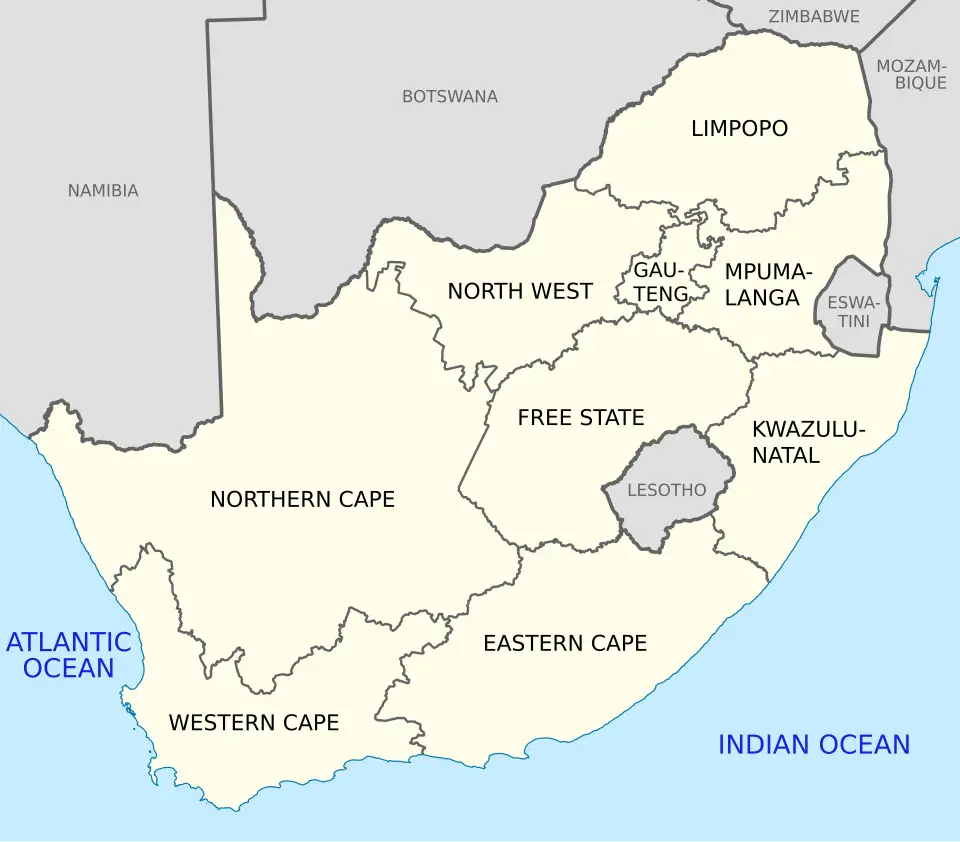
There are four main hunting regions in South Africa. All of the areas contain many of the common plains game species; however, each regions has some distinct species that are suited to that specific terrain.
East Cape
- The entire Eastern Cape is 100% malaria-free, making it the premier choice for family hunting trips and first-time travelers.
- A rugged landscape blending steep mountains, deep valleys, and thick coastal valley bushveld.
- Specialized regional species:
Free State & Northern Cape
- Terrain consists of grassy, flat, open savannahs and semi-desert sandy soils of the Kalahari Desert
- Requires long-range shooting across open plains for herd animals like Gemsbok, Springbok, and Black Wildebeest.
- Specialized regional species:
Limpopo
- Widely considered the premier hunting destination in South Africa
- Characterized by dense acacia thorns, mopane scrub, and granite hills,
- Offers the classic walk-and-stalk hunting for Greater Kudu, Impala, Blue Wildebeest, and Bushbuck.
- Specialized regional species:
- Kudu
- Limpopo Bushbuck
- Impala
- Color variants like the Golden Wildebeest, Kings Wildebeest, Black Impala, White Blesbok
Mpumalanga
- Translates to “The Place of the Rising Sun”
- Features a dramatic landscape divided into two sharply contrasting hunting zones:
- The Highveld: The western half is a chilly, high-altitude alpine grassland with the following specialized species:
- The Lowveld: The eastern half drops steeply down the Drakensberg Escarpment into the tropical, low-altitude bush and specializes in:
- Black Wildebeest
- Blesbok
- Eland
Exporting and Taxidermy
Once an animal is harvested, international hunters must navigate the “Dip and Pack” process to get trophies home:
- Field Preparation: The outfitter’s skinners immediately salt, cape, and prep the hides and skulls at the skinning shed.
- Dip and Pack facilities: Hides and skulls are sent to a licensed South African taxidermist for mandatory chemical processing (dipping) to kill any diseases before export.
- Shipping: A specialized freight forwarder handles the export permits, CITES documentation (for protected species), and ocean or air freight to the hunter’s home country, where a designated customs broker clears the shipment.
How South African Hunts are Packaged and Sold
The most common way South Africa hunts are usually marketed is by a la carte itineraries, which means you are charged a daily rate plus trophy fees. This requires gathering information such as how many days you may need to hunt to get the animals you want. The alternative is a packaged hunt that gives you one set price that is all-inclusive of daily fees, trophy fees for specified animals, lodging, meals, and possibly other things like a free observer, etc. The packaged hunts are a simplified approach that helps with budgeting and also usually comes with a discounted price.
Daily Rates + Trophy Fees (A La Carte)
This is the typical way hunts are marketed in South Africa. This means you are charged a daily rate for each day at the hunting lodge plus trophy fees. This requires gathering information such as how many days you may need to hunt to get the animals you want.
- Daily Rates: You pay a flat fee per day for lodging, meals and hunting. If you have someone travelling with you, non-hunting observers typically have a lower daily rate.
- Trophy Fees: You only pay for the specific animals you successfully harvest or wound. Each animal has a fixed price on the outfitter’s price list.
Packaged Hunts
Packaged hunts give you one set price that is all-inclusive of daily fees, trophy fees for specified animals, lodging, meals, and possibly other things like a free observer added in. The packaged hunts are a simplified approach that helps with budgeting and also usually comes with a discounted price.
- Plains Game Packages: Typically bundled as a 7-to-10-day hunt including daily rates, 4 to 6 specified animals, lodging, meals, and drinks for a flat price. This is the all-inclusive hunt that can make budgeting for your safari easier and usually provides a discounted price.
- Dangerous Game Packages: “Big Five” animals are less commonly bundled into flat-rate packages. They require individual daily rates (often $1,000+ per day) and heavy trophy fees. However, you can find them more often with hunt brokers/booking agencies.
Travel Information
Flying to South Africa
Flying to South Africa is a cross-continental journey that spans roughly 15 to 16 hours on nonstop flights from the US to Johannesburg, South Africa (O.R. Tambo International Airport – JNB). Delta Airlines has a direct flight from Atlanta (ATL) and United Airlines has a direct flight from Newark/New York (EWR). These flights usually leave the US in the evening and arrive in Johannesburg in the evening. The other option is flying through a major European or Middle Eastern airport on your trip from the US to Johannesburg (JNB).
If you arrive in South Africa in the evening, you will usually stay in Johannesburg overnight and your PH will pick you up the next morning. Depending on where you are hunting, you may need to take a domestic flight the next morning to another part of South Africa. In this case, your PH will pick you up at the domestic airport on your arrival.
We have hotels that we recommend and arrange for you if you need an overnight stay in Johannesburg. The hotels will transport you to and from the airport as needed and their are also options to stay right at the airport.
Customs Declaration
Within the 24 hours prior to leaving for your hunt, you need to fill out the Customs Online Traveller Declaration for entry into South Africa. This can also be completed by downloading the South African Traveller Management System (SATMS) App on your mobile device.
Traveling with Firearms
You have two options regarding the rifle(s) you will use on your African Safari. You can rent a rifle from your outfitter or you can bring your own.
Renting a Rifle from the Outfitter
Renting a rifle from your outfitter has become a popular option when traveling to South Africa. Most outfitters have very good rifles available.
I have always brought my own rifles on my African safaris until my guns were still in the US when I was being picked up by my outfitter. Instead of wasting a hunting day or two waiting for my rifles to arrive, I decided to use my outfitters rifles. They were very good rifles with suppressors on them and very good scopes.
Bringing and Importing Your Own Rifles
To temporarily import a firearm for hunting or sporting purposes through O.R. Tambo International Airport in Johannesburg (JNB), follow these steps when you arrive.
- Clear passport control and claim your regular luggage.
- Proceed to the SAPS Firearm Office to present your documents, inspect serial numbers, and collect your permit and firearm.
The following documents must be presented to the SAPS officer when picking up your firearm:
- SAPS 520 Form: Download this form and complete it in black ink. You must not sign it until you are in front of the police official.
- Passport: Current and valid.
- Return Airline Ticket: Your airline itinerary must show your entry and exit dates.
- Proof of Firearm Ownership: US citizens must fill out the U.S. CBP Form 4457 and bring their firearm(s) to a customs office in the US for inspection and to get your form signed. This form must be presented at the SAPS office when importing your firearm(s).
- Invitation Letter: An official letter from your South African hunting outfitter detailing your stay, hunting address, and specific firearm serial numbers.
Safety Information
South Africa does have alot of crime, particularly near and in the big cities. It is recommended for travelers not to be out walking or driving after dark.
Your safety is always the top priority. Whenever you leave the lodge, you’ll be in the expert hands of your PH or outfitter staff. I’ve traveled to South Africa numerous times, and from my firsthand experience, I have never once felt unsafe or threatened in any way. Hunting lodges are typically far away from urban centers and are gated and fenced.
Current safety information can be found on the US Government Travel site.
Health Information
There are areas in South Africa that are Malaria areas, primarily the eastern Mpumalanga and Limpopo provinces (including the entire Kruger National Park) and the Maputaland coast of KwaZulu-Natal. The highest risk is during the rainy season (roughly October to May). You should consult your doctor for preventative malaria medication (prophylaxis), and using mosquito repellent containing 30% to 50% DEET if you are hunting in these areas.
Depending on your itinerary, you may need vaccines for diseases like Yellow Fever, Hepatitis A, and Typhoid. Consult a travel doctor 6-8 weeks prior to departure to obtain any vaccines you may need.